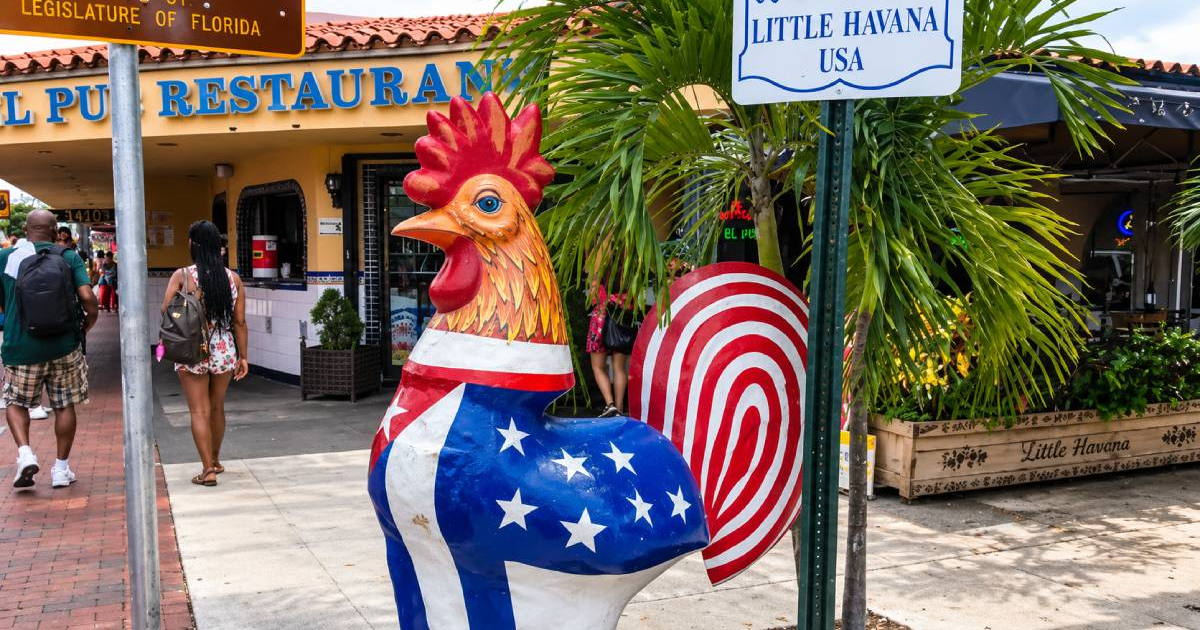
The city of Miami is hosting a series of community workshops this Thursday, Friday, and Saturday at the gymnasium of Parque José Martí for residents and merchants of Little Havana to define which elements of the neighborhood should be preserved before drafting the new design rules for the future Neighborhood Revitalization District (NRD).
The process is a direct update of the rezoning proposal that would include buildings of up to 12 stories in parts of the neighborhood, approved by the Miami Planning and Zoning Board on September 3 with a vote of seven to three, and which still needs to pass the Miami Commission review, a state scrutiny, and a final vote before becoming law.
During the work tour that accompanied the workshops, residents, merchants, and urban planners pointed out the elements they consider essential: a house built in 1922, balconies facing the street, little café windows, and buildings with architectural details that have stood for decades.
«You can see the neighbors from the second-floor balconies. You can still hear the music. That is one of the things that fascinates me about my neighborhood and my grandfather's,» said resident Raissa Fernández.
For the owner Alfredo Durán, the main challenge is that growth does not erase the memory of the place: "It's important to me that the historical character of Little Havana is maintained... that a lot of modern buildings don’t start to be constructed. This is a neighborhood with history, and that history needs to be preserved."
The commissioner Rolando Escalona, the main advocate for the initiative, emphasized that the residents' voices are the starting point: "The purpose of this workshop and this tour is for the residents to tell us what they want to see in Little Havana... the future of Little Havana... that is going to come from them."
From the development side, Juan Mullerat of Plusurbia Design —the firm that created the master plan for the neighborhood alongside the National Trust for Historic Preservation— argues that the new zoning can be compatible with the identity of the neighborhood: "We need good zoning that allows developers to invest in the area to create more housing and to ensure that Little Havana emerges as the heart of Miami that it has always been."
The proposal under discussion would allow buildings of up to five stories in areas where three are currently permitted, up to eight in other areas, and up to 12 with certain incentives, covering a perimeter of approximately 460 properties and nearly 100 acres along 7th Street and part of 9th Street in the southwest. 8th Street is excluded because it already permits taller structures.
The debate takes place in a context of increasing real estate pressure on the neighborhood. The case of the Silver Court mobile home park illustrates this vulnerability: approximately 30 families, mostly elderly adults and low-income Cuban and Latino immigrants, are facing an eviction process with a court hearing on October 6.
Little Havana, designated a "National Treasure" by the National Trust for Historic Preservation in 2017, contains nearly 20% of Miami's rental stock and over a quarter of the units rented for less than $1,000 a month, making it one of the last havens of affordable housing in a city with skyrocketing costs.
Once the workshops for this week are completed, the proposal will have to go through a lengthy institutional process: Planning and Zoning Board, Miami Commission, state review, and final voting, before any new building regulations take effect in the neighborhood.
Related videos:
Filed under: