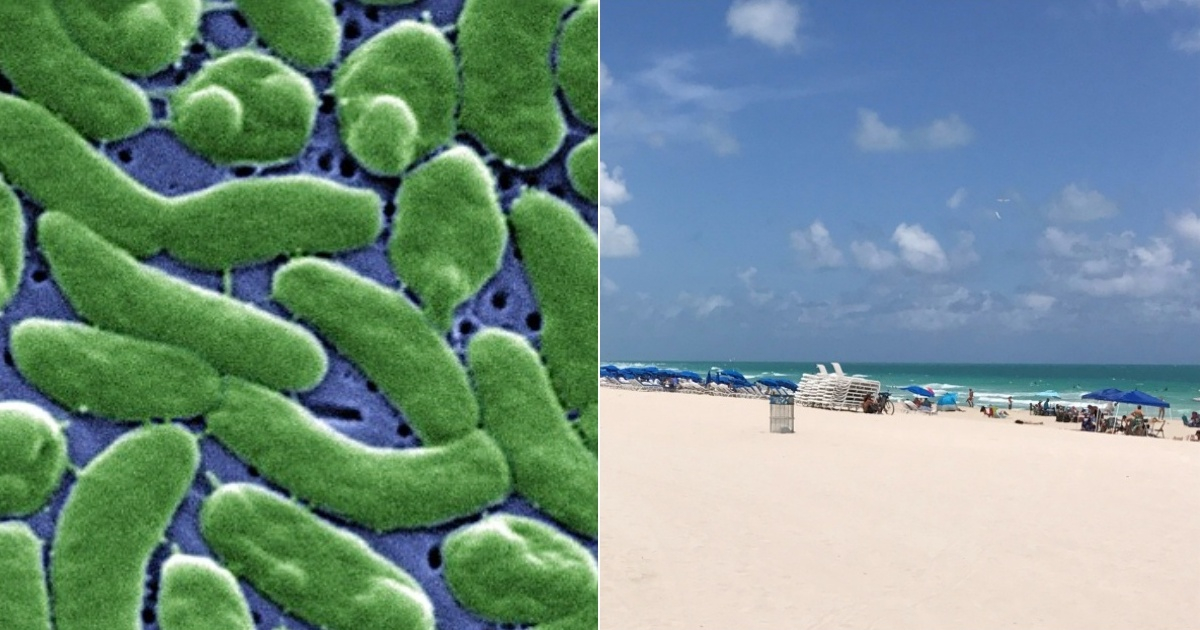
Florida confirmed a fifth death in 2026 due to infection from Vibrio vulnificus, a bacteria commonly known as "flesh-eating" that can cause severe infections and progress rapidly when it enters the body through open wounds or from eating raw seafood.
The most recent victim was a resident of Pinellas County, in the Tampa Bay area, according to reported by ClickOrlando based on data from the Florida Department of Health.
With this death, the state totals 23 confirmed cases and five deaths so far this year.
The other four deaths have been recorded in the counties of Bay, Broward, Marion, and Palm Beach. State data also indicates cases in Brevard, Duval, Hillsborough, Lee, Miami-Dade, Okaloosa, Polk, St. Johns, and Santa Rosa, among other areas.
According to records from the Florida Department of Health, the five deaths recorded so far in 2026 match the total number of deaths accounted for throughout 2025, a year in which the state reported 33 cases of Vibrio vulnificus and five fatalities.
In 2024, the figures were significantly higher: 82 cases and 19 deaths. The Department of Health reported that that year several counties experienced an unusual increase in infections following Hurricane Helene, due to exposure to floodwaters.
Vibrio vulnificus is a bacterium that naturally inhabits warm coastal and brackish waters. It can cause infections when an open wound comes into contact with contaminated water or through the consumption of raw or undercooked seafood, especially oysters.
In the most severe cases, the infection can spread rapidly and cause severe tissue damage or a bloodstream infection.
The term "eats flesh" is a popular designation: the bacteria do not literally consume tissue, but some infections can cause necrosis and rapid destruction of soft tissues, as well as serious bloodstream infections.
Dr. Daniel Egan, an infectious disease specialist at Orlando Health, explained to ClickOrlando that even a small cut, blister, or scrape can become an entry point if it comes into contact with water where the bacteria are present.
"It can become quite aggressive," she warned, pointing out that redness and pain can begin around the wound and spread rapidly.
Health authorities recommend avoiding contact of open wounds with saltwater or brackish water, using waterproof bandages when there is a risk of exposure, and cooking seafood thoroughly before consumption.
The Centers for Disease Control and Prevention (CDC) also warn that raw oysters can contain Vibrio bacteria without showing any visible changes, meaning their appearance, smell, or taste do not indicate whether they are contaminated.
Florida had already been experiencing a gradual increase in cases during the summer. At the beginning of June, the state had confirmed five infections, and in July the first death of the year was reported.
In August, the second death was confirmed, and by mid-September, the number had risen to four deaths and 21 cases.
Related videos:
Filed under: