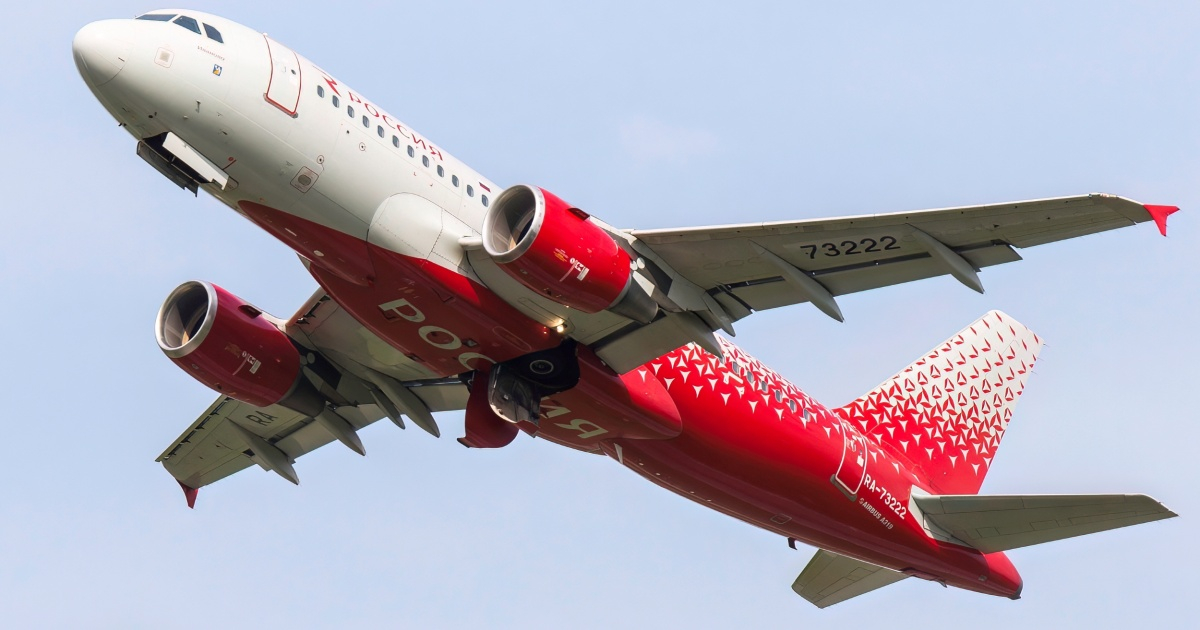
The Russian Foreign Ministry confirmed this Monday that the resumption of direct flights to Cuba remains on the bilateral agenda, but it conditioned their return on the island ensuring operational technical and logistical conditions, according to statements from diplomat Alexandr Schetinin, director of the Latin America Department of the Russian Ministry of Foreign Affairs.
Schetinin emphasized that the reactivation of routes specifically requires secure refueling schemes for Jet A-1 fuel for Russian aircraft at Cuban airports or at intermediate points, and that without these concrete operational guarantees, no connections can be reopened.
The Russian position is not new. At the end of August, the Minister of Transport Andrei Nikitin had set the same condition in an interview with the RIA Novosti agency: “As soon as the situation with aviation kerosene stabilizes completely, we can immediately proceed to fully restore the flight programs.”
The underlying problem is that this normalization has not occurred. The Russian airlines Rossiya and Nordwind suspended their regular flights in February upon realizing that Cuba could not guarantee Jet A-1 at its international airports. Aeroflot completed the total suspension of regular connections on the 24th of that same month. Between February 13 and 22, both companies organized nine special repatriation flights from Varadero, Havana, Holguín, and Cayo Coco to transport almost 4,300 stranded Russian tourists back to Moscow.
The fuel shortage has not been resolved since then. Between August 31 and October 1, alerts to pilots —the so-called NOTAMs— were in effect declaring the unavailability of Jet A-1 at ten Cuban international airports, from José Martí in Havana to Vilo Acuña in Cayo Largo. The expiration of those alerts on October 1 was not accompanied by any official announcement regarding the restoration of supply.
The Cuban Minister of Energy and Mines, Vicente de la O Levy, acknowledged in May the extent of the collapse: "We have absolutely no fuel oil, nor absolutely any diesel. We no longer have any reserves."
The impact on tourism has been devastating. Russia was the second largest source market for visitors to Cuba, with nearly 132,000 tourists in 2025. In March of this year, that number plummeted to just 249 Russian travelers, compared to more than 7,300 who arrived in February before the cancellations.
The overall outlook for the sector is not any better. Between January and August 2026, Cuba received just 450,353 international visitors, a decline of 64.4% compared to the same period in 2025. Only in August did 30,490 tourists arrive, compared to around 133,000 in the same month last year.
Russia is not the only one affected. At least eleven airlines suspended flights to Cuba in 2026, including Air Canada, Air Transat, WestJet, Air France, Iberia, LATAM Peru, and Turkish Airlines, according to a report from Infobae, which notes that at least five countries have lost direct connection to the island due to the energy crisis.
Moscow and Havana are exploring the possibility of refueling aircraft at intermediate stops to avoid reliance on a single supply point, but as long as the Cuban authorities do not announce a real normalization of Jet A-1, the route between Moscow and Havana will remain on indefinite hold.
Related videos:
Filed under: