A Cuban identified as Cesáreo Navas y Morlanes published an open letter addressed to Miguel Díaz-Canel on Facebook, in which he demands that he abandon the empty political rhetoric and urgently address the humanitarian crisis faced by the elderly, the sick, and individuals with disabilities on the island.
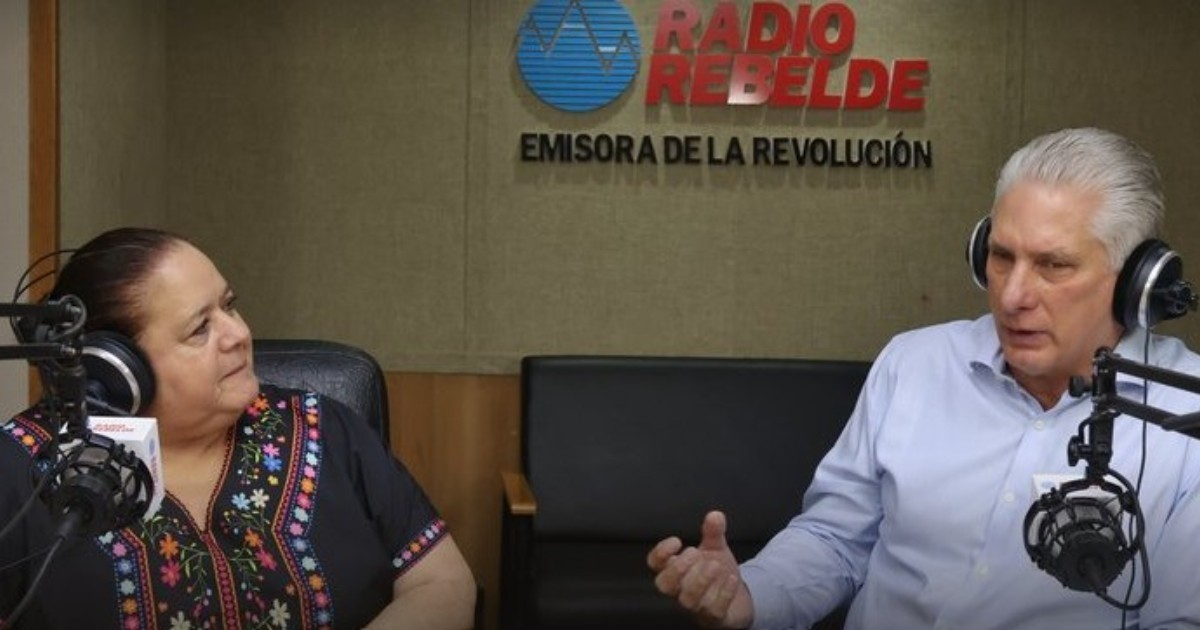
The text, titled "TODAY IN 'SHARED CRITERION'", was published in direct response to the biweekly radio program on Radio Rebelde that Díaz-Canel hosts alongside journalist Bárbara Betancourt since the premiere of the show on September 23.
"Díaz-Canel, you are mistaken once again; the party and its most determined members alone will not be able to confront the worsening survival of hundreds of thousands of retired seniors, patients without medication, and those with physical disabilities," Navas writes at the beginning of his letter.
The author questions the ruler's ignorance—or unwillingness to acknowledge—the daily reality of the population: "It seems that, by your words, you do not know or do not want to recognize the painful and humiliating life that people endure."
To remedy the situation, he proposes a solution that is as simple as it is uncomfortable: to walk without an escort or cameras through Montes, Galeano, and Reina streets, the parks of Curita and Fraternidad, as well as the city blocks and lots of Havana. "Walk through the streets, without parades or press, try not to be recognized, try to be invisible (it's very difficult)," he advises, even suggesting that he consult the makeup and wardrobe specialists at ICRT to blend in unnoticed.
Navas also rejects the idea that the Communist Party can solely resolve the "great social chaos" and proposes that the offices of the PCC, the UJC, the CTC, and the Association of Combatants be transformed into centers to care for, feed, and clothe the most vulnerable, in coordination with religious and union institutions.
The letter concludes with a phrase that captures the exasperation of broad sectors of the population: "PLEASE, we need fewer speeches, fewer slogans and heroic calls, and yes, more food, medicine, and respect for all human rights."
The term "teque" —widely recognized in colloquial Cuban speech— refers to the repetitive and propagandistic official political discourse that is disconnected from reality.
Navas's criticism comes at a time when the data on the social situation is devastating. According to figures from the Cuban Observatory of Human Rights, 79% of those over 70 cannot have three meals a day. The minimum pension of 4,000 pesos per month amounts to barely between seven and ten dollars at the informal exchange rate, while an economist estimated that a person needs more than 96,000 pesos per month to cover their basic needs.
The second broadcast of "Criterio Compartido," held this Wednesday, received more than 50 citizen calls regarding social vulnerability, medication shortages, poor services, and bureaucracy. In response to these complaints, Díaz-Canel acknowledged the shortage of medications—which he attributed to the lack of foreign currency due to the embargo—and stated that "the crisis also generates citizen creativity."
Navas's letter is part of a sustained pattern of direct criticisms of the ruler throughout 2026, a year in which the struggle of aging in Cuba with miserable pensions and lack of access to medications has been documented through testimonies, surveys, and reports that even the official program has been unable to ignore.
Related videos:
Filed under: