As a teenager, I greatly enjoyed the captivating stories of One Thousand and One Nights. Among its protagonists was the famous Abbasid caliph Harun al-Rashid, ruler of Baghdad from 786 to 809. I remember particularly fondly the story of Baba Abdullah, the blind man who asked to be slapped after receiving alms; the tale of Abul-Hassan, "the awake sleeper," and the extraordinary adventures of Dalila the Cunning, Zeynab the Deceiver, Ahmad the Pest, Hasan the Plague, and Ali the Heavy.
Those narratives awakened in me a profound sympathy for that caliph who, according to literary tradition, would disguise himself and roam the streets of Baghdad to see how his subjects lived, and who went down in history as a protector of the arts, sciences, and culture. Nothing like the Castros and Díaz-Canel and their Potemkin villages!
What a stark contrast between those fascinating stories of Islamic civilization and the contemporary crimes of fundamentalist organizations that murder innocents, persecute Christians, oppress women, and seek to impose their interpretations of Sharia through terror!
Islam was born in Arabia during the 7th century, with the preaching of Muhammad. After his death in 632, an impressive territorial expansion began. The first caliphates conquered Syria, Palestine, Egypt, and North Africa, predominantly Christian regions, as well as Persia, primarily Zoroastrian. Their territories stretched from the Iberian Peninsula to Central Asia.
In 711, the Muslim conquest of Spain began. In 732, Charles Martel defeated the Umayyad forces near Poitiers. Constantinople withstood the Arab sieges but fell to the Ottoman Turks in 1453. They expanded their domains across Greece and the Balkans. The Christian victories at Lepanto in 1571 and Vienna in 1683 served as significant setbacks to Ottoman expansion.
Meanwhile, Islam was spreading in Persia, Afghanistan, India, and Indonesia through conquests, trade, and preaching.
Currently, Islam has about two billion adherents and continues to grow, primarily due to demographic and migratory reasons. Millions of Muslims live peacefully in Europe and America, adhering to the laws and rejecting extremism.
However, Islamic fundamentalism poses a real threat. Organizations such as ISIS, Al Qaeda, Al-Shabaab, and other jihadist groups have carried out thousands of attacks and killed countless innocents, primarily in Africa and Asia, although also in Europe and America. The massacres of September 11, 2001, Madrid, London, Paris, and Brussels remain as chilling testimonies.
Special concern is warranted for Hamas, Hezbollah, and the Islamic Revolutionary Guard Corps of Iran, due to their involvement, support, or connection with terrorist activities. Their international networks encompass funding, propaganda, recruitment, and clandestine operations. Iran is the main supporter of Hezbollah and one of the major state sponsors of radical armed organizations.
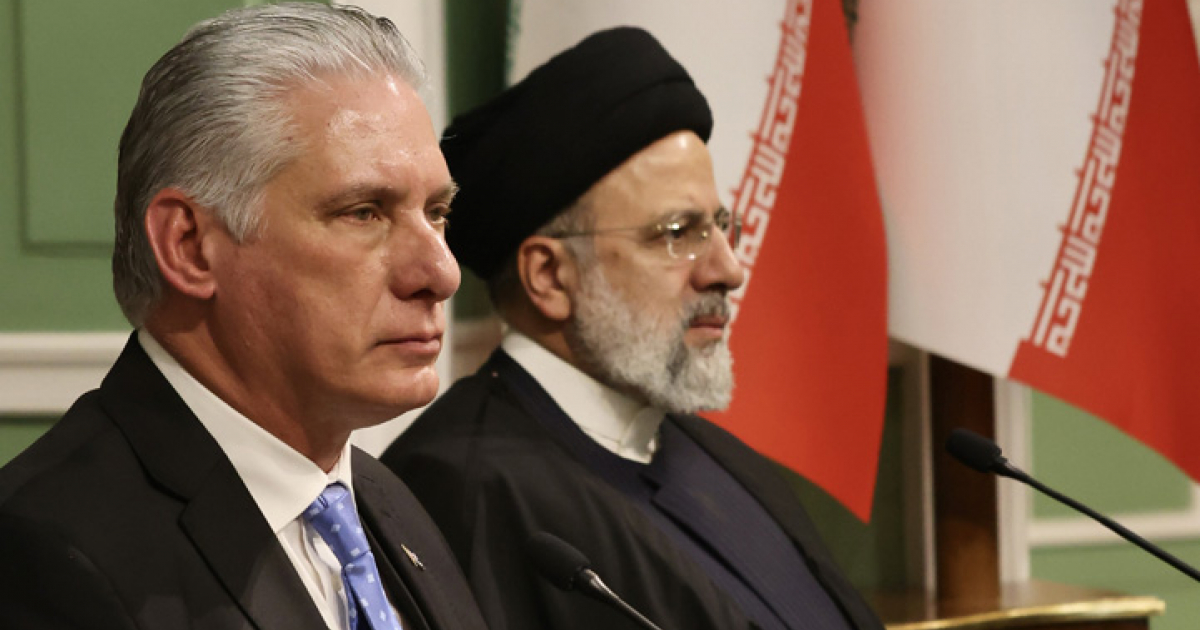
It is particularly revealing the close alliance of the Cuban communist regime with the Iranian theocracy. The communists who govern Cuba, responsible for decades of political and religious persecution, maintain excellent relations with the ayatollahs, despite the differences between Marxism-Leninism and Islamic fundamentalism.
Havana and Tehran have signed important cooperation agreements and share their hostility towards the United States and Western democracies. The propaganda of the Cuban regime expresses sympathy for Hamas and Hezbollah. Miguel Díaz-Canel called the Israeli operation that ended with Hassan Nasrallah, the leader of Hezbollah, in September 2024, cowardly. He also did not unequivocally condemn the massacre of Israeli civilians perpetrated by Hamas on October 7, 2023.
This convergence between communists and Islamic fundamentalists demonstrates how seemingly incompatible ideologies can ally against liberal democracies, the West, and especially the United States.
It is no less concerning that among nations with a Muslim majority, relatively few enjoy solid democratic institutions and broad freedoms. Countries like Senegal, Albania, and Indonesia exhibit varying levels of political pluralism, but numerous Islamic states remain subjected to absolute monarchies, military dictatorships, or theocratic regimes.
In Afghanistan, the Taliban have denied millions of girls and women access to education and fundamental freedoms. In Iran, women endure religious impositions and legal discrimination. In other states, apostasy, blasphemy, and homosexuality are punished, while certain interpretations of Sharia justify flogging, death sentences, forced marriages, and severe restrictions against women.
Religious persecution represents another unacceptable contradiction. In Saudi Arabia, public worship of religions other than Islam is prohibited. In Pakistan, blasphemy laws facilitate persecution against religious minorities. In Iran, numerous converted Christians have been imprisoned.
Why can Muslims build mosques, preach and practice their religion freely in Western democracies, while Christians do not enjoy equivalent freedoms and, in numerous Muslim countries, face discrimination, persecution, or even the risk of death?
Why is religious tolerance demanded in Europe and America while certain Islamic governments punish those who leave Islam and embrace Christianity?
Religious freedom should be universal, not a privilege reserved for the followers of the dominant religion.
Christians in Europe and America have every right to preserve our faith, transmit our traditions, and defend our Judeo-Christian cultural heritage. Tolerance does not mean relinquishing our principles or accepting practices that are incompatible with human rights.
Democracies must combat terrorism, prevent the coercive imposition of religious norms, and especially protect women, persecuted minorities, and those who exercise their freedom of conscience.
But we must not confuse the millions of peaceful Muslims with violent fundamentalists. A person's religion should never justify their persecution or the denial of their rights.
The West does not need to renounce its identity to be tolerant, nor does it have to persecute other religions to preserve its traditions. Ideally, Christians should be able to remain Christians, Jews should practice their religion, Muslims should peacefully exercise their faith, and no one should impose their dogmas on others by force.
Because a truly free civilization does not defend itself by replacing one form of intolerance with another, but by ensuring that no political or religious authority can take ownership of human conscience, as has happened in Iran and Cuba, to cite just two examples.
Related videos:
Filed under:
Opinion article: Las declaraciones y opiniones expresadas en este artículo son de exclusiva responsabilidad de su autor y no representan necesariamente el punto de vista de CiberCuba.