The Minister of Energy and Mines, Vicente de la O Levy, categorically denied in an exclusive interview granted to Reuters in his office in the Cuban capital, any connection between the government of Havana and the 90 shipments of biodiesel seized by U.S. authorities in September.
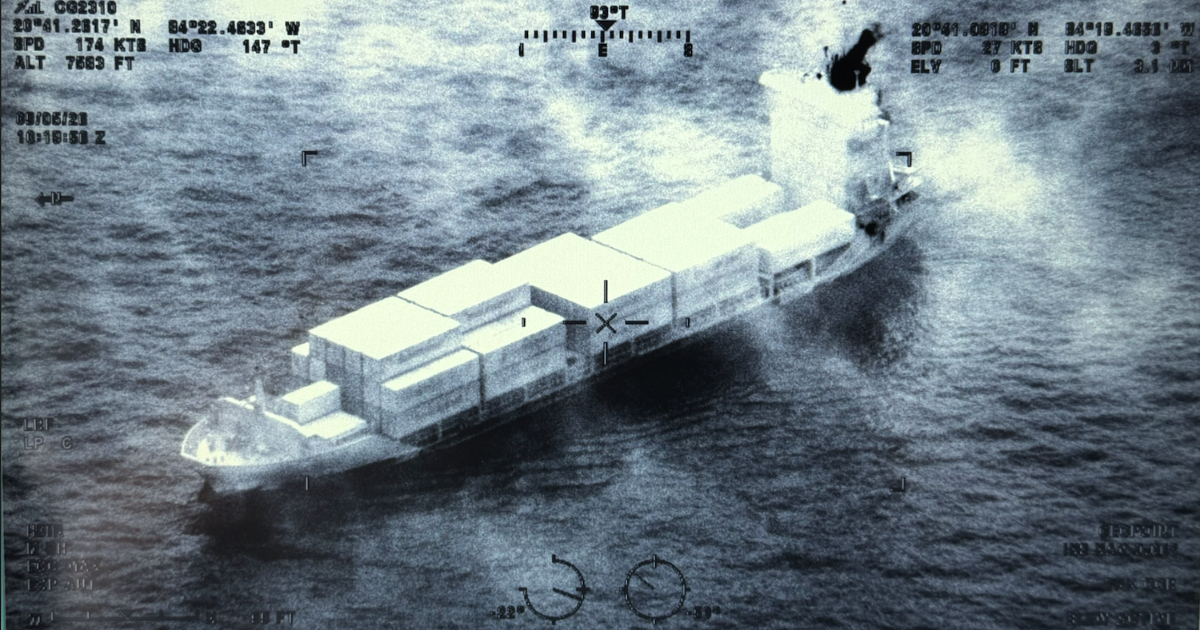
The U.S. Department of Homeland Security announced last Tuesday in Miami the seizure of over 620,000 gallons of biodiesel —valued at nearly three million dollars— distributed across 71 tanks in Port Everglades (Florida) and 19 shipments at the port of Houston (Texas).
The business documents indicated ENETEC S.A. as the recipient, a Cuban state-owned wholesale fuel company sanctioned by OFAC in July 2026.
The minister's refusal
De la O Levy assured that he is completely unaware of the intercepted shipments, and he denied that there is any commercial agreement with the company pointed out by Washington.
"We can assure you that there was no contract of any kind with ENETEC S.A.," declared the minister.
"No Cuban state-owned company has managed to secure a fuel contract, whether for small or large quantities.", he added.
Days earlier, the Deputy Minister of Foreign Affairs, Carlos Fernández de Cossío, described the U.S. policy of intercepting ships in international waters as illegal, likening it to acts of piracy.
"It is illegal to harass and intercept vessels transporting fuels to Cuba in international waters, just as piracy and looting are illegal," said Fernández de Cossío.
Cuba and the UN have characterized the energy restrictions imposed by Washington as unilateral coercive measures that are contrary to international law.
An energy crisis at its breaking point
Beyond the denials, De la O Levy acknowledged the seriousness of the island's energy situation, worsened since the capture of Nicolás Maduro in January 2026, which led to the suspension of Venezuelan oil shipments.
Although Washington has allowed private exporters to send gasoline and diesel to the Cuban private sector since the beginning of this year, the minister emphasized that these volumes are insufficient.
“I would dare to say that the amount coming into the country doesn't even cover 3% of its fuel needs,” he stated.
The reality that residents are experiencing confirms it: the island has suffered at least eight total collapses of the electrical system so far in 2026, with power outages lasting between 20 and 24 hours daily in multiple locations.
Cuba produces about 40,000 barrels of crude oil daily, but it needs between 90,000 and 110,000 to meet its demand.
The mining front: nickel, cobalt, and the dispute over Sherritt
De la O Levy also addressed the situation regarding nickel and cobalt mining.
Sherritt International Corp., a Canadian company with over 30 years of joint venture experience with the Cuban government in the Moa mine in Holguín, suspended operations this year and announced its withdrawal, leaving an outstanding debt of approximately 277 million dollars to the Cuban state.
In May, Sherritt signed a non-binding agreement with Gillon Capital LLC, a Dallas firm whose vice president is Ray Washburne, a former official from the first Trump administration.
The minister clarified that this operation does not involve a direct acquisition of the joint venture with the Cuban State.
“We have always made it clear that what the American company would be purchasing would be shares of Sherritt, not of the joint venture”, he specified.
"The Canadian company is publicly traded, and any investor has the right to purchase its shares," he added.
He warned, however, that any restart of production requires resolving specific obstacles. “If the intention is to resume nickel production, all of those issues would need to be addressed,” he stated.
Renewable energies as a response to the crisis
In light of the fuel blockade, De la O Levy presented the transition to renewable energies as the regime's primary strategy.
According to their figures, 144 solar parks have been installed with a combined capacity of 1,418 megawatts, and the country now has over one million electric motorcycles and tricycles.
40% of Cuba's electricity still comes from national oil, almost entirely allocated to thermoelectric power plants.
The official himself admitted, however, that the pace of progress does not meet the actual needs of the population. "We are making progress with our solutions little by little, although not as quickly as we would like," he concluded.
Related videos:
Filed under: