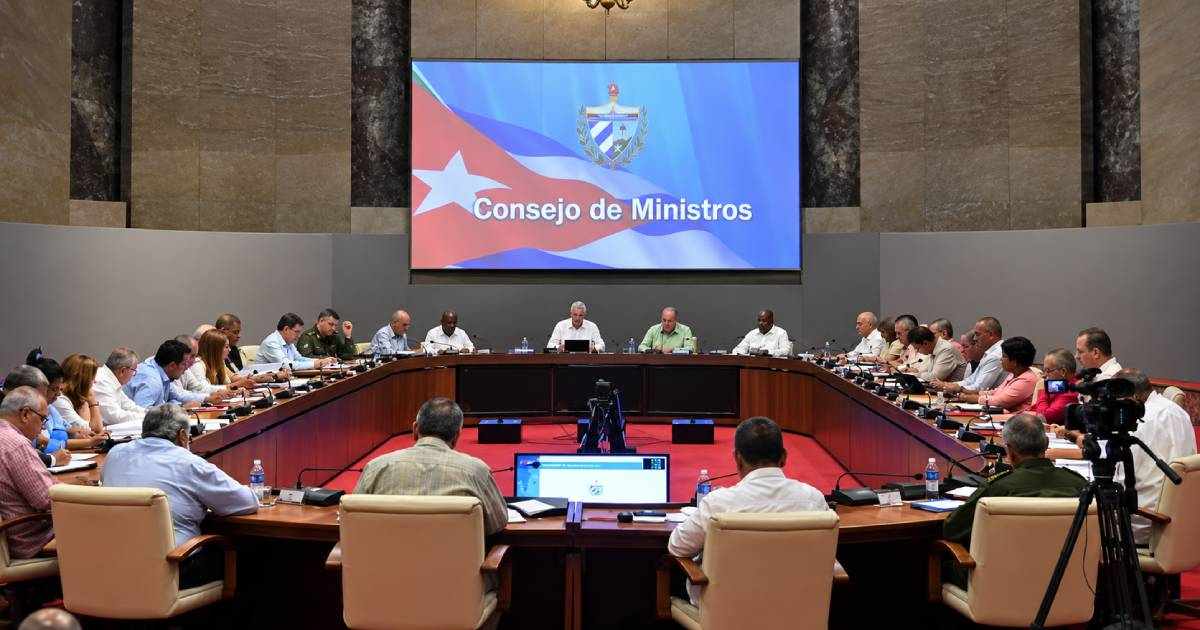
The Cuban government published a decree on Wednesday aimed at updating the regulations regarding access, production, and management of housing in the country, with particular attention to young people and those in vulnerable situations, amidst a prolonged housing crisis.
The , published by the Council of Ministers develops the specific mechanisms to implement Law 187 approved by the National Assembly on July 30, 2026.
The decree, signed by Prime Minister Manuel Marrero Cruz on September 4, 2026, was published in the , on pages 46 to 117.
Law 187 itself had assigned the Council of Ministers the task of issuing this regulation to complement its provisions regarding habitat, production, and access to housing.
The text of the decree justifies the regulation by stating that "it is necessary to update the legal framework in accordance with the new reality," with particular emphasis on "the protection of vulnerable individuals and young people through public policies."
Decree 176 regulates 16 specific subjects, including:
- The National Housing Development Program and the price of the homes that the State builds and allocates.
- The microbrigade as a form of management.
- The granting of state-owned vacant lots under the concept of perpetual surface rights.
- Self-initiated architectural interventions.
- The transfer of state-owned housing and properties to individuals and legal entities.
- The rights derived from administrative acts of assignment through sale, lease, and usufruct.
- The exchanges and alternative methods of conflict resolution.
- The delegation of functions.
Regarding the management of the housing program, the regulations state that its direction falls under the Ministry of Construction with the participation of the Housing Departments in each province and municipality.
The director of Municipal Housing acts as a direct investor of the Municipal Administration Council and "supervises the proper development of the construction process in each of its phases and is accountable for the results of the investment, including quality and warranty periods," according to Article 4.3 of the decree.
For the reception of completed works, the standard requires that each housing unit guarantees habitability, climate resilience, and energy efficiency, and includes solutions for water supply, sewage, drainage, electricity, green areas, sanitary installations, as well as vehicular and pedestrian access.
The Gaceta No. 86 Ordinary includes a total of six regulations related to the new housing legal framework: Law 187, Decree 176, the , the , and two resolutions from the National Institute of Territorial Planning and Urbanism regarding certifications and cadastral valuation.
This regulatory package comes at a time of serious deterioration of the Cuban housing stock: the deficit exceeds 900,000 homes, nearly 35% of the 4.1 million existing units are in fair or poor condition, and in Havana, approximately 1,000 buildings collapse each year.
Law 187, which is regulated by Decree 176, replaced Law No. 65 "General Housing Law" of 1988, which was in force for nearly four decades, and introduced criteria for climate resilience, recognition of housing cooperatives, and new regulations for horizontal property.
Related videos:
Filed under: