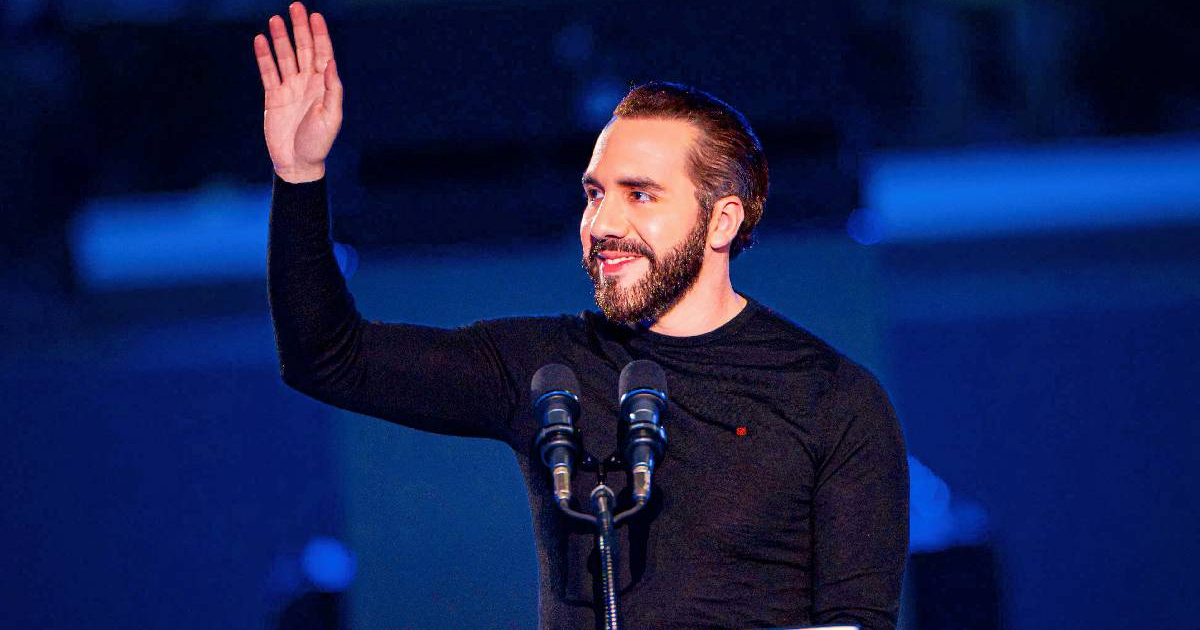
The President of El Salvador, Nayib Bukele, assured this Wednesday that his country is moving toward becoming the safest in the world, supported by a
The president reacted on X to a post that attributed to the Central American country a rate of 0.97 homicides per 100,000 inhabitants up to October, equivalent to 48 deaths. "Although crime rates are already at extremely low levels, we are still reducing them further. We are on our way to becoming the safest country in the world," he stated.
The figure stands in stark contrast to the country's recent past. In 2015, El Salvador recorded more than 6,600 homicides and a rate of 103 per 100,000 inhabitants, one of the highest in the world, driven by the MS-13 and Barrio 18 gangs. When Bukele came to power in mid-2019, the rate hovered around 50 crimes per 100,000 inhabitants.
The downward trend accelerated following the declaration of a state of emergency in March 2022, which suspended constitutional guarantees and resulted in over 92,000 arrests. The rate dropped from 7.8 that year to 2.4 in 2023, then to 1.9 in 2024, and to 1.3 in 2025, the lowest recorded in the Americas.
The chancellor Alexandra Hill stated before the UN General Assembly at the end of September that the country decreased from 103 to 1.3 homicides per 100,000 inhabitants, although observers pointed out inconsistencies in the timeframe used in that presentation.
Bukele's statement comes at a significant turning point in his security policy. This Wednesday, the president announced that a government commission is assessing the potential conditional release of up to 46,000 prisoners from the state of emergency, following a conversation with U.S. Secretary of State, Marco Rubio. The announcement contrasts with four years of official rhetoric in which the president maintained that the detainees "will never be released again."
Human rights organizations have documented over 500 deaths in state custody since the beginning of the state of emergency, with 90% of the deceased not having been convicted at the time of their death. Last March, a group of UN experts concluded that there are reasonable grounds to believe that crimes against humanity are being committed in the country, including torture and enforced disappearances.
The claim of being "the safest in the world" is a political statement, not an internationally certified result: safety also encompasses thefts, disappearances, police violence, and respect for human rights, dimensions that critics of the model point out as still needing attention.
Bukele, who secured the presidential nomination from his party Nuevas Ideas last July, will seek a third consecutive term in the elections on February 28, 2027, enabled by a constitutional reform approved in 2025 that allows for indefinite reelection.
Related videos:
Filed under: