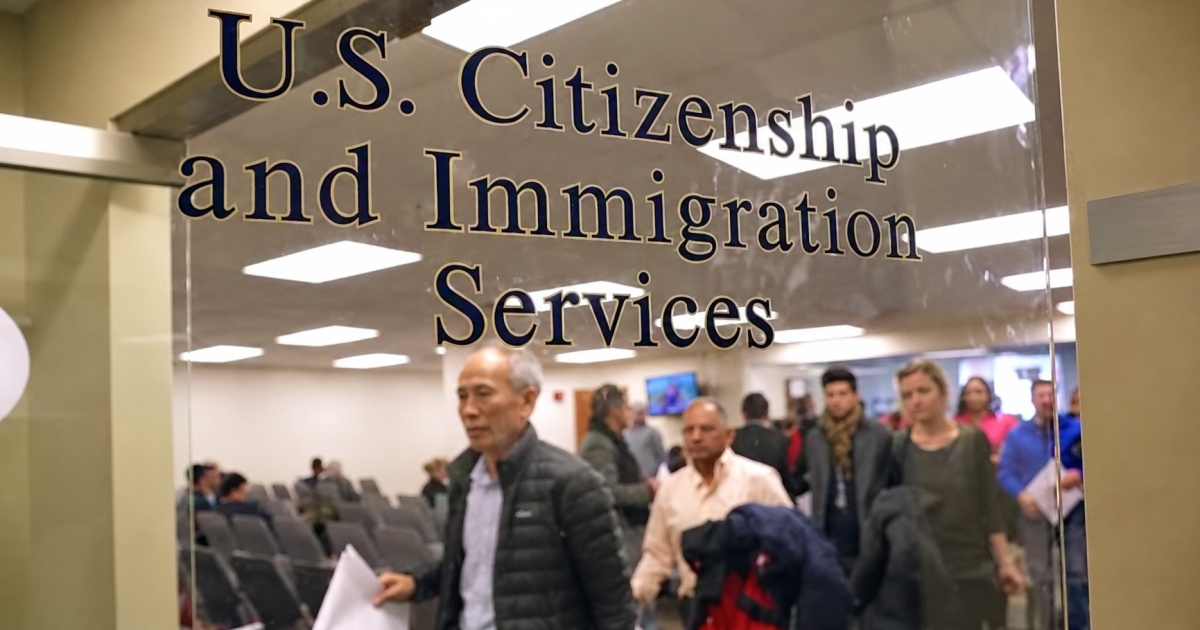
The Department of Homeland Security (DHS) of the United States implemented a rule this week that reduces the time formal refugees have to challenge the cancellation of their immigration status from 30 to 10 days.
The measure, published in the Federal Register, took effect immediately and without a waiting period.
The regulation modifies the response procedure to the Notice of Intent to Terminate (NOIT) refugee status, which is issued by the U.S. Citizenship and Immigration Services (USCIS) when it determines that a person did not meet the requirements at the time of their admission.
If the notification arrives by postal mail, an additional three days are added, for a total of 13 days from the date of dispatch.
The deadline runs continuously, including weekends and federal holidays.
Who does it affect exactly?
The rule applies exclusively to those who entered as primary refugees through the U.S. Refugee Admissions Program (USRAP) and have not yet adjusted their status to permanent residency.
The Trump administration is reviewing at least 185,000 of these cases, pertaining to individuals admitted between the fiscal years 2015 and 2025.
The regulation does not address humanitarian parole, asylum, Form I-220A, permanent residency, or citizenship.
The impact for Cubans is limited
For the vast majority of Cubans in Florida, the measure has limited direct impact.
The Cuban community primarily arrived through humanitarian parole —including the CHNV program—, asylum, the I-220A form, as “Cuban entrants,” or through the , and not as formal refugees from USRAP.
The numbers confirm it: in fiscal year 2024, only 258 Cubans were formally resettled under that program nationwide, compared to a total of 100,060 refugees admitted that year across the country.
Venezuelans, the most exposed
Those caught in the eye of the storm are the Venezuelans. Venezuela was one of the main countries of origin for resettled refugees during the Biden administration, and Florida is home to large Venezuelan communities in the southern part of the state, with many applications for permanent residency still pending.
A review of over 14,500 records of individuals from Ecuador, El Salvador, Guatemala, Honduras, and Venezuela admitted between 2021 and 2024 identified more than 1,500 with indicators of possible public safety risks, including alleged gang affiliations, according to the preamble of the rule itself.
The consequences of not responding in time
Anyone who does not respond within the deadline may lose their status without the possibility of administrative appeal.
Cancellation also results in the simultaneous loss of employment authorization, and USCIS may initiate deportation proceedings.
The effect extends to the spouse and children under 21 years of age included as dependents in the file.
Advocacy organizations reject the measure
Krish O'Mara Vignarajah, president of Global Refuge, noted that "these families did everything that was asked of them."
They underwent interviews, background checks, and years of waiting abroad, and only set foot on U.S. soil once their applications were approved by government officials.
Vignarajah added that the DHS "wants to review those decisions within 10 days, a notification period that is completely insufficient to find a lawyer, translate documents, or obtain records from a country they were forced to flee."
Naomi Steinberg, Vice President of Refugees, Immigration Policy, and Advocacy for HIAS, was more direct: "The publication of this new policy marks a new low, in a series of lows, in the ongoing effort of this administration to turn permanent protection for refugees in this country into something of the past."
Context: a policy of maximum pressure
This rule is part of the immigration policy of the Trump administration, which effectively suspended the USRAP since January 20, 2025. For the fiscal year 2026, the admission limit was set at 7,500, a 94% decrease from the previous year.
The DHS has opened a public comment period on the new rule, with a deadline of November 13, 2026, through the docket USCIS-2026-0397 at Regulations.gov.
Los cambios en las reglas migratorias pueden afectar a miles de cubanos en EE.UU. Sigue todos los detalles en nuestra sección de
Related videos:
Filed under: