A documentary published on YouTube presents, with unusual bluntness, the accounts of three Cubans who left the island through different routes: by sea, via air through Nicaragua, and Mexico.
Episode 3 of the first season of Deciphering Realities, a project by communicator Nayib Yara, lasts nearly 45 minutes and features Yaser, Dayana, and Lissette, three individuals whose stories depict the contemporary Cuban exodus from within.
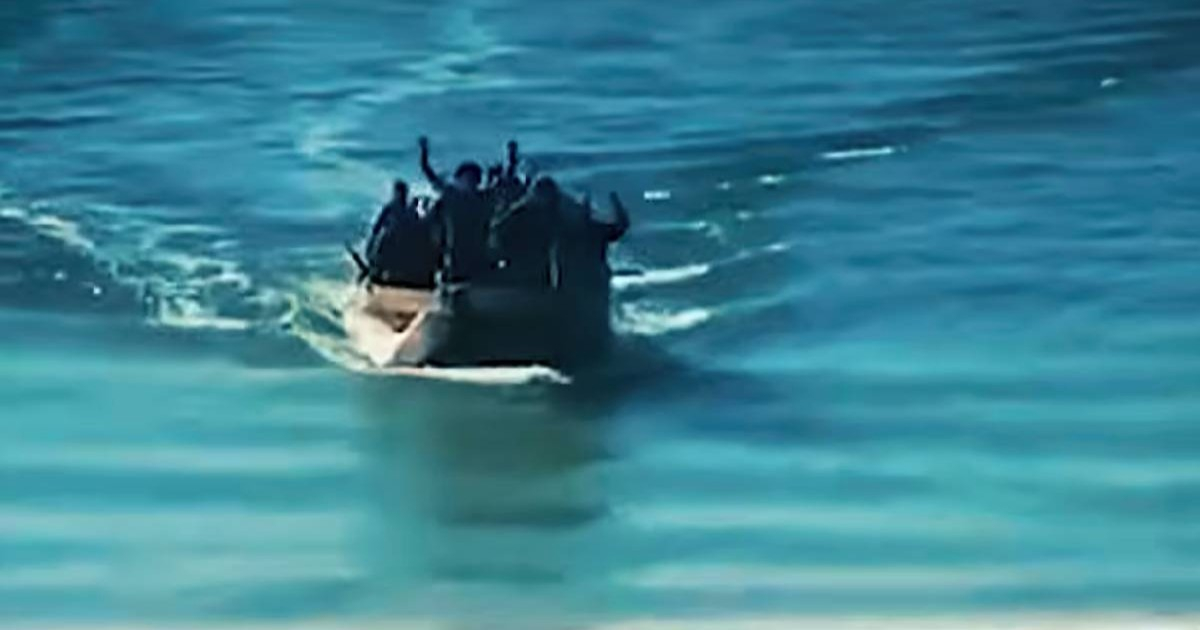
Yaser made the decision in two weeks. Together with a group of 32 people, he secretly built a handmade metal raft over the course of two weeks on a clandestine farm about 200 meters from the water. The cost was 300 dollars per person.
"In a moment, the frustration became greater than the ability to reason," he explains in the documentary. He was working two or three jobs simultaneously, yet he still couldn't help his family: without electricity, without water, without prospects.
On the night of the departure, planned for December 20, the police nearly thwarted the entire operation. The 32 members of the group hid inside a sand truck to reach the shore undetected.
The raft, powered by a lawnmower engine, entered the water for the first time that night. Halfway through the journey, they discovered that the compass was not working and they sailed in circles for 11 hours. Yaser used the GPS on his phone to navigate.
Three nighttime storms later, with the phone battery at 3%, they spotted the lighthouse of Dry Tortugas in Florida. "When I saw the lighthouse, it felt like... I arrived. I'm alive," he recalls.
Las rutas migratorias desde Cuba hacia Estados Unidos siguen siendo peligrosas y cambiantes. Mantente informado sobre deportaciones, asilo y todo lo relacionado con la
Dayana didn't succeed on her first or second attempt. On her first try on a raft, the Cuban regime's Coast Guard intercepted the vessel.
"They shot at us, they tried to sink the boat, people jumped into the water to try to swim to shore. Terrible, terrible," he recounts.
The detainees were taken to Mariel and interrogated as if they were criminals. When the police went to his house demanding that he sign a paper committing to not trying to leave again, his response was straightforward: "You can leave. I am not going to sign any paper. I will try to leave again as many times as it takes."
His second attempt was via the Nicaragua-Honduras-Guatemala-Mexico route, which was used by more than 400,000 Cubans between 2021 and 2024. The ticket cost 3,400 dollars. He made it to Mexico, but the immigration authorities deceived him: they put him on a bus with the promise of transferring him to another shelter and took him directly to the airport.
"They handcuffed the women in front and the men with their hands behind... and they didn't remove the handcuffs until the plane was no longer in the air flying back to Cuba," she describes.
On the third attempt—this time with a ticket costing $3,600—he crossed Mexico in a rescue boat throughout an entire night and morning along the Pacific coast, with the engine breaking down mid-journey, until he finally reached the border with the United States.
Lissette arrived in Mexico alone, with a Canadian visa that her son—who had been granted political asylum in that country after fleeing by sea—arranged for her from there. She sold all her furniture and belongings before leaving.
He lived for eight months in precarious conditions, suffered a broken arm, and relied financially on his daughter in the United States until he secured an appointment through the CBP One app and crossed legally through Ciudad Juárez.
"In Cuba, we haven't lived; we've survived. I have health, I have medicine. The treatment I receive here is incredible," she says.
The three testimonies point to the same causes: power outages of up to 20 hours a day, shortages of food and medicine, and salaries that are insufficient to cover basic needs.
Cuba has been experiencing nine consecutive years of population decline and its GDP has fallen by more than 23% since 2019, with an additional contraction projected at 7.2% in 2026.
"I ask God for that dictatorship to fall so that my country can breathe and be free," Dayana concludes in the documentary.
Related videos:
Filed under: