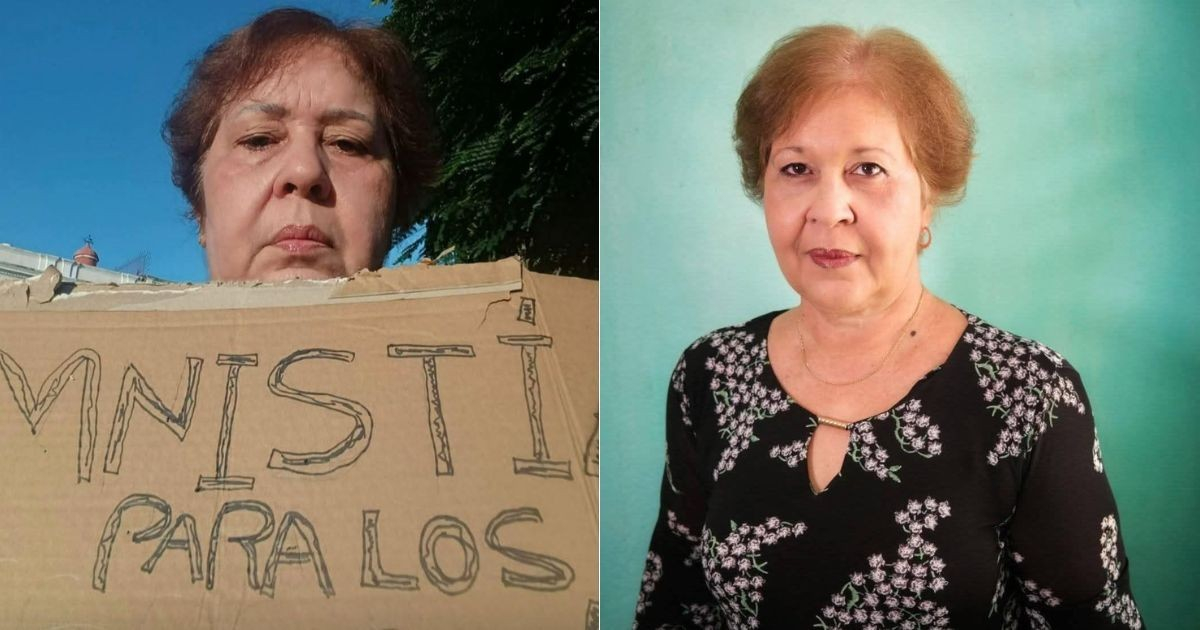
The Cuban philosopher and historian Alina Bárbara López Hernández published an essay titled "Cuba, the data and the narrative" in the magazine Letras Libres last Wednesday, in which she dismantles the idealized view of the Cuban Revolution held by sectors of the international left and coins a phrase to describe the current situation of the island: "civilizational regression."
The text emerged from a revealing experience. A leftist magazine called on seven Cuban authors to develop a dossier on Cuba; once the texts were submitted, the editor suggested that it would be "more practical" to focus solely on highlighting the achievements of the process and to identify "oil as a weapon of the U.S. blockade" as the cause of its ills.
The authors rejected the proposal. The anthropologist and researcher Hilda Landrove, another of those excluded, summarized the situation: the editor was asking them to talk "about a Cuba that doesn’t exist, because that is the one he is interested in."
López Hernández—Doctor of Philosophical Sciences, corresponding member of the Academy of History of Cuba, and co-director of CubaxCuba—argues that the crisis is neither recent nor attributable to the dispute with Washington. Government control over the press, culture, and labor unions occurred before the U.S. embargo and even prior to the reestablishment of the Communist Party in 1965.
The most drastic turnaround, the author argues, occurred in 2008, when Raúl Castro officially took over leadership of the Council of State. Since then, the state has retained its coercive institutions but systematically reduced social spending. According to official figures cited by López Hernández, the budget allocated for social assistance fell from 2.2% to 0.3% between 2006 and 2018.
Economist Carmelo Mesa-Lago attributes part of that cut to the guidelines of the VI Congress of the PCC in 2011, which "ended social assistance for those with a family able to help them." Between 2016 and 2020, investments in health and social assistance collapsed by two-thirds: from 232.6 to 84.5 million pesos.
This accumulated deterioration is reflected in the Human Development Index: Cuba fell 32 positions, from 51st place in 2007 to 83rd in the years 2021-2022. The Cuban demographer Juan Carlos Albizu-Campos states that "such a regression has no global equivalent."
The picture drawn by López Hernández is devastating: “In Cuba, more than a crisis, one could speak of a civilizational regression: for more than six years, more people have died than those born; the current birth rate corresponds to the level it had in 1899; it ranks second in suicide rates in the region, only behind Uruguay; it has the second highest prison population per capita in the world, after El Salvador; a dramatic exodus, which has generated what Albizu Campos refers to as 'demographic emptying' and is comparable to what is seen in areas displaced by wars […]”.
The data supports this description. In 2024, Cuba recorded 71,358 births compared to 128,098 deaths, according to official figures from the National Office of Statistics and Information (ONEI). In 2025, the demographic decline worsened: births fell to 68,064 and deaths rose to 136,214. In terms of repression, Prisoners Defenders documented 1,372 political prisoners as of October 1, a record high. The most common offense in that record was "public disorder," applied in 577 cases.
Regarding the 176 economic measures approved in June 2026, López Hernández is categorical: they are proof that the regime only negotiates in the economic sphere when the crisis escalates, with a "socialist rhetoric and capitalist economy." She also cites a statement from Raúl Guillermo Rodríguez Castro —grandson of Raúl Castro— in an interview with USA Today, where he asserted that if Trump wanted, "he should lead the process," a phrase that no spokesperson for the Cuban government has denied.
The author concludes with a warning that goes beyond historical analysis: “Under no circumstances should citizen rights and liberties be surrendered in exchange for common social rights, because when the moment comes that these social benefits are eliminated, demanding their restoration, even through non-violent means, can provoke the harshest repressive response. To organize and demand social rights from the bottom up, one must start by having political rights.”
Related videos:
Filed under: