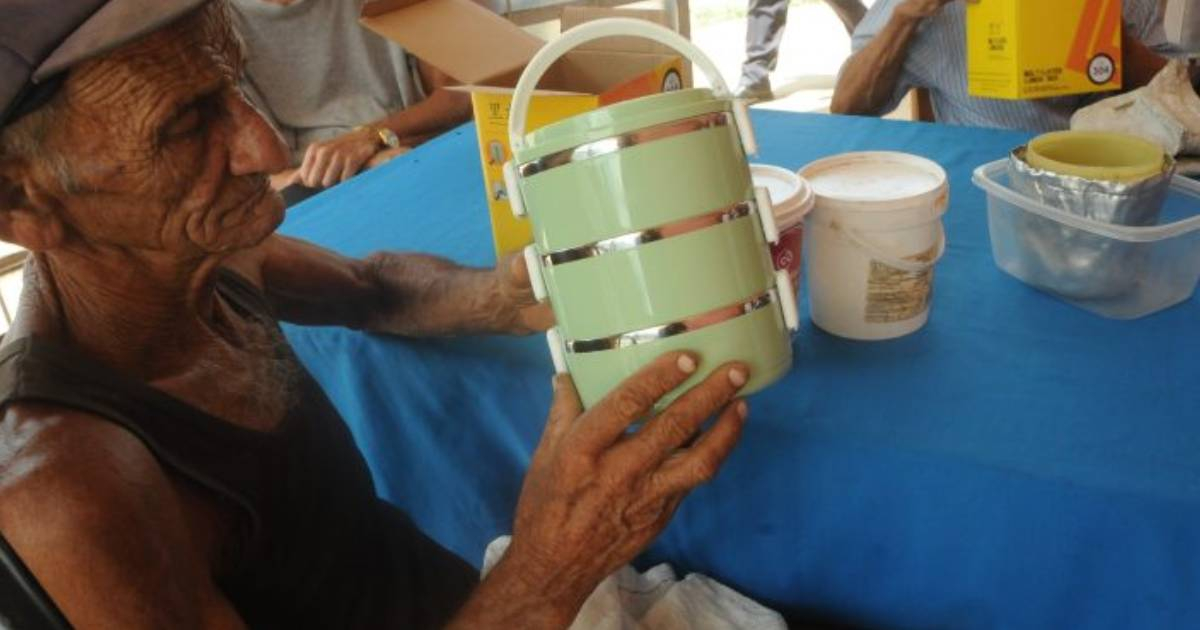
The Cuban regime authorized that small and medium enterprises (mipymes), self-employed workers, state entities with worker cafeterias, and non-profit institutions take over the management of the cafeterias within the Family Care System (SAF), the subsidized food program aimed at individuals in vulnerable situations. The decision, published this Tuesday in the , represents a further acknowledgment of the state's inability to sustain one of its main social assistance programs on its own.
The new provisions—the Agreement 10418 from the Council of Ministers and Resolution 14/2026 from the Ministry of Domestic Trade (MINCIN)—will come into effect seven days after publication, around August 11, and they repeal regulations approved only a year ago, a shift that highlights the speed with which the Government is attempting to adapt a system unable to respond to the deepening economic and food crisis.
The reform officially expands the ways in which the SAF dining service can be provided. While state-run commerce establishments will continue to be the main channel, now companies with worker canteens, non-state management forms, and non-profit institutions or associations will also be able to participate. In rural or hard-to-reach areas, the service may even be offered from community feeding homes or by individuals in their own residences.
The Minister of Domestic Trade, Betsy Díaz Velázquez, introduced the measure as part of the economic transformations promoted by the Government.
"A service provided in a dining unit can be managed by economic actors, both state-owned and non-state, outside of commerce. Therefore, it may happen that a company with certain results and specific income decides to manage that dining unit, serve the beneficiaries of the SAF, and offer a quality service."
According to statements made and shared by Canal Caribe, the opening aims for companies or private entities to manage these establishments without altering the subsidized nature of the program.
"Although management is non-state, those benefited by the system will be defined locally by social policy groups," the official affirmed.
However, the regulations raise fundamental questions about the economic viability of the new model.
An analysis from the independent media El Toque mentions that although it is established that prices will be set by the Ministry of Finance and Prices and that the provincial and municipal Finance departments will take on the financing of the subsidy, it does not specify how much the new managers will receive or what the mechanism will be to compensate for operating costs.
The obligations for those managing these establishments are also significant. Resolution 14/2026 requires ensuring two daily meals with nutritional contributions certified by the National Institute of Hygiene, Epidemiology and Microbiology, providing home delivery for those who cannot travel, and meeting health and infrastructure requirements that include food preservation equipment, availability of water, cooking capacity, functional bathrooms, and accessibility for people with reduced mobility.
The program is primarily aimed at elderly individuals living alone, persons with disabilities without family support, and families in vulnerable situations who lack the means to cook in their homes. Exceptionally, pregnant women who require additional nutrition due to their economic circumstances will also be eligible.
The opening comes as Cuba faces the worst food crisis in decades. The Food Monitor Program reported in May 2026 that 96.91% of the population lacks adequate access to food, 33.9% of households had at least one member who went to bed hungry in the past month, and among those over 60 years old — the primary group served by the SAF — 55.6% reported having completely lost access to food.
In this context, the government itself has repeatedly had to seek international assistance to keep the program's dining halls operational. Just weeks ago, the World Food Program delivered 106 tons of canned meat to supply 130 dining halls of the SAF in Villa Clara, due to the government's inability to ensure the supply with its own resources.
The flexibilization of the SAF is part of the package of 176 economic measures announced by the regime in June 2026, aimed at increasing the participation of the private sector in activities traditionally reserved for the State.
The same Official Gazette also implemented the regulations for the so-called Neighborhood Markets and the new supply markets, two initiatives that create opportunities for wholesale and retail trade with the participation of non-state actors and even modalities for foreign investment. Among the tax incentives, there is a 5% discount on the retail sales tax for those participating in the Neighborhood Market project and a full exemption from the sales tax for non-state actors who wholesale imported goods intended for the domestic trade system.
During the presentation of the measures, Díaz Velázquez reiterated that the Government will maintain the policy of "subsidizing people and not products," a formula that has been repeated for several years and which now accompanies the decision to delegate part of the food assistance to private actors, in a context where the economic decline has significantly reduced the State's ability to support its own social programs.
Related videos:
Filed under: