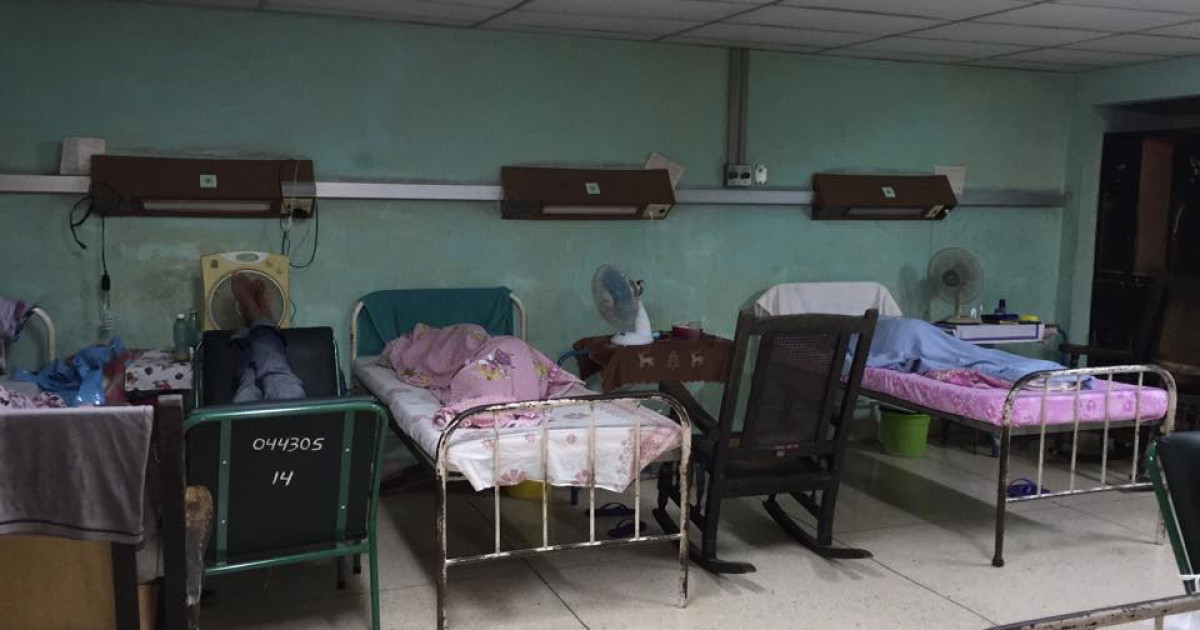
A team from the American television network CBS News toured Havana and gathered testimonies from doctors who are unable to obtain essential medications for their patients, retirees who must wait for hours to collect their pensions, and citizens who have access to electricity for only a few hours each day.
The report by Matt Gutman and Sarah Lynch Baldwin was published this Friday and highlights the deterioration of basic services in Cuba.
In a pediatric hospital, journalists spoke with doctors who acknowledged the difficulties in obtaining critical medications for children. While parents waited in line for care, they had no assurances that treatments would be available.
The situation contrasts with the image of the public healthcare system that the Cuban government has defended for decades as one of the main achievements of the 1959 revolution.
The shortage also forces citizens to seek alternatives outside the state system. The retiree Sara Emilia Márquez showed the CBS team medications she had received through donations, after her monthly prescription began to be dispensed once every three months, when it was available. Other Cubans turn to the black market to obtain basic products that they cannot find in pharmacies.
The health deterioration precedes the most recent sanctions from Washington. In August, the ruler Miguel Díaz-Canel admitted that only 30% of the essential medicine stock was available, about 190 of the 651 included drugs.
In February, the Minister of Public Health, José Ángel Portal Miranda, described the system as "on the verge of collapse" in statements to Associated Press. Furthermore, 98,500 patients remain on the surgical waiting list, among them 12,000 children, according to authorities.
The electricity crisis exacerbates the difficulties faced by hospitals and the population. In Havana, 178 circuits reported service interruptions this Friday, and some neighborhoods experienced power outages lasting between 24 and 37 consecutive hours.
The consequences also extend to medical centers. This week, the hospital in Cárdenas had to transfer intensive care patients to the Faustino Pérez hospital due to an electrical failure.
Power outages are adding to the rising cost of food and the loss of purchasing power. A woman interviewed by a U.S. television station while waiting in line to buy bread in one of the wealthier neighborhoods of Havana stated that the price of the product had increased tenfold so far this year.
With a state salary of less than 20 dollars a month, the woman tries to make each baguette last at least two days. According to the informal exchange rate mentioned in the information, the average monthly income at the national level is about nine dollars a month.
The publication of the report coincided with a new pressure measure from Washington against the Cuban financial system. One day prior, the administration of President Donald Trump sanktioned the International Commercial Bank of Cuba (BICSA) for its connections with the Iranian Karafarin Bank.
The chancellor Bruno Rodríguez described the measure as "collective punishment" and defended the entity as "absolutely legitimate." The Office of Foreign Assets Control (OFAC) set November 14 as the deadline for foreign entities to close their operations with BICSA.
The U.S. Secretary of State, Marco Rubio, has advocated for an economic strategy aimed at preventing the Cuban government from finding ways to circumvent sanctions. According to his statements, the campaign seeks to ensure that the regime does not have any financial "escape valves."
Meanwhile, contacts between Havana and Washington continue without progress towards a formal dialogue. Tanieris Diéguez, the second in command at the Cuban Embassy in the United States, confirmed that "several exchanges have taken place", although she acknowledged that there has been no advancement towards a "serious dialogue," she stated in an interview with the Spanish agency EFE published this Friday.
The Cuban government attributes much of the economic difficulties to U.S. sanctions, but the distribution of state resources also raises questions about its priorities.
According to figures from the National Office of Statistics and Information for the first half of 2024, nearly 40% of state investment was allocated to tourism, while health received just 2.7%. The tourism sector is largely controlled by the Business Administration Group S.A. (Gaesa), the conglomerate of the Cuban military elite.
The report by CBS News highlights the everyday consequences of a crisis affecting healthcare, electricity, and access to basic goods.
The testimonies collected in Havana show citizens who rely on donations, endure prolonged blackouts, and witness their incomes losing purchasing power to meet essential needs.
Related videos:
Filed under: