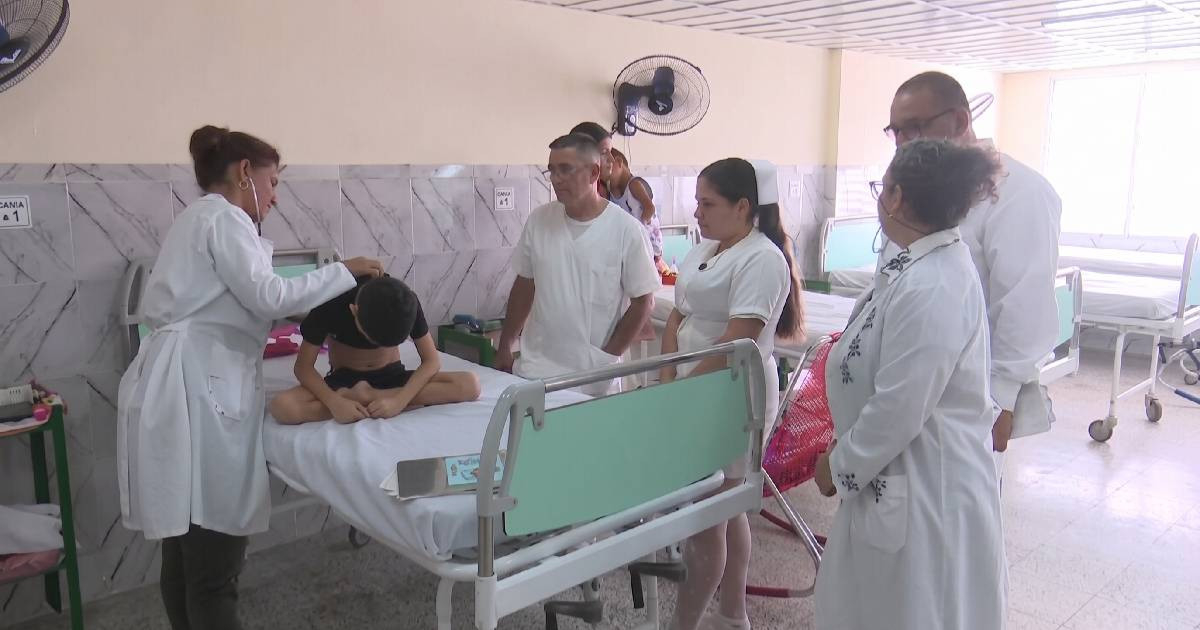
The director of the Institute of Hematology and Immunology (IHI), Dr. José Manuel Ballester Santovenia, along with Dr. Wilfredo Roque García, issued a public alert directed at hematological and immunological patients in light of the worsening epidemiological situation in Cuba, characterized by the simultaneous circulation of dengue, chikungunya, acute respiratory infections, diarrheal diseases, and hepatitis.
The specialist issued the warning in a television appearance in Cuba on Wednesday, October 15, which was later shared by IHI on its social media platforms.
Roque García described the situation as "complex" and emphasized that "any precaution is necessary to avoid contracting any of the diseases that have increased in circulation," while urging everyone to remain calm and take preventive measures seriously.
The doctor outlined the specific risks for each group of vulnerable patients.
In the case of immunocompromised patients, it was warned that "their condition puts them at a disadvantage when facing infectious processes," which makes them especially susceptible to any of the diseases in circulation.
For hematological patients, the most immediate danger comes from dengue: changes in the quantity and quality of platelets can worsen the effects of the disease "potentially leading to severe hemorrhages," as the specialist explained.
The group at the highest risk within this universe is the sickle cell patients, that is, those who suffer from sickle cell disease.
A respiratory infection can trigger acute chest syndrome, a serious and potentially life-threatening complication. Moreover, in the case of acute diarrheal disease, they are at a higher risk of rapidly becoming dehydrated and developing other complications.
The director of the IHI emphasized that "these complications can be avoided" and recommended consulting a doctor or specialist without delay at any sign of alarm.
Among the preventive measures highlighted are to intensify personal and food hygiene, maintain proper hydration, avoid closed spaces with a high concentration of people, and wear a mask.
Roque García also made a collective appeal: "The participation of everyone in environmental sanitation and adherence to hygiene and sanitary measures is essential to prevent the proliferation of vectors and the conditions that deteriorate the epidemiological landscape."
The alert comes at a critical time. Cuba has reported approximately 11,235 estimated cases of dengue in 2026, a figure equivalent to 9.2 times the country's historical five-year average, according to the Global Dengue Observatory of the London School of Hygiene and Tropical Medicine. All four serotypes of the virus are circulating, with serotype 2 being the predominant one.
This is compounded by the presence of chikungunya in multiple provinces and, according to recent reports, a sustained increase in febrile cases in five municipalities of Matanzas: Cárdenas, Pedro Betancourt, Los Arabos, Ciénaga de Zapata, and the provincial capital.
The situation could worsen: October is historically the month with the highest transmission of dengue in Cuba, indicating that the epidemic peak of 2026 may not have been reached by the time of the alert.
Related videos:
Filed under: