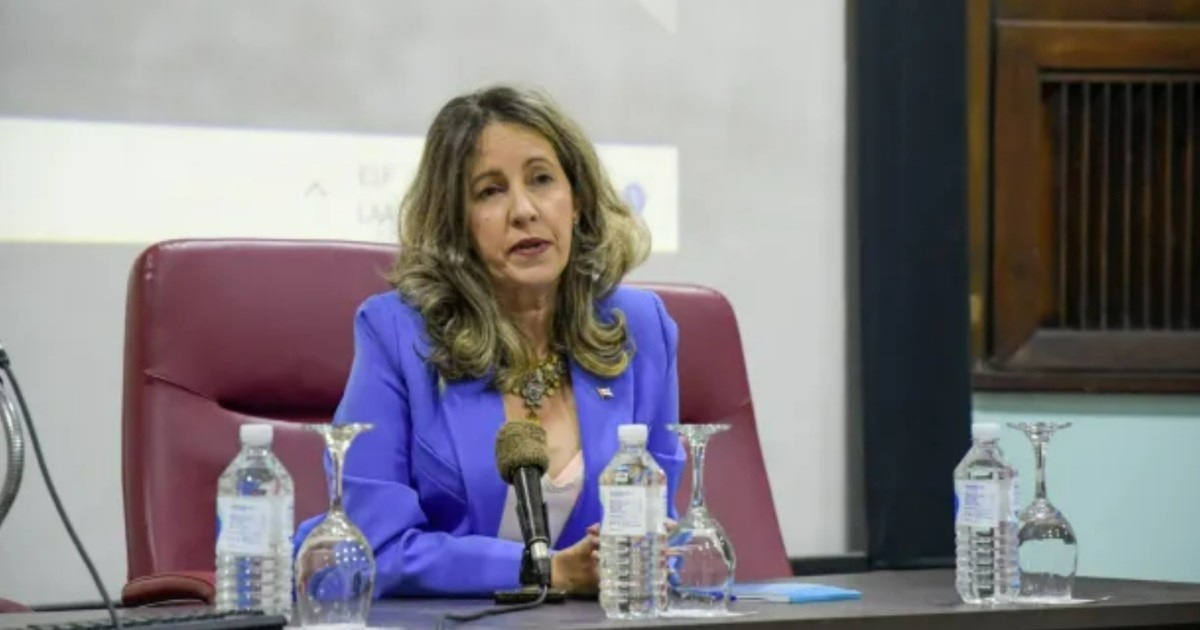
The Minister of Education of Cuba, Naima Trujillo, publicly admitted that private companies and small and medium-sized enterprises (SMEs) have had to fill the gaps left by the State in the 2026-2027 school year, which began on September 1 with nearly 1.5 million students amidst an unprecedented energy and economic crisis.
"In the current conditions we are in, we have seen significant responses with the participation of the non-state sector," Trujillo told EFE, referring to donations of food, footwear, and clothing as the most visible contributions of private businesses to the education system.
The head of the Ministry of Education (MINED) described the start of the school year as "difficult," acknowledging that issues with cooking, logistics, and transportation have marked the first weeks of classes.
Regarding transportation —one of the sectors hardest hit by the fuel shortage—, Trujillo noted that private companies have introduced routes for students and teachers who, "due to distance and family circumstances, cannot afford the costs" of travel.
M SMEs have also intervened in the homes of children without parental care, providing energy alternatives in response to the blackouts lasting over 20 hours a day that affect large areas of the country, in addition to helping to restore deteriorated school infrastructures.
This recognition contrasts with the official discourse from August, when the Communist Party referred to the start of the school year as a “heroic act” and the minister herself promised that September 1 would be “a great celebration.”
The documented reality was different: the course began with only 73% of teaching positions filled, a deficit equivalent to about 24,000 teachers, and power outages that affected up to 70% of the national territory on the first day.
In mid-October, teacher coverage rose to 86% thanks to the reintegration of retired educators, university trainees, and professionals from other sectors, although a deficit of 14% in positions persisted.
The minister herself acknowledged that salaries are part of the structural problem: "Indeed, income is an important issue because sometimes it is true that we have mobility because salaries do not meet the needs of our professionals."
The average salary in the education sector is around 5,824 Cuban pesos per month, equivalent to about seven dollars at the informal exchange rate, which pushes teachers toward the private sector or emigration.
Another development this academic year is the legalization of private teachers through the Resolution 30/2026 from MINED, published on September 2 and effective from the 9th of that month, which repealed the prohibition that had been in place since 2022 preventing active teachers from offering tutoring classes through the non-state sector.
11,000 students still do not attend school regularly, receiving virtual classes or attending sporadically, although this number represents an improvement compared to the 33,000 who were in that situation at the end of the previous school year.
In May 2026, UNESCO warned that Cuban education is "at risk," with more than 2,000 schools needing urgent support and over 400,000 students on shortened schedules. This situation is confirmed by the public acknowledgment of the minister: the Cuban state can no longer manage the educational crisis alone.
Related videos:
Filed under: