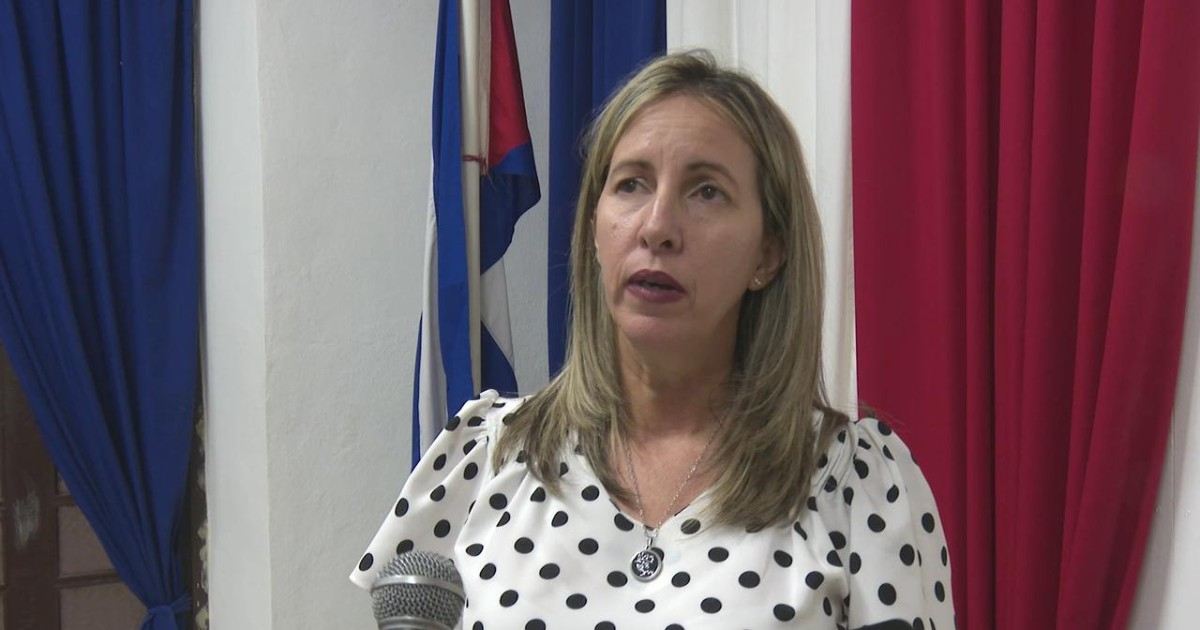
A month and a half after the Minister of Education Naima Trujillo promised that the start of the school year would be "a great celebration in Cuba", the official herself acknowledged that about 11,000 students are attending classes virtually or sporadically attending schools, and that half of the prioritized group of students still lack uniforms.
The statements, collected by the agency EFE, confirm the deterioration of an educational system that the regime insists on presenting as a priority while demanding full in-person attendance despite power outages, fuel shortages, and a teacher deficit that still affects 14% of positions.
The figure of 11,000 students without regular attendance represents a reduction from the 33,000 who were unable to maintain regular attendance at the end of the previous school year, but it does not eliminate the problem: thousands of children and adolescents rely on alternative modalities in a country where power outages and shortages affect everything from transportation to food preparation in the schools themselves.
In terms of teacher coverage, the Ministry of Education started on September 1 with only 73% of positions filled and managed to increase that figure to 86% by relying on retired teachers who returned, university students in training, and professionals from other sectors.
A salary compensation for teachers taking on additional groups was also approved, something the minister acknowledges as an undesirable measure. "We would prefer to have the appropriate number of teachers in each classroom," she said.
The provinces facing the most difficulties are Havana, Matanzas, Sancti Spíritus, and Camagüey. The latter started the school year with nearly 3,000 teachers missing to cater to more than 95,000 students in 690 schools.
The driving force behind the teacher exodus is salaries. The education sector reports salaries of 5,824 Cuban pesos per month, which are equivalent to just about seven dollars in the informal market. Trujillo acknowledged this openly: "Certainly, income is an important issue because sometimes it is true that we have mobility because the salaries do not meet the needs of our professionals."
The energy crisis is hitting schools directly. The shortage of liquefied gas has forced some institutions to cook with firewood or coal, and the lack of fuel is affecting the transport of students and staff. "It has been a difficult start that impacts cooking capabilities, supply assurance, logistics, and transportation," noted the leader.
Regarding the uniforms, the course started with only 12% coverage for the priority group due to operational issues in the textile industry. By mid-October, that proportion had increased to only 49%.
In light of this reality, the authorities eased the requirement to wear the official uniform and are allowing students to attend school in other clothing. "When it's not in uniform, school is still a place to learn," stated the minister.
Trujillo attributed part of the difficulties to U.S. sanctions, though the structural problems of the Cuban economy — inflation, shortages, and the loss of purchasing power — are primarily a result of decades of centralized management and the regime's internal policies, rather than the embargo.
The contrast with the official discourse from August is striking: the same minister promised then that September 1 would be "a great celebration," while the Communist Party described the start of the school year as "an act of heroism" and Díaz-Canel denied the collapse of the system.
The UNESCO warned in May that Cuban education is "at risk" due to the energy crisis, with more than 2,000 schools needing urgent support and over 400,000 students facing reduced hours.
Related videos:
Filed under: