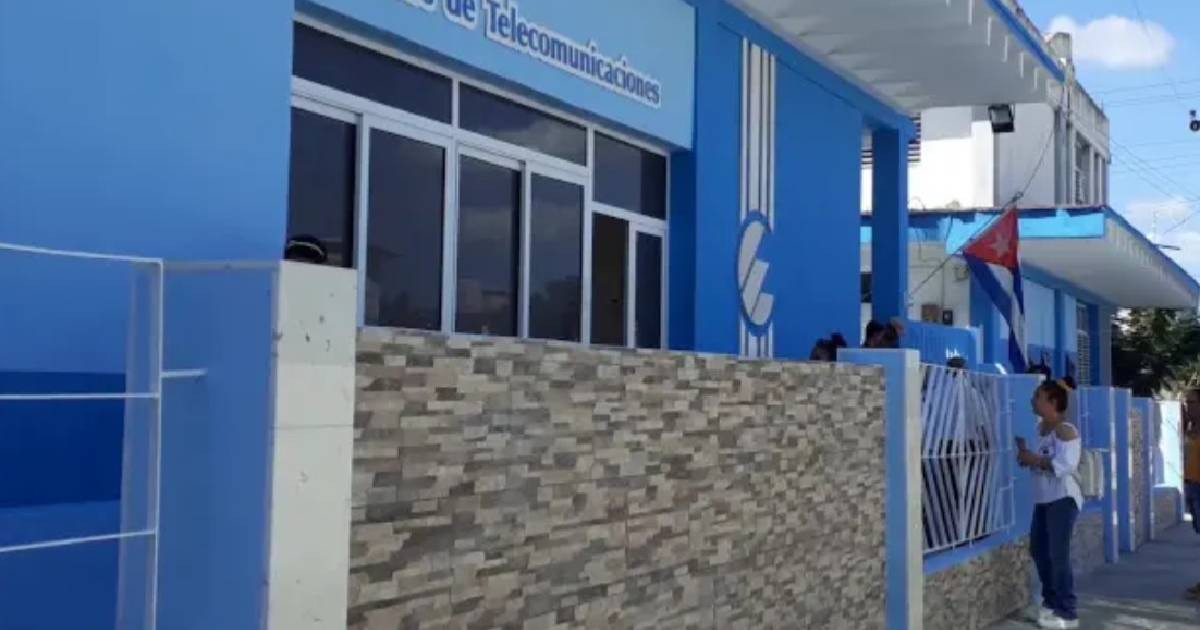
Internet connectivity has deteriorated again in the municipality of Contramaestre, in Santiago de Cuba, after several days of improvement. Residents are reporting that neither the state’s sole telecommunications company, Empresa de Telecomunicaciones de Cuba S.A. (Etecsa), nor local institutions are providing any explanation for what is happening.
Arnoldo Fernández, a resident of the municipality, raised concerns this Saturday about the return of instability in a Facebook post that quickly gathered comments from fellow frustrated neighbors.
"The most concerning issue is not only the interruption or deterioration of the service, but also the lack of information from Etecsa regarding the potential causes of the problems that have affected connectivity in recent days," Fernández wrote.
Upon reviewing the municipal institutional pages on social media, from the radio station to the Communication Department, the author found only triumphalist messages and promotions of activities, with not a single useful guidance for the population.
"What is the point of maintaining an active presence on social media if, when the population needs answers about a problem that directly affects their daily lives, those same platforms do not provide useful information?" he questioned.
The citizens who responded to the post extended their criticism beyond connectivity.
A resident compared Etecsa's silence to that surrounding the drinking water crisis in the municipality: "Why doesn't the head of the water supply say what is really happening? There are a thousand rumors, and in the end, we don't know which one is true, and we are dying of thirst."
Another comment pointed out that the Communications Department of Contramaestre "has fallen short regarding its social purpose, which is precisely to inform the public," and called for urgent measures to reverse the situation.
The outrage also pointed directly at the state monopoly. "Etecsa would not exist in another country due to its poor service and lack of respect for customers, as it has the most expensive internet in the world in relation to salaries," wrote a user.
Another resident was more emphatic: "In any other place on the planet, customers affected by poor phone service would be compensated with money or credits. Here, the law of absence and lies prevails."
Some pointed to positive references such as the pages of Radio Jiguaní and Palmeros Adelante, which "at least show an intention to inform the people and address the most pressing issues" of their communities.
Fernández summarized the double frustration of the contramaestreneses with a phrase that encapsulates what many Cubans feel about the silence of the state monopoly: "When the connection fails, public information shouldn't be disconnected as well."
Contramaestre is among the territories with the highest incidents in the fixed network of Santiago de Cuba, along with San Luis, Palma Soriano, and Songo-La Maya.
The territorial director of Etecsa in the province acknowledged in September that between 140 and 150 of the company's sites are out of service daily due to a lack of electricity or fuel for the generators.
Nationwide, blackouts render approximately 47.5% of mobile radio bases and 56.5% of telecommunications cabinets inoperable, as the infrastructure cannot withstand more than 24 hours without electric supply, the company itself admitted.
In its clearest statement of the year, published at the end of September, Etecsa declared that "it is not viable to continue investing to expand the access network if there is no capacity to support the infrastructure with energy," thereby shifting the responsibility to the electricity crisis without offering concrete solutions or timelines for improvement for the affected users.
Related videos:
Filed under: