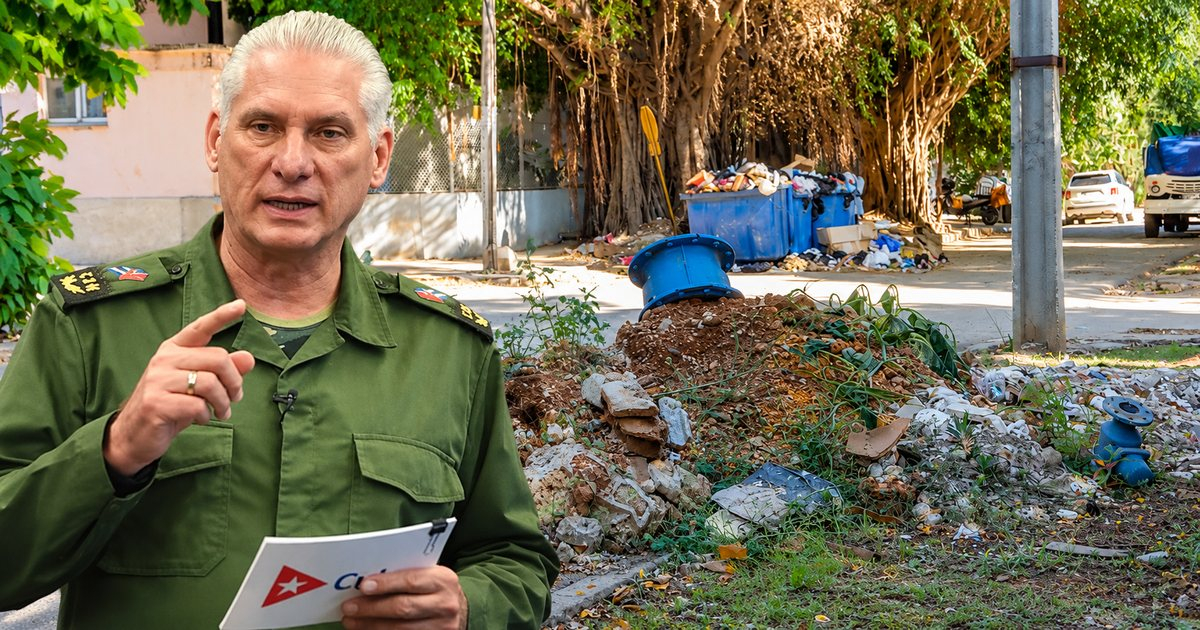
The representative of the Cuban regime at the United Nations, Ernesto Soberón Guzmán, like his masters in Havana, is very upset. On October 16, he denounced the celebration of an event organized by the U.S. Mission to the UN, scheduled for today, October 19, titled "Cuba Libre: the oppression that Havana hides." Soberón described it as a political maneuver against his government.
What truly bothers the dictatorship is that political prisoners, human rights defenders, and specialists can internationally denounce their crimes, the horrors of their penitentiary system, corruption, human trafficking and the exploitation of healthcare professionals through so-called medical missions.
The Castro-communist regime is the longest-serving dictatorship in the Western Hemisphere and one of the most repressive in our history. For almost 68 years, it has denied the Cuban people basic freedoms, persecuted opponents, imprisoned the innocent, and destroyed the nation. Freedom House, in its 2026 report, gives Cuba only 9 points out of a possible 100: zero out of 40 in political rights and nine out of 60 in civil liberties. It is the lowest rating on the American continent.
But this dictatorship is not only an enemy of Cubans. It has been one of the main driving forces behind authoritarianism and projects that oppose liberal democracy and market economies in Latin America.
For decades, Havana contributed to the political, military, and intelligence strengthening of Venezuelan chavismo. It also supported Daniel Ortega in Nicaragua and cultivated close political ties with Evo Morales in Bolivia, Rafael Correa in Ecuador, and other far-left populists on the continent. It is impossible to ignore the influence of the Castro political machinery over its allies in Latin America and beyond.
The depth of its intervention in Venezuela was dramatically exposed on January 3, 2026, during the U.S. operation that resulted in the capture of Nicolás Maduro. Two days later, the Cuban government itself acknowledged the death of 32 members of its Armed Forces and intelligence agencies in that operation. Thirty-two members of the Cuban military and repressive apparatus on Venezuelan territory! What better demonstration of Havana's involvement in the survival of that dictatorship?
The West has imposed sanctions on numerous governments and individuals responsible for serious international violations: Venezuela, Nicaragua, Iran, Russia, Belarus, Myanmar, and North Korea, among others. Iraq was also subjected to severe international sanctions. The United States, the European Union, Canada, and the United Kingdom have resorted to financial restrictions, asset freezes, travel bans, and arms embargoes to pressure governments responsible for repression, aggression, or international threats.
Why sanction the disciples and not the master? Why punish the repressors of Managua and Caracas while important democracies maintain privileged economic relations with those who taught, advised, and supported those power apparatuses?
History provides an extraordinary precedent: South Africa. In 1977, through Resolution 418, the United Nations Security Council imposed a mandatory arms embargo on the apartheid regime. Subsequently, international economic and diplomatic pressure helped hasten the end of that abhorrent system.
Apartheid discriminated institutionally on racial grounds. Castroism discriminates and excludes mainly for political and ideological reasons. Those who dissent suffer marginalization, harassment, persecution, and may lose their jobs, freedom, and even their homeland and lives. There is also no true religious freedom. The United States Commission on International Religious Freedom reported in May 2026 surveillance, fines, harassment, and forced exile against religious leaders and believers. Although religious persecution may not always resemble that of the sixties, seventies, or eighties, it remains a documented reality.
Havana maintains close ties with Russia, China, Iran, and North Korea. In July 2013, Panama intercepted the North Korean ship Chong Chon Gang, coming from Cuba, carrying concealed weapons hidden under approximately ten thousand tons of sugar: combat aircraft, missile components, and ammunition. That operation violated United Nations sanctions against Pyongyang.
The Cuban regime also diplomatically supports Putin in his war against Ukraine. A considerable number of Cuban citizens have been recruited to fight in the Russian army. Its relations with Iran and political support for Hamas also deserve thorough international scrutiny.
The gravity of the Castro regime's history also extends to the United States. On May 20, 2026, the Department of Justice announced a federal indictment against Raúl Castro and five others involved in the shooting down of the planes belonging to Brothers to the Rescue, which took place on February 24, 1996. Raúl faces seven charges: conspiracy, four counts of murder, and destruction of two aircraft. Criminal responsibility will need to be established in court.
This is compounded by the historical U.S. accusations of connections between Cuban officials and drug trafficking. On July 20, 2026, the State Department itself published the report Cuba: the capital of 21st-century communism, in which it attributes decades of espionage, subversion, and support for extremist movements in the United States to Havana. These are official accusations that warrant examination and accountability.
Meanwhile, the regime aims to blame the United States for the Cuban tragedy. However, the figures contradict the claim that Cuba cannot trade with its neighbor. U.S. regulations include exceptions for food and medicine. According to the Census Bureau of the Department of Commerce, the United States exported goods worth $809.6 million to Cuba in 2025 and $876.5 million between January and August of 2026. A significant portion of this consists of food and agricultural products. The U.S. leads in food sales to the Island.
These exchanges are supplemented by remittances, medications, clothing, equipment, and food sent by the Cuban exile community based in the United States. There are also commercial authorizations under specific conditions for activities in the "private" sector. How much independence can "private businesses" have in a country where the State retains broad discretionary powers over licenses, property, and economic activity? No open supporter of liberal democracy can run a business in Cuba.
The misery of the people stands in shocking contrast to the privileges of the ruling elite. While millions of Cubans endure endless blackouts, hunger, shortages of medicines, transportation, and housing, those in power maintain privileged access to food, fuel, vehicles, electricity, and medical services.
Sanctions should be directed against those who uphold the machinery of oppression, not against the families who survive under it. They must be effective, coordinated internationally, and accompanied by humanitarian guarantees.
The United States, the European Union, Canada, the United Kingdom, and other democracies should work together to prevent resources intended to alleviate suffering from inadvertently strengthening the repressive, military, and propaganda structures of the dictatorship.
Humanitarian aid must reach the elderly, children, the sick, and vulnerable families directly, through churches, independent organizations, and verifiable mechanisms, without handing over control to those who monopolize power. Contributions from countries such as Japan, Canada, or members of the European Union must be subject to strict guarantees of transparency and distribution.
The world can no longer confuse solidarity with an oppressed people and funding for their oppressors.
Therefore, in light of the resolution that the Cuban regime will present on October 27 and 28 before the United Nations General Assembly against U.S. sanctions, it is incumbent upon democratic governments to examine not only the economic restrictions but also the responsibility of a dictatorship that denies fundamental rights and uses the suffering it inflicts on the people as a diplomatic argument to have the sanctions lifted.
Hundreds of Cubans, leaders of pro-democracy organizations, human rights activists, religious leaders, journalists, artists, Freemasons, and citizens aware of the communist regime's responsibility in the national tragedy, urge the European Union, the United Kingdom, Canada, Latin American democracies, and free countries in Asia and Africa to vote against that resolution or, at the very least, to abstain.
Because the international response to repression cannot consist of providing resources without guarantees to those who carry it out. That amounts to strengthening the hand of the executioners who beat and imprison desperate mothers and citizens when they take to the streets, amidst blackouts, to demand electricity, food, and freedom.
It is time for the free world to truly stand with the Cuban people. Criminals are investigated, tried, convicted, and sanctioned. Their machinery of oppression is not financed. Let Soberón, Rodríguez Parrilla, and all those responsible for the suffering of a people who wish to live in freedom scream and kick.
Related videos:
Filed under:
Opinion article: Las declaraciones y opiniones expresadas en este artículo son de exclusiva responsabilidad de su autor y no representan necesariamente el punto de vista de CiberCuba.