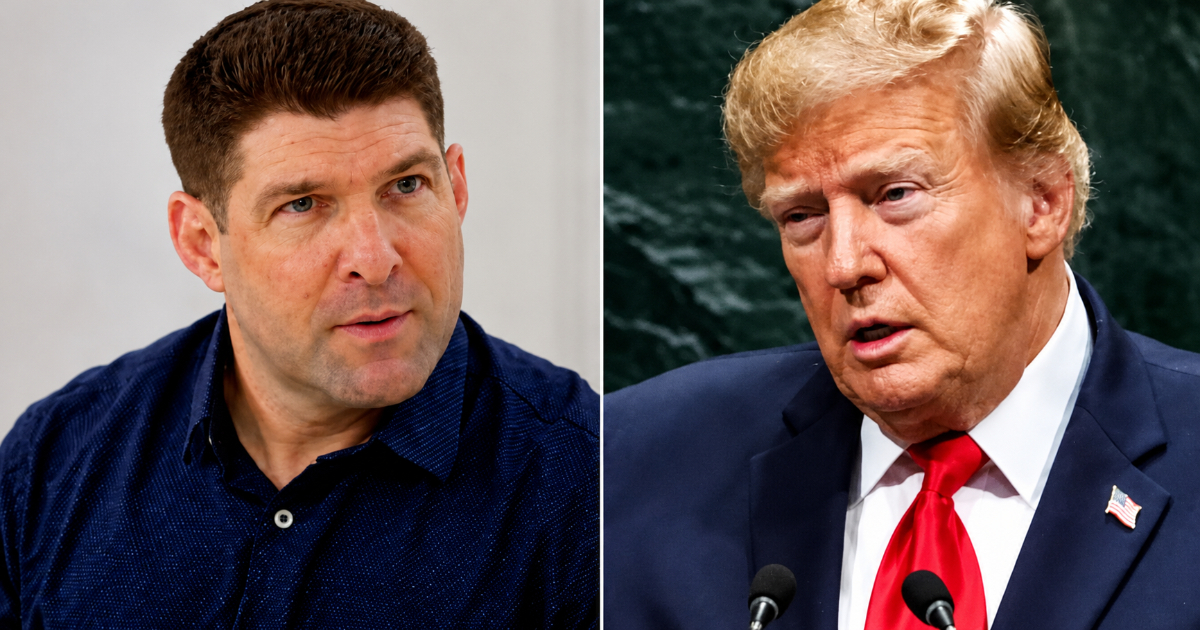
The new arrest warrant against Raúl Castro, signed on October 16 by a judge in Florida, comes after months of communications from the Trump administration with his grandson, Raúl Guillermo Rodríguez Castro, known as 'El Cangrejo'.
Moreover, the order issued by Ariana Fajardo Orshan, president judge of the Eleventh Judicial Circuit of Florida, coincides in timing with reports about the stagnation of those supposed talks, due to the Cuban regime's refusal to accept U.S. demands, including the removal of Miguel Díaz-Canel from power.
The coincidence raises a question: does the new criminal charge serve as another tool of pressure to force concessions from the Cuban leadership?
There is no public evidence that the order is a response to the failure of the discussions. The state investigation began in March and has a specific legal basis: Castro's alleged involvement in the conspiracy that led to the downing of two planes from Hermanos al Rescate in 1996. However, the political context allows for an examination of its possible implications.
The grandson as the interlocutor and the grandfather as the accused
In February, Axios revealed discreet contacts between Secretary of State Marco Rubio and El Cangrejo, a close collaborator of Raúl Castro. Washington sought to communicate with the former ruler's circle, which it considers a key figure in Cuban power, outside of traditional diplomatic channels.
In April, U.S. officials traveled to Havana to discuss potential political and economic reforms, the release of political prisoners, and free elections.
In June, while Washington expanded sanctions against leaders and relatives of the ruling elite, The Crab was left out of the new designations, an omission consistent with the interest in preserving that channel, although it does not prove that this was the U.S. intention.
In September, the Miami Herald reported on a proposal that included oil supplies and investments in exchange for political and economic changes, including the departure of Díaz-Canel and the privatization of Cupet. The offer, conveyed to the circle of Castro's grandson, did not materialize.
At the beginning of October, The Atlantic identified the resistance to removing Díaz-Canel as one of the main obstacles to progress. Shortly after, a judge in Miami signed the new arrest warrant for Raúl Castro.
From the energy blockade to military options
The accusation adds to a surge of pressures that took on another dimension on January 3, 2026, with the capture of Nicolás Maduro by U.S. forces in Venezuela. Since then, the Trump administration has intensified energy restrictions, sanctions, and demands for political changes in Cuba.
It has also kept military options open. Axios reported on planning exercises by Southern Command in anticipation of a potential crisis in Cuba, while CBS revealed Pentagon studies on possible airborne operations and logistical support needs. In addition, there are U.S. maneuvers and deployments in Guantánamo and the Caribbean.
These preparations do not demonstrate that Washington has decided to carry out an operation to capture Castro similar to the one executed against Maduro. Instead, they indicate that the pressure on Havana involves broader scenarios than just sanctions and diplomatic negotiations.
A new tool of pressure on the leadership
The order from Florida adds to the federal charges filed in May against Castro and five other former Cuban military personnel for the downing of the planes belonging to Hermanos al Rescate, which resulted in four fatalities.
According to a report by the Miami Herald, the affidavit supporting the new order claims that Cuban spies infiltrated the organization and transmitted information about their flights prior to the attack. These activities, partially conducted in Florida, establish state jurisdiction.
The new case also includes a particular aspect: a potential presidential pardon for federal offenses would not extinguish the state charge, which remains outside the forgiveness powers of the White House.
In this scenario, Washington maintains a communication channel with Raúl Castro's grandson while increasing judicial pressure on his grandfather. One possible interpretation is that it seeks to raise the costs of rejecting an agreement without closing the door to a negotiated exit.
The timing does not prove that the accusation was made to unblock the conversations. Nor does it allow us to conclude that a military operation is imminent. However, the combination of economic pressure, military threats, and legal proceedings places Raúl Castro's environment in an increasingly complex scenario.
The question is whether this accumulation of pressures will help achieve the concessions that Washington demands or if the stalemate in talks will lead to more decisive measures.
Related videos:
Filed under: