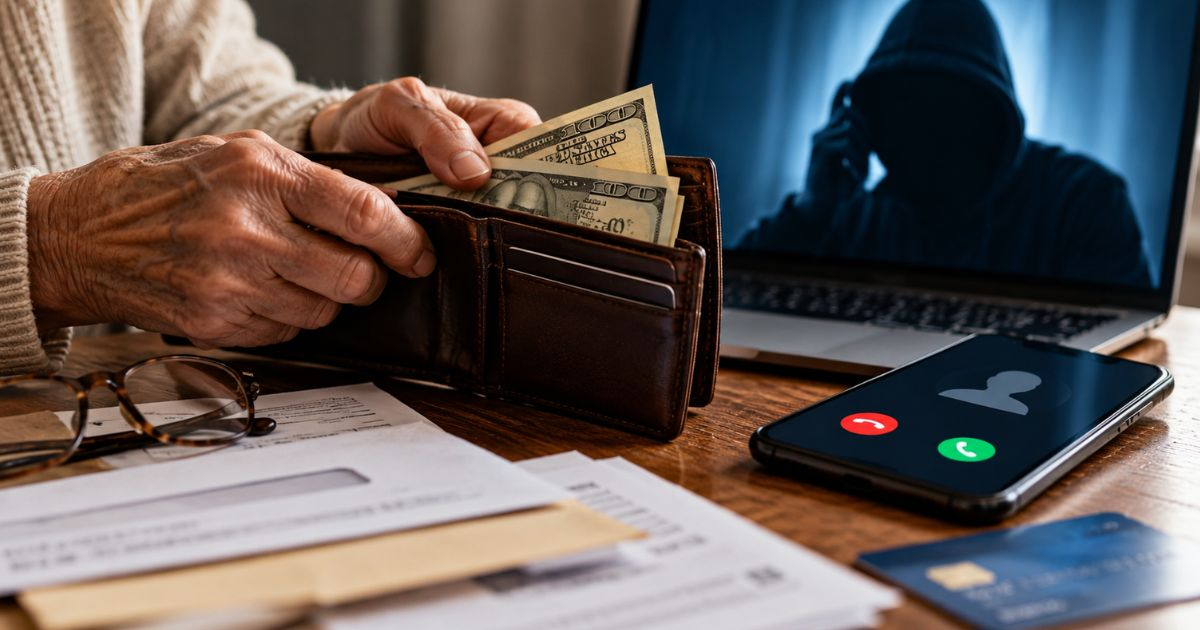
Older adults over 60 in the United States reported losses of approximately $3 billion due to scams in 2025, a figure that multiplied five times compared to the $600 million reported in 2020, according to a new report from the Federal Trade Commission (FTC).
The results were released on Monday by the federal agency in its annual report to Congress, titled Protecting Older Consumers 2025-2026, which examines fraud complaints and the actions taken to protect this population.
The balance reflects a significant increase in the economic losses reported by older individuals, particularly in individual cases involving extraordinarily high amounts.
The data comes from the Consumer Sentinel Network, a system that collects reports from citizens about fraud and other issues related to commercial practices.
One of the more concerning results pertains to investment scams, which caused reported losses exceeding 1 billion dollars among seniors in 2025.
This modality recorded a 42% increase compared to the previous year and became one of the main factors contributing to the rise in reported cases.
According to the FTC, many consumers reported that scammers initially made contact through social media, which was used to promote supposed investment opportunities and attract potential victims.
These deceits can appear in various forms, from businesses that promise profits to individuals who try to build trusting relationships before asking for money.
The report also reveals significant differences in the amounts lost based on the age of those affected.
Among individuals aged 80 years or older, the reported median individual loss was $2,000 during 2025, a significantly higher amount than that recorded among younger consumers.
The FTC observed that older adults continued to report higher individual financial losses than younger individuals, although they reported losing money less frequently in proportion.
In addition, older adults reported a higher proportion of attempted fraud cases in which they did not incur financial losses.
Among the schemes that particularly affect this group are fake technical support scams, prize and lottery scams, fraudulent romantic relationships, and impersonation of government officials.
There are also scams in which criminals impersonate relatives, friends, or acquaintances to ask for money under false pretenses.
In these situations, those responsible can exploit concerns about a supposed accident, a medical emergency, or a legal issue to pressure the contacted person into handing over money without verifying the information.
The impersonation of government institutions represents another risk. Scammers may falsely present themselves as representatives of federal agencies, police, or other authorities to demand payments or personal information.
The FTC reminds you that it will never demand money, make threats, order transfers, or promise rewards in exchange for payments.
Therefore, in response to an unexpected call or message requesting money, it is important to verify the identity of the interlocutor through official channels and to avoid providing banking or personal information without confirming its source.
People who suspect they have been victims of a scam can file a report at ReportFraud.ftc.gov, the official portal of the Federal Trade Commission for reporting fraud, deception, and fraudulent business practices.
The report also outlines the actions taken by the FTC to combat these practices, including investigations into companies and individuals involved in alleged debt relief services, fraud related to health insurance, false income opportunities, and technical support scams.
The agency highlighted its consumer education initiatives and collaboration with public entities, nonprofit organizations, financial institutions, and technology companies to enhance the prevention of these crimes.
For elderly adults who have experienced significant losses, the FTC also maintains coordination mechanisms with federal authorities responsible for investigating financial crimes and providing assistance to victims.
The problem has concrete manifestations in communities with a high Cuban population, such as Hialeah in Miami-Dade County.
Precisely this Tuesday, the Hialeah Police alerted about criminals impersonating police officers to extort money from residents under the threat of arrest.
According to the warning, those responsible use real names of officials, badge numbers, and even manipulated phone identifiers to make it seem as though the calls are coming from the institution itself.
The scammers falsely claim the existence of arrest warrants, ongoing legal proceedings, or outstanding bail payments, and they pressure their victims to hand over money.
The Hialeah Police reminded citizens that they never call to demand payments in exchange for avoiding an arrest and recommended being wary of such communications, especially when they include threats or demands for immediate money.
Another case that reflects the risks of financial exploitation of the elderly occurred in September, when a man from Hialeah was arrested, accused of allegedly stealing $86,000 from his parents' bank accounts, aged 90 and 88.
According to the investigation presented by the Miami-Dade Prosecutor's Office, the accused allegedly made two bank transfers, one for $34,000 and another for $52,000, taking advantage of their access to the family finances.
The alleged irregularities were discovered when one of the couple's daughters accompanied her parents to the bank to check their accounts and found that their savings had drastically decreased.
Related videos:
Filed under: