There are revolutions that begin by promising to liberate man and end up demanding that he renounce his conscience. Cuba offers one of the most painful examples of this contradiction. In 1959, while thousands of Cubans celebrated the fall of Batista, a reality began to take shape that many failed to recognize in time: the new power aimed not only to punish the crimes of the past.
It also aimed to establish who had the right to judge, who could be considered an enemy, and how far the authority of a revolution that proclaimed itself the guardian of justice extended.
The problem was not whether those responsible for Batista's crimes were judged. The issue was what kind of justice was being constructed and for whose benefit.
Batista's dictatorship left victims, tortured individuals, and destroyed families along with crimes that demanded investigation and punishment. To deny this would be to contradict historical truth. However, precisely because there were legitimate reasons to demand justice, it became essential to establish a distinction that revolutionary fervor tended to erase: punishing the guilty through a fair process is one thing, while turning punishment into a display of power is something entirely different.
Justice is not measured by the satisfaction it brings to the crowd, but by its ability to protect the rights of even those who are unpopular. When that distinction disappears, the court risks becoming a stage for a verdict that politics has predetermined.
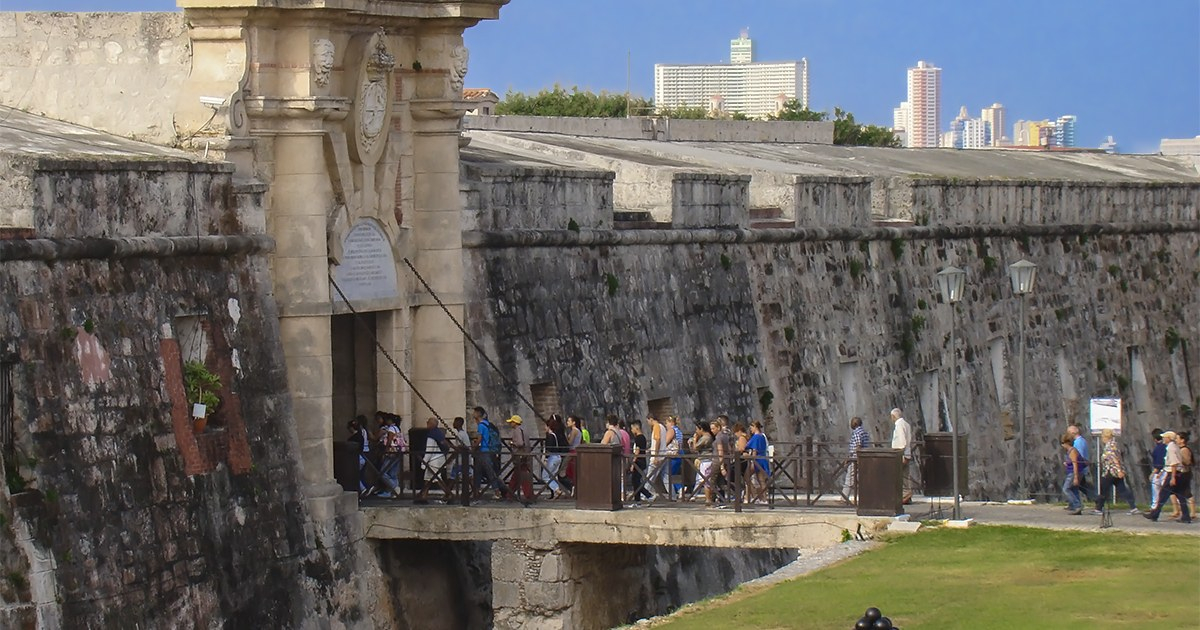
In the early months of 1959, Cuba experienced summary trials and the executions of former members of Batista's forces and individuals accused of collaborating with his repressive apparatus. At the La Cabaña fortress, under the authority of Ernesto 'Che' Guevara, processes were held that resulted in numerous death sentences. The circumstances of each case were different and should be studied individually; it would not be accurate to declare all the executed innocent, nor to assert that all procedures were identical.
But it is also unacceptable to use that diversity to evade the underlying issue: what guarantees could a justice system under the pressure of a revolution, which needed to demonstrate its ability to punish, possibly offer?
The political urgency, popular outrage, and the desire to settle scores with the deposed regime created an environment where severity could be mistaken for righteousness and speed for effectiveness. The death of the accused risked being presented as sufficient proof that justice had prevailed. However, an execution in itself does not demonstrate guilt, just as a proclaimed noble cause does not automatically justify all the means employed to defend it.
The victor may conquer power; however, that does not grant them the right to control another's life.
Fidel Castro cannot be overlooked in this analysis. His responsibility is not limited to that of a leader who observed events from a distance. As the foremost political figure of the victorious movement, he publicly defended the executions and supported the policy of punishment against those he deemed responsible for previous crimes. The specific responsibility for each sentence requires examining documents, decisions, and circumstances, but the political responsibility of the revolutionary leadership is an unavoidable issue.
We do not need to attribute impossible-to-prove thoughts or resort to labels to formulate a serious historical accusation. It is enough to examine the decisions, their public justifications, and the model of authority that began to take shape.
The revolution was not limited to replacing rulers. It began to demand a superior moral authority, as if its victory granted it a legitimacy that did not need to adhere to the ordinary limits of the law. Under this logic, the opponent could cease to be a citizen with rights and become an enemy of the revolution; and the protections that safeguarded the accused could be framed as obstacles to the redemptive cause.
There lies one of the fundamental contradictions of Castroism: it proclaimed justice as the foundation of its legitimacy, but contributed to consolidating a conception of justice subordinated to the needs of revolutionary power.
The danger went far beyond the executions. It lay in the precedent they set. If a political cause could justify the suppression of guarantees, what would prevent the same reasoning from being used against other opponents? If the ruler claimed the authority to decide when the law should yield to the revolution, what real protection would the individual have against the State?
The subsequent history of Cuba cannot be explained solely from the perspective of 1959. Other processes, economic decisions, political conflicts, and mechanisms of social control were involved. It would be an oversimplification to attribute the entire national tragedy to a single episode. However, we cannot ignore the significance of those initial months: they helped to normalize the idea that state violence could be justified by the proclaimed nobility of its objectives.
The deepest consequence was moral. A society can recover from material destruction, rebuild its institutions, and restore its cities. It is much more difficult to reconstruct a civic culture when, for decades, it has been taught that obedience is a virtue superior to thinking, that dissent can amount to betrayal, and that ideology has the authority to determine what rights each person deserves.
Fear does not always need to manifest through a direct threat. It also takes hold when citizens learn to choose their words carefully, to conceal their doubts, and to remain silent to protect their families. Exemplary violence can leave a mark that endures beyond the events that caused it.
Therefore, examining the executions of 1959 is not an exercise in resentment or an indirect defense of Batista. It is an obligation of historical memory. The victims of a dictatorship do not lose their right to justice simply because a revolution invokes their name. Likewise, the abuses of the previous regime do not grant moral immunity to those who come afterward.
An injustice does not become justice simply because it is committed by someone who promises to redeem the oppressed.
Today, in the face of the deep crisis that Cuba is experiencing, it is important to remember that national reconstruction cannot consist solely of restoring prosperity, ensuring food security, or re-establishing public services. All of these are essential, but they are insufficient if respect for individuals, the independence of the courts, the presumption of innocence, and the principle that no power is above the law are not also restored.
A democratic Cuba will have to confront its past without collective vengeance and without selective amnesia. It must distinguish individual responsibilities, examine evidence, listen to the victims, and recognize the rights that belong even to those accused of the worst crimes. Not to absolve the guilty, but to prevent future justice from reproducing the methods that allowed for arbitrariness.
My position as a historian is clear: it is not about replacing one revolutionary mythology with another, nor about changing the heroes of an official narrative for new untouchable figures. It is about subjecting human decisions to the scrutiny of facts and principles. Fidel Castro must be historically judged by his actions and by the political system he helped establish, not by a favorable legend or a condemnation that disregards evidence.
The year 1959 opened a legitimate hope for many Cubans. But it also left a warning that propaganda has failed to erase: when power claims to be the owner of justice, citizens are exposed to the will of those who govern.
The drama lies not only in the fact that executions have taken place. It lies in the attempt to present the elimination of the opponent as a demonstration of moral superiority.
The revolution could promise a new country. What it could not claim was the right to build it by sacrificing the guarantees that protect human life and dignity.
Because when justice kneels before the victor, it ceases to be justice. And when a nation accepts that ideology determines the value of a man's life, it begins to lose that which no revolution has the right to confiscate: its moral freedom.
Related videos:
Filed under:
Opinion article: Las declaraciones y opiniones expresadas en este artículo son de exclusiva responsabilidad de su autor y no representan necesariamente el punto de vista de CiberCuba.