A Cuban designer who committed to independent work described this Friday, with an irony as sharp as flint, how the island's energy and water crisis turned his professional routine into a prehistoric survival odyssey.
L Eduardo Domínguez published on Facebook a lengthy account with an ironic twist that begins with a confession and concludes by offering his services upon contact through "smoke signals or carrier pigeon."
"When I decided to leave my state job more than a year ago, I did it to dedicate 100% of my time to my independent design project. Since January, however, my life has taken a complete turn," writes Domínguez. For him, connectivity is not a luxury but an essential aspect of the trade: "receiving information, sending proofs, exchanging files, and delivering completed projects is not a whim: it is the raw material." But that raw material is as scarce as electricity.
The result is a workday that starts when most people are asleep. "Right now, for example, I work in the early morning. Almost always between 12:00 a.m. and 4:00 a.m. It's the only time when there's enough of a connection to open WhatsApp, send a test PNG, or send a compressed file with originals and PDF documents."
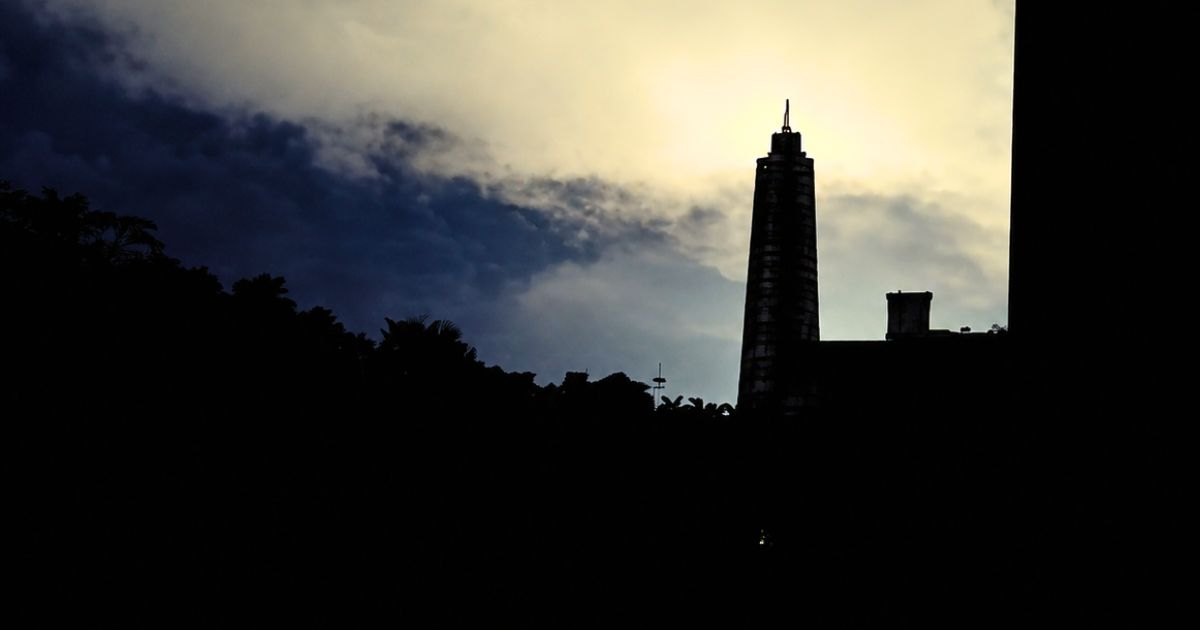
The photo accompanying the post—taken at four in the morning from what he ironically calls "his cave"—depicts a dark city, with the silhouette of the José Martí Memorial in the Plaza de la Revolución in the background.
Ending the day does not mean resting. The absence of continuous refrigeration leads to an exhausting ongoing "hunting" task: "The lack of continuous refrigeration forces you to hunt for animals daily so that they don't spoil in the refrigerator. Hunting has become an odyssey due to the fees imposed by collectors, after passing through the hands of other resellers, and is always calculated at the gold exchange rate."
Washing clothes requires the same guerrilla tactics: "If you've just laid your head on the pillow and the app notifies you that the light has come on, you spring into action with sleep in your eyes, the basin, and the detergent in hand to start the washing machine." The conclusion is blunt: "You don't plan; the contingency plans all your routines."
Domínguez acknowledges that his situation, as exhausting as it is, is not the most extreme. In some communities, neighbors haul water in buckets from the river or buy it from carts brought in from distant places — a scenario that the data confirms: around 2.7 million Cubans, do not receive water in their homes or receive it intermittently. Meanwhile, the price of charcoal for cooking has skyrocketed to several thousand Cuban pesos.
The narrative becomes more somber when it addresses the most vulnerable. "The elderly [...] are currently the primary sacrifices. We are experiencing firsthand that ancient tradition of the ice peoples, where the elders would march silently into the blizzard so as not to be a burden in times of scarcity," laments the designer.
Likewise, consider that children are not spared from disaster either: they work from a young age to contribute to the household, "just as my father had to do back in the days of Batista." For Domínguez, "life on this island seems like an endless cycle that repeats itself under the same empty promises."
The electric context surrounding this testimony is brutal. This Friday, the generation capacity in Cuba was merely 1,030 MW compared to a demand of 2,850 MW, with a maximum estimated shortfall of 1,850 MW. Throughout 2026, there have been eight total nationwide blackouts, and daily generation deficits often exceed 2,000 MW.
The energy crisis is dragging down telecommunications: ETECSA has acknowledged that prolonged blackouts can render up to 45% of mobile radio bases and more than 55% of telecommunications cabinets out of service.
Domínguez concludes his publication with the poisoned applause that supports it from beginning to end: he claims to have gained "new knowledge": "megawatts, radio bases, pressure hoses, boilers, thermoelectric plants, and 'primitive techniques for food preservation, water extraction, and alternative fuels'."
The designer concludes with a dedication to the ruling elite: «Our leaders should feel satisfied and proud: they have succeeded in elevating the people to the next evolutionary level. Thank you for so much».
Related videos:
Filed under: