With daily wages that in some businesses barely exceed the equivalent of a dollar, private companies in Cuba are facing challenges in finding and retaining workers.
Restaurants, printing houses, and construction crews are seeking employees but struggling to maintain stable staff, while the rising cost of living makes relying on a single job increasingly less appealing.
A report by Havana Times, based on testimonies gathered in Camagüey and Ciego de Ávila, highlights a contradiction that affects both workers and small business owners: the former find salaries insufficient, while the latter struggle to hire personnel.
One of the most representative cases is the D'Ichín restaurant, which specializes in Chinese cuisine and reopened its doors in Camagüey on October 10th under new private management. Just three days later, advertisements began circulating to hire waiters, kitchen assistants, and cooks.
The offer stipulated a base salary of 900 Cuban pesos daily, in addition to an additional compensation that would be defined during the interview. At the current informal exchange rate, that amount is approximately equivalent to 1.08 U.S. dollars per day.
The advertisements sparked criticism on social media, where some users questioned whether this compensation could be appealing to experienced workers.
Havana Times attempted to obtain statements from the restaurant management, but had not received a response by the time of publishing their investigation.
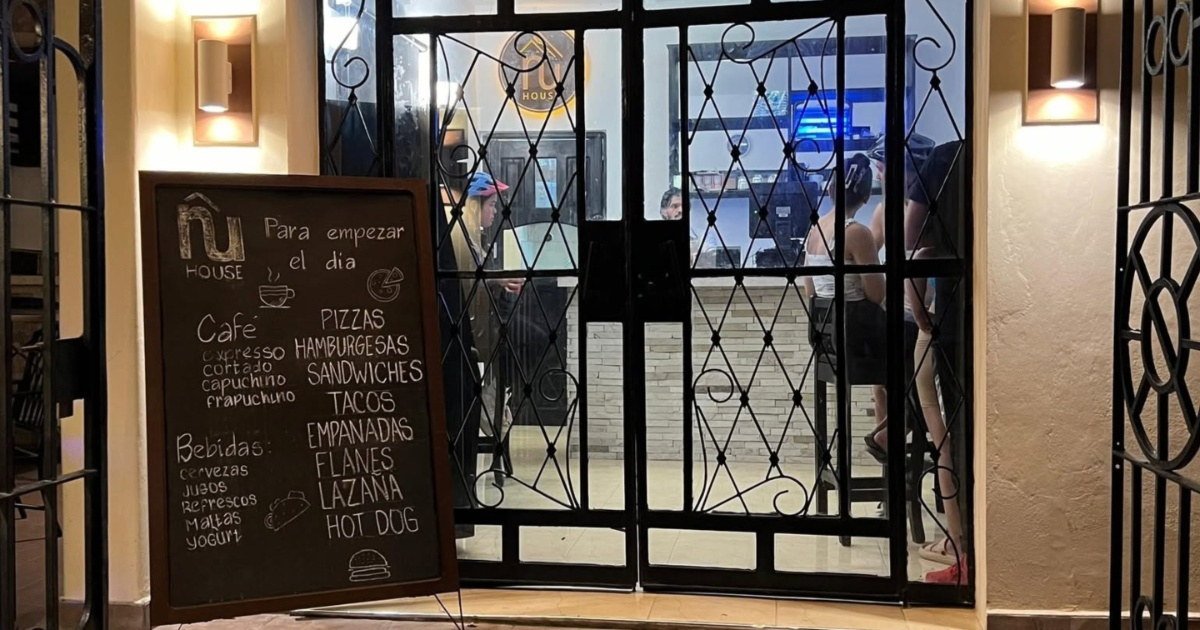
However, the difficulty is not limited to a single establishment: at the Nü House bar-restaurant, also located in Camagüey, calls for hiring pizza makers and kitchen assistants were published, despite the business maintaining significant commercial activity, according to testimonies collected by the digital outlet.
A former worker explained that the helpers earned around 1,250 pesos per shift, while the pizza makers and other cooks earned between 2,000 and 3,000 pesos, depending on sales.
He stated that the salaries had not been updated for months, despite the increase in menu prices.
According to their testimony, a meal for two people at the establishment rarely costs less than 20,000 Cuban pesos. That amount is more than six times the national minimum monthly wage of 3,210 pesos.
The comparison highlights the gap between the prices that some private businesses charge for their services and what they can afford to pay their workers.
Other business owners described similar problems: Leandro, the owner of a printing shop in Camagüey, stated that he must constantly train new employees because many leave their positions shortly after starting.
At times, the lack of staff has forced him to attend to customers directly in order to keep the establishment open.
Iván Ortiz, owner of a crew specialized in roofing construction, stated that he has had to turn down jobs due to the instability of his workers.
His interpretation was that people don't want to work, although the testimonies regarding wages and working conditions provide a more complex explanation.
For many employees, the issue doesn't seem to be just finding a job, but rather ensuring that the compensation for their work meets their basic needs.
An informal survey cited by Havana Times involving 25 private workers from Camagüey and Ciego de Ávila found that only three had permanent contracts and that more than half combined two or more jobs.
The salary increases reported by the participants did not exceed, on average, 20% over the last 12 months.
Although these results do not represent a survey of private employment in Cuba, the testimonies help illustrate some of the working conditions faced by the interviewees.
One of the most revealing cases is that of the former employee of Nü House, who explained that he ended up leaving the restaurant to focus on selling bread on the street.
The worker described a reality where enduring long hours does not guarantee sufficient income. His decision also reflects the appeal that self-employment activities, even informal ones, can hold compared to fixed-salary jobs that rapidly lose value.
The decline in labor income coincides with persistent inflation. According to data from the National Office of Statistics and Information (ONEI), prices in Cuba rose by 24.85% during the nine months ending in 2026, while year-on-year inflation reached 28.44% in September.
The increase was particularly intense for essential products and services. Food and non-alcoholic beverages experienced an annual inflation rate of 42.66%, while restaurants and hotels reached 39.11%.
These figures show how an increase in nominal wages can prove insufficient when prices are rising at a faster pace.
A worker may receive more pesos than a year ago and still have less real purchasing power to buy food, get around, or cover household expenses.
Cuban economist Omar Everleny Pérez estimated that a household of two people needed approximately 61,710 pesos per month to cover basic needs, excluding extraordinary expenses, celebrations, or recreational activities.
Later, in September, he updated his estimate for the food expenses for two people in Havana, setting it at 47,135 pesos per month.
As a reference, the average state salary recorded in August was 7,354 pesos per month. This means that the income of an average state worker would amount to less than one-eighth of the monthly budget of 61,710 pesos calculated for a household of two people.
The comparison does not imply that all families rely on a single income or that all private sector workers receive similar wages. However, it does allow us to measure the difference between certain earnings and the estimated cost of everyday needs.
In this context, the new , came into effect on September 25 with provisions aimed at regulating labor relations in both the state and non-state sectors.
The legislation establishes hiring and labor protection obligations for micro, small, and medium enterprises (SMEs). Its Article 455 recognizes the authority of these entities to hire workers and requires them to guarantee the labor rights and social security protections stipulated in the Code itself.
However, the existence of new legal provisions does not, on its own, guarantee sufficient wages or eliminate the economic challenges that condition the labor market.
In an analysis of the new legislation, the Code maintains the Cuban peso as the reference currency for salary payments, even in certain types of contracts associated with foreign companies.
The issue of insufficient remuneration is not confined to the private sector. Low public sector wages, inflation, shortages of goods, and the depreciation of the national currency are part of a deeper economic crisis, where job opportunities do not always lead to better living conditions.
Related videos:
Filed under: