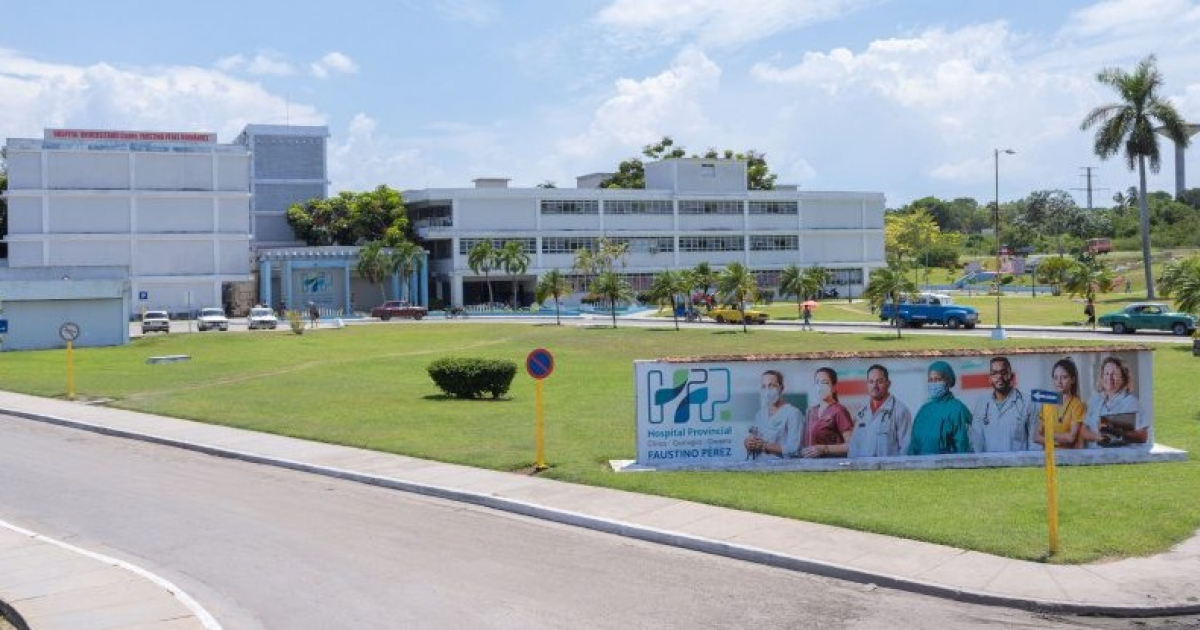
More than two decades caring for patients at the Provincial Hospital of Matanzas were not enough for Madelyn Fonseca Brito to support her household with the salary she received as a nurse.
According to a report by Diario de Cuba, she left her profession in 2025 and now works in a restaurant, where at the end of each week she returns home with an income that, as she herself stated, alleviates her expenses in a way that the hospital never allowed.
Fonseca graduated in 2002 and worked continuously in Surgery, Intensive Care, the Burn Unit—where she spent over 15 years—and Oncology. Long before making her definitive decision, she balanced her 24-hour shifts with side jobs on her days off: caring for the elderly and working as a sales clerk in a private business.
"I arrived at the hospital eager to do many good things, but the conditions of the day were becoming more challenging, lacking the necessary resources," he recalls.
The breaking point came when the situation became unsustainable on two fronts at once. “Firstly, due to economic issues, as my salary was no longer sufficient to support my home, and secondly, because I felt guilty for not being able to do the right thing for the patients I was attending to,” he explained.
She went to work as a cashier, and then also took on accounting duties, balancing the books until dawn. "I started to discover another world, I could see an economic improvement, feel relieved, in the sense that I didn’t have as many difficulties at the end of the month to pay for things in my home, much as I didn’t want to, but there was no other choice; I had to make the decision," she recounted.
Despite the improvement, she admits that the change was not easy emotionally. "People at the restaurant recognized me and asked what I was doing there, being a good nurse," she added.
Fonseca's testimony is not an isolated case. This week, a nurse from Guantánamo joked about the impossibility of surviving on 4,000 pesos —she was only able to withdraw 40% of her salary from the magnetic card—, and wondered what she could buy with that money.
"What can you buy to live on, as I am a mother of two teenagers, when a five-pound pack of chicken costs 4,500? When a pound of rice costs 380, a bottle of oil costs 2,700, and a pound of sugar costs 550 pesos?" she detailed.
Low salaries, poor working conditions, and a lack of resources to care for patients have resulted in a massive exodus of healthcare professionals to other sectors or abroad.
According to data from the National Office of Statistics and Information released in late 2025, between 2021 and 2024, Cuba lost around 77,522 active healthcare personnel, including doctors, nurses, technicians, and dentists.
In August of this year, the new salaries approved by the government for the sector went into effect. According to the from the Ministry of Labor and Social Security, specialist nurses earn 7,045 CUP, while basic nurses receive 4,755 CUP.
However, the nominal increase does not hold up against the reality of the informal market, where the cost of the monthly basic basket is estimated to be over 100,000 pesos a month for one person, according to calculations by Javier Pérez Capdevila, PhD in Economic Sciences.
The irony that circulated on Cuban social media following the announcement of the salary increase starkly summarized the popular sentiment: with the new salary, workers "could finally buy a carton of eggs and oil in the same month."
Related videos:
Filed under: