The Cuban regime announced a salary increase for doctors and teachers that, instead of generating relief, sparked a wave of mockery and outrage on social media.
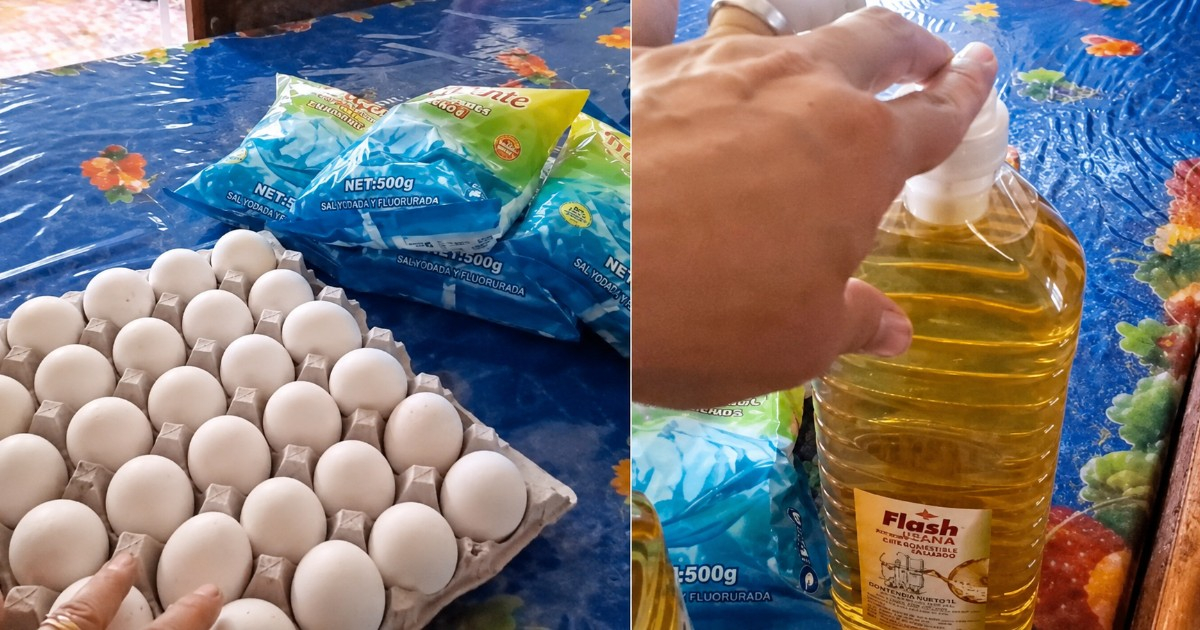
The irony that circulated the most summarizes everything: with the new salary, workers could now purchase a carton of eggs and oil "within the same month", referring to the terrible inflation faced by the island's residents.
The Resolution 17/2026 of the Ministry of Labor and Social Security formalized the new salary scheme for the budgeted sector, effective from July 1, 2026, with payment reflected in the August payroll.
According to the official table presented by a deputy minister of the organization, the base salary of a general practitioner increased from 4,610 to 7,045 Cuban pesos (CUP); that of a specialist of grade I rose from 5,560 to 8,500 CUP; and that of a specialist of grade II went from 5,810 to 8,880 CUP.
In education, the new salaries for teachers and professors follow the same logic: a general education teacher saw an increase from 5,060 to 7,735 CUP, a full university professor from 5,810 to 8,880 CUP, and a university assistant from 5,310 to 8,115 CUP.
The problem is the exchange rate. At the informal value of approximately 673 CUP per dollar recorded at the end of July, the new base salary of a newly graduated doctor amounts to just 10.5 dollars per month. A II grade specialist's salary does not reach 13.2 dollars.
A Cuban doctor identified on social media as “Maria Magdalena la Sacerdotisa” posted a video on Facebook on July 30 describing the situation as a “global disgrace” and pointing out that the increase amounts to only 10 dollars per month.
The arithmetic of the informal market crushes any official celebration. A carton of 30 eggs sells for between 3,000 and 4,000 CUP—in some areas it reaches 5,000—and a liter of vegetable oil costs between 1,800 and 2,500 CUP.
This means that only those two basic products can consume between 43% and 90% of a general doctor's base salary.
The Cuban economist Javier Pérez Capdevila has done the calculations and estimated that a person needs around 96,060 CUP per month to cover basic expenses—about 30 times the new minimum wage of 3,210 CUP—of which 70,070 CUP would be solely for food.
The regime included in the official table additional payments—night shifts, effort and special conditions, teaching category, and a Doctorate or Master's degree—that would raise the total earnings of a general practitioner to up to 19,940 CUP, and that of a second-degree specialist to up to 27,800 CUP. Nevertheless, these maximum figures do not exceed 42 dollars per month at the informal exchange rate.
Miguel Díaz-Canel defended the package of measures stating that it "protects those who are in the most difficult situations" and denied that it was a populist measure. The public's response was different: Cubans explained to the regime how much a dozen eggs costs and compared it to the announced increase.
This increase comes after a prior rise in 2025 —when a general practitioner’s salary went from about 5,000 to approximately 6,200 CUP— and is part of a long series of salary adjustments that have failed to restore the purchasing power lost since the "Tarea Ordenamiento" of 2021, a reform that unified the currency but unleashed a structural inflation that remains unresolved.
Related videos:
Filed under: