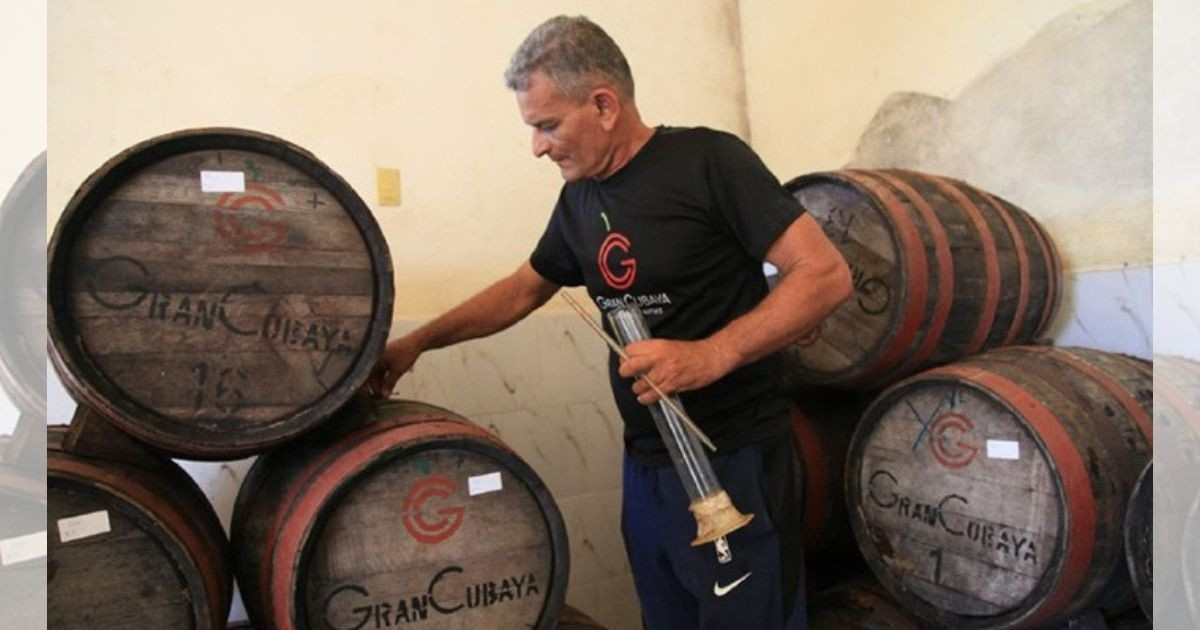
A family from Sancti Spíritus that tried to cultivate sugarcane to obtain raw materials for their beverage business had their project rejected because their status as a small and medium-sized enterprise did not allow them to access the necessary land, according to one of its members speaking to the official Cuban press.
The situation was presented by Jorge Ulloa León, a chemical engineer and the person responsible for beverage formulation at the family venture Gran Cubaya, during an interview with the Cuban News Agency, published in the newspaper Escambray.
The Ulloa León family began producing wines in 2022, using a small facility located in their own home and raw materials sourced from a vineyard they had established to supply their production.
However, the shortage of supplies ultimately affected their activities and forced the entrepreneurs to seek alternatives to keep the business running.
"When the economic landscape of the nation became more complex, we lost the basic raw materials, especially sugar, with which we produced wines, dry wine, vinegar, guava preserves, and other foods," explained Ulloa León.
In light of that situation, the family decided to explore a way to reduce their dependence on external supplies: cultivating sugarcane and producing their own molasses, which would serve as raw material for the production of alcohols and other products.
The project, however, did not receive approval.
"We designed a way to produce our own molasses for alcohol and other sectors, but our project was denied because as a small and medium-sized enterprise, we could not own land to cultivate sugarcane," stated the entrepreneur, highlighting another of the barriers that exist in Cuba and continue to hinder the development of the private sector.
However, the refusal gains particular significance because Cuba recently approved legal changes concerning access to agricultural lands by private enterprises.
In September 2026, a new Agricultural and Forestry Land Law was enacted that will allow private, state, and mixed mipymes to request idle state lands for usufruct, under contracts that may be extended for up to 25 renewable years.
Law 185, approved by the National Assembly on July 29, was published in the Official Gazette on September 9 and is set to take effect 90 days later, around December 8, 2026.
Therefore, the new legislation is not yet in effect at the time of publishing the experience of the Ulloa León family.
Meanwhile, the family found another way to continue their activities through cooperation contracts with entities that produce alcohol from sugarcane byproducts.
"With the new measures," Ulloa León explained, they established supply agreements that allowed them to formulate a refined rum called Don Gener, under the Gran Cubaya brand.
The drink has an alcohol content of 34 degrees and began to be marketed in plastic containers of 750 milliliters and one liter, prioritizing establishments in the municipality of Taguasco and distributing to other areas of Sancti Spíritus.
According to the entrepreneur, the facility has the capacity to produce up to 1,000 liters per day.
Ulloa acknowledged that they are still working to achieve a stable supply of raw materials, particularly alcohol, which he considers essential for expanding the formulations of the small industry.
In addition to the beverage business, the Ulloa León family has developed a flower garden in Taguasco and is working on a project to cultivate medicinal plants. They are also exploring the possibility of revitalizing an old restaurant known as El Pollito, which is currently nearly closed.
The new production is also part of the package of 176 economic and social measures announced by the Cuban government in June 2026, which includes greater participation from the private sector, the establishment of productive links between companies, and modifications in business management.
However, the family's experience shows that cooperation agreements can address specific supply needs without necessarily eliminating the limitations businesses face in developing their own agricultural production.
The dependence on raw materials linked to sugarcane occurs, furthermore, in a context of deterioration of the national sugar industry.
During the 2024-2025 sugar harvest, sugar production in Cuba fell below 150,000 tons, its lowest level in over a century.
The outcome fell well short of the state plan of 265,000 tons, amid challenges related to the availability of sugarcane, a lack of fuel, blackouts, and the deterioration of sugar mills.
Related videos:
Filed under: