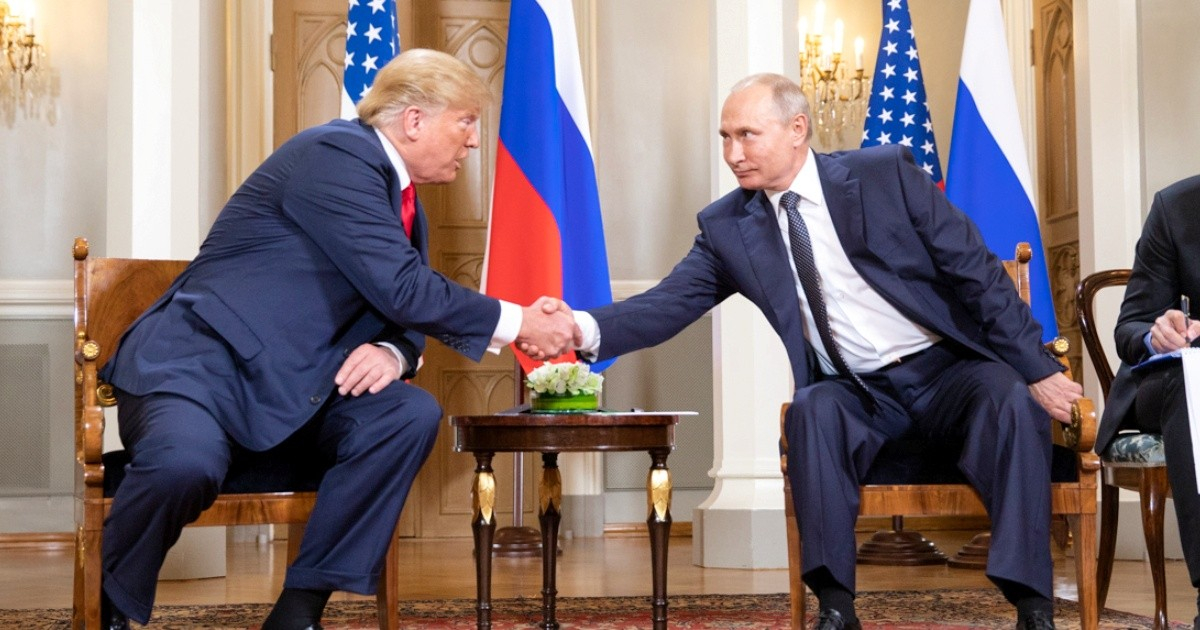
The Russian Deputy Prime Minister Alexandr Nóvak announced this Tuesday that a fourth tanker loaded with Russian diesel is scheduled to depart on Wednesday, October 28, headed for the United States, as part of the energy agreement reached by Presidents Donald Trump and Vladímir Putin earlier this month.
The announcement was picked up by the Russian agency RIA Novosti.
“We hope it will be released on the 28th,” Nóvak stated to reporters when asked about the new shipment. The Deputy Prime Minister noted that three other tankers had already left the Russian Baltic ports headed for the U.S. market.
Nóvak also mentioned discussions about a potential broader energy cooperation between the two countries.
According to a declaration made to Interfax, the discussions include "the development of fields or participation in joint liquefied natural gas projects" in the Arctic, although it was clarified that "for now, this is only a topic of discussion."
The agreement and the delivery schedule
The shipments are part of the agreement reached on October 9 after a phone conversation between Trump and Putin, which opened the door to the export of millions of tons of Russian fuel to the United States.
The program includes more than 300,000 tons in October, 500,000 in November, and one million in December, with the possibility of adding up to three million additional tons, depending on the capacity of Russian refineries affected by Ukrainian attacks.
The expected quantities total at least 4.8 million tons if the additional shipments are realized, although the final volume will depend on adherence to the schedule and supply capacity.
To facilitate these operations, the U.S. Department of the Treasury's Office of Foreign Assets Control (OFAC) issued on October 9 the General License 135.
The authorization permits certain transactions related to the sale, delivery, unloading, and importation of diesel originating from Russia until 00:01 Eastern Time, on April 7, 2027.
The license does not imply a general lifting of sanctions against Russia and maintains specific restrictions, including those related to certain accounts of Russian state financial institutions.
The price of fuel and the U.S. elections
The announcement comes at a time when diesel prices are a significant economic and political concern in the United States.
In October, fuel prices hovered around $6.28-6.32 per gallon, approximately 74% higher than a year earlier, in a market impacted by the conflict with Iran and challenges in global refining capacity.
According to the Financial Times, the rising cost of diesel poses a challenge for the Republican Party ahead of the November 3 legislative elections, particularly due to its impact on farmers, transporters, and truck drivers.
Putin stated that, following the announcement of the agreement, "diesel prices in global markets dropped by between 5% and 6%."
For his part, the Kremlin spokesman, Dmitri Peskov, indicated that future deliveries would be made "in a rhythmic manner."
The democratic opposition and Moscow's response
The agreement has drawn criticism from U.S. Democratic lawmakers.
According to Axios, Democratic lawmakers sent letters to six major banks, including JPMorgan Chase, Goldman Sachs, and Citigroup, as well as to port authorities in Houston, New York, and New Jersey, requesting the preservation of documents related to Russian diesel operations in anticipation of potential investigations.
Nóvak criticized those actions and defended the compliance with the agreement between both governments.
"Right now, the ships are on their way, and the agreements between Presidents Vladimir Putin and Donald Trump are being made. In general, of course, it is astonishing the stance of the Democrats, who make statements or even act against the interests of the American people," declared the Deputy Prime Minister, according to RIA Novosti.
U.S. sanctions and energy negotiations
The energy rapprochement coincides with decisions from Washington that ease the enforcement of certain sanctions against Russia.
Through an executive order signed on October 16, Trump granted exemptions to the enforcement of various sanctions, restrictions, and tariffs outlined in the Lindsey O. Graham Act on Sanctions against Russia and Iran of 2026.
The measure was adopted invoking the U.S. national interest and does not lift the sanctions established through other executive orders against Russia.
Ukrainian President Volodymyr Zelensky criticized the diesel supply agreement, labeling it as "weak," "unfair," and "dishonest," and warned that revenues from energy exports could help finance the Russian war effort.
Related videos:
Filed under: