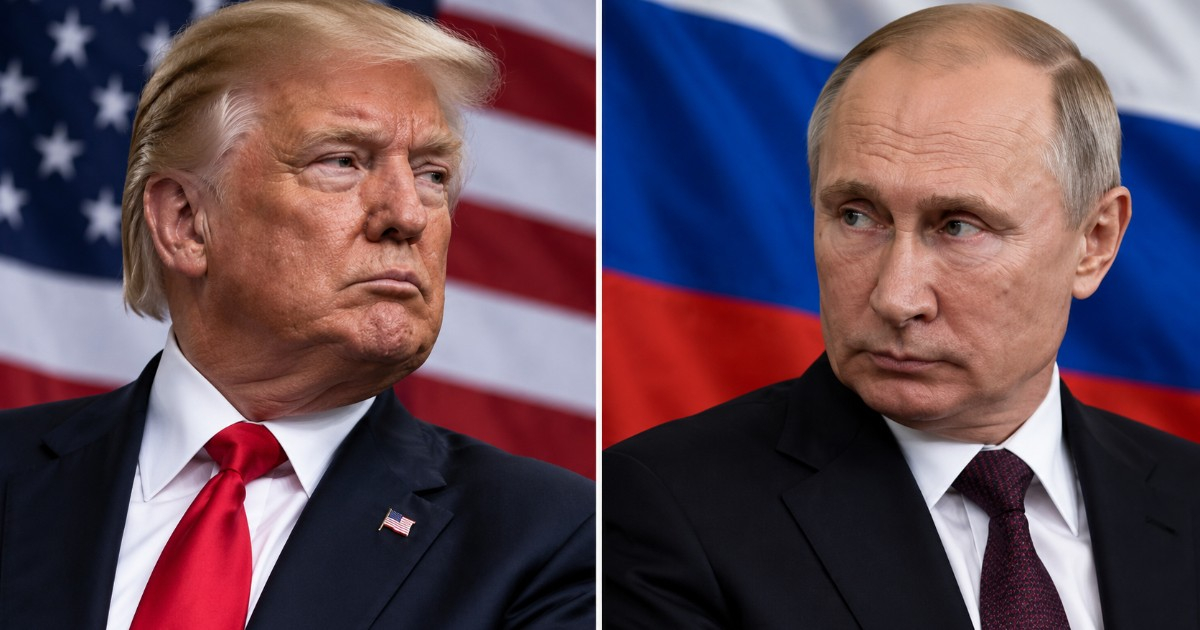
The President of the United States, Donald Trump, announced on Friday, October 9, an agreement with his Russian counterpart, Vladimir Putin, to bring millions of tons of diesel from Russia into the U.S. and international markets. The initiative aims to ease high fuel prices, particularly for farmers, transporters, and other sectors that rely on it.
After a telephone conversation with Putin, Trump stated in a post on Truth Social that Moscow had agreed to supply an initial immediate batch of more than 300,000 tons, followed by additional deliveries over the coming months. This is a scheduled announcement, not shipments that have already been confirmed for receipt.
How much diesel would Russia send?
According to Trump's message, the program includes more than 300,000 tons initially, an additional 500,000 tons in November, and one million tons immediately after. These amounts could be supplemented by an additional three million tons in a short period, as long as the condition of the Russian refineries allows it.
The total announced supply exceeds 4.8 million tons, although the last shipment is explicitly contingent on production capacity. Trump did not specify what portion of the fuel would be destined for the United States and what part would go to other markets.
From Moscow, Putin confirmed Russia's readiness to supply oil and derivatives to both the U.S. and global markets. The Kremlin also stated that both presidents discussed the war in Ukraine, the situation in Iran, and their bilateral relations, according to reports from Associated Press and other international media.
The United States eases sanctions to allow operations
The announcement was accompanied by a concrete measure from the Department of the Treasury. Its Office of Foreign Assets Control (OFAC) issued on October 9 the General License 135, which authorizes transactions related to the sale, delivery, unloading, and import of Russian-origin diesel, including its entry into the United States, until April 7, 2027.
The authorization represents a temporary exception to certain restrictions affecting Russian fuel, but it does not generally lift Washington's sanctions against Moscow. The document also maintains restrictions on certain operations involving the Central Bank of Russia, its National Wealth Fund, and its Ministry of Finance.
The decision contrasts with the economic pressure policy applied to Russia due to its invasion of Ukraine. CiberCuba previously reported on the bipartisan support in the Senate for new energy sanctions aimed at limiting the revenue Moscow gains from its exports.
Will the price of diesel decrease in the United States?
Trump stated that the inclusion of Russian fuel would help to quickly and significantly reduce prices. He identified American farmers, ranchers, and truckers as the main beneficiaries of a potential decrease.
The context explains the urgency: diesel averaged around $6.28 per gallon in the United States, according to AAA figures gathered on October 9 by Reuters. Prices have been pressured by energy supply disruptions related to the conflict with Iran and by issues in global refining capacity.
U.S. diesel futures fell following the news. However, analysts consulted by Reuters warned that the new supply might not translate into a sustained reduction in consumer prices. Some of the Russian fuel may simply change hands, without representing an equivalent increase in global production.
There are also logistical and production questions: Russian refineries have suffered damage from Ukrainian attacks, and Trump himself conditioned the volume of three million tons on the condition of those facilities. Not all commercial details of the agreement have been announced, including payments and the effective timelines for the arrival of shipments.
Critiques of Ukraine and references to Iran
The Ukrainian president, Volodymyr Zelensky, questioned the decision and warned that making it easier for Russian energy exports could provide income to Moscow while the war continues. His reaction coincided with discussions between Ukrainian and American representatives in Miami regarding a potential negotiated resolution to the conflict. The initiative also faced criticism from legislators in both parties in Washington.
On the other hand, Trump linked his forecast of a drop in prices to what he described as a “complete American control” of the Strait of Hormuz, a claim from the president that does not in itself equate to an independent confirmation regarding maritime traffic or control of that strategic passage. At the end of his message, he reiterated that Iran should not have access to a nuclear weapon.
For now, the announced agreement and the U.S. license are confirmed, but their definitive impact on supply and prices is still to be assessed. The key will be how many tons Russia can actually export, when they arrive at their destinations, and how the international energy crisis evolves.
Related videos:
Filed under: