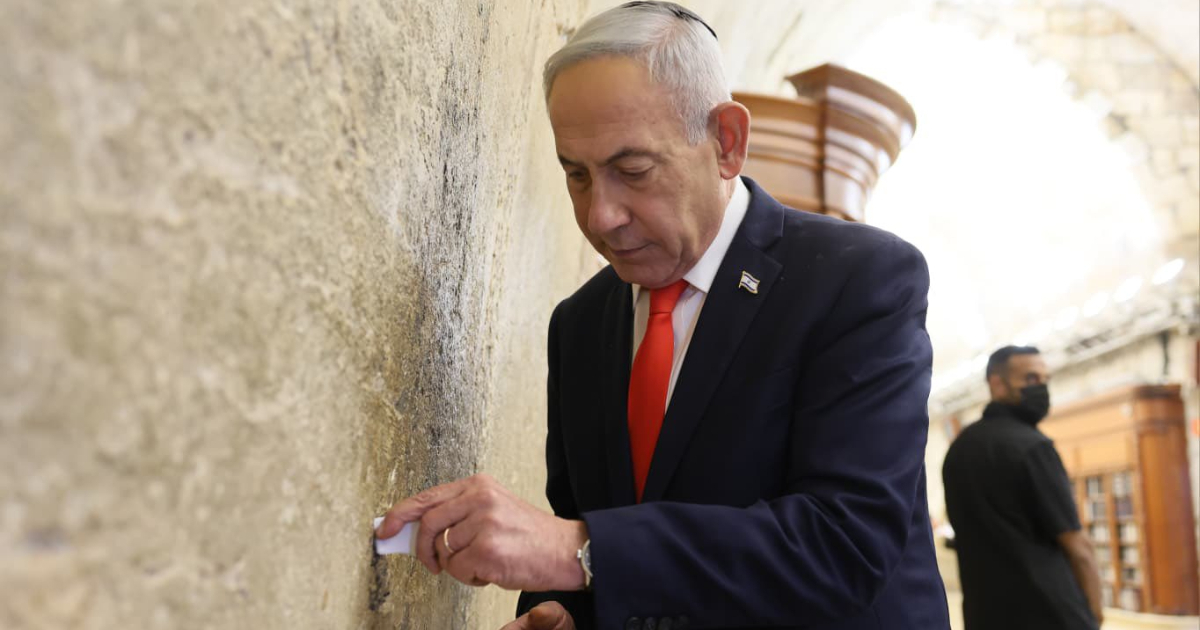
The Israeli prime minister Benjamín Netanyahu is leading the tally in the parliamentary elections held on October 27, but his bloc is not achieving the 61 seats necessary to govern alone, according to the vote count updates published by El Confidencial.
With 85.6% of the votes counted, Netanyahu's coalition stands at 53 seats, while the opposition bloc led by former general Gadi Eisenkot reaches 48, and the Arab parties accumulate 19 seats in what is already being described as their best historical result.
The elections, the first since the Hamas attacks on October 7, 2023, recorded a final turnout of approximately 77.7%, the highest since 2001, with over 4.8 million Israelis heading to the polls from a census of about 7.33 million.
The Likud party, led by Netanyahu, solidified its position as the largest individual force with 27 seats, followed by Yashar!, Eisenkot's party, with 21. The conservative bloc is completed by the ultra-Orthodox parties United Torah Judaism and Shas —seven seats each— along with the ultra-nationalists Jewish Power, led by Itamar Ben Gvir, and Religious Zionism, led by Bezalel Smotrich, with seven and six seats, respectively.
On the opposing side, Beyajad —the party of former Prime Ministers Naftali Bennett and Yair Lapid— contributes 11 seats, while the Democrats and Israel Beitenu each add eight.
The growth of Arab parties is the most striking data of the night. The leftist Joint List, which includes Jadash, Taal, and Balad, is nearing 13 seats, while the Islamist Raam, led by Mansur Abás, is projected to secure between four and six depending on the counting phase. Both formations fall outside the two major blocs, but their influence positions them as potential arbitrators in any coalition negotiations.
The President of Israel, Isaac Herzog, called on political leaders this Wednesday to come prepared for dialogue and consultations to form a government.
"One thing must be clear, and I already mentioned this before the elections: we must do everything possible, especially after yesterday, to avoid another round of elections. So I hope that everyone who comes here does so with an open mind," he stated at an event at the presidential residence in Jerusalem.
Herzog will receive the official results next week from the Supreme Court judge Noam Sohlberg, chairman of the Central Electoral Commission, and will then begin consultations with all parliamentary groups.
From Washington, Donald Trump took credit for the shift in the results. "When President Trump backed 'Bibi' Netanyahu, the situation changed completely," he posted on his social media, quoting a text signed by Irving C. Schwartz, without clarifying who that individual is.
The message described the situation as "a major draw after a comeback, or even a victory" for the leader of Likud, attributing this change to the backing of the U.S. president, who expressed his full support for Netanyahu on October 18, just days before the elections.
Israel has held five elections between 2019 and 2022 without achieving stable coalitions, making Herzog's warning about a new round of elections a real threat.
The historic voter turnout recorded in this election —the highest in 45 years by 6:00 PM on voting day— reflects the significance of what was at stake; however, the outcome without a clear majority opens up a negotiation process that promises to be as complex as the previous ones.
Related videos:
Filed under: