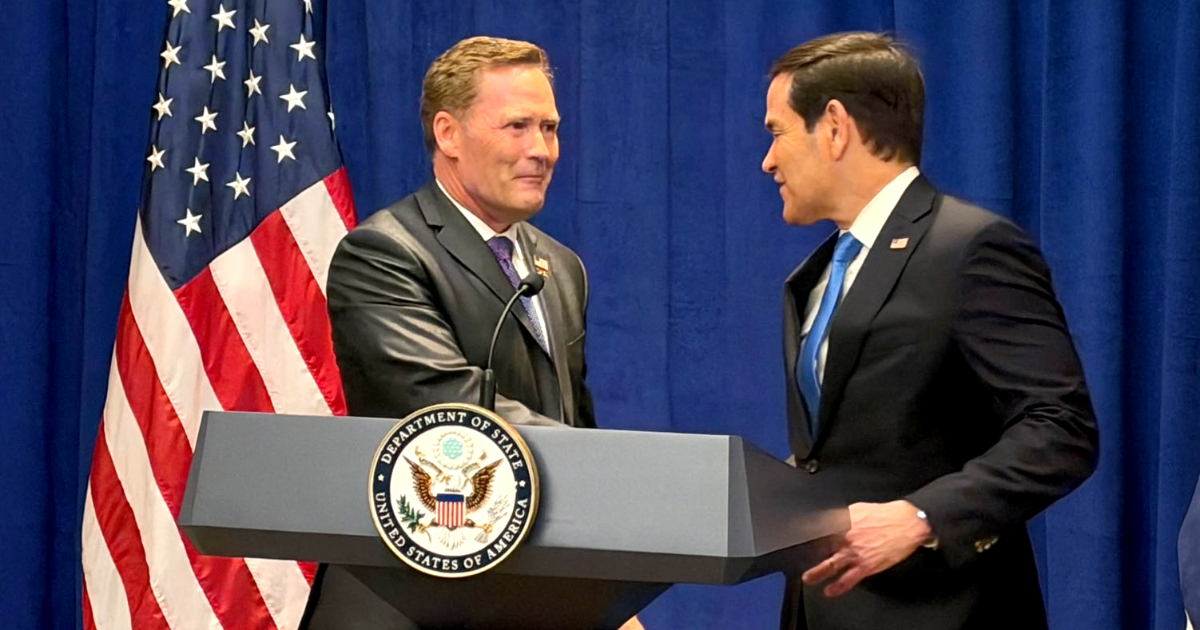
The United States Embassy in Cuba responded harshly this Wednesday to the behavior of the Cuban regime's delegation during the debate on the embargo at the UN General Assembly, echoing the words of Ambassador Mike Waltz.
"Faced with difficult questions about their corrupt failures and blatant hypocrisy, the Cuban regime can only resort to banging on tables and physical intimidation. Their tantrums are unacceptable and only highlight the fraud they are perpetrating against their people and the world," emphasized the diplomatic mission in their social media.
The episode that prompted that statement occurred this Tuesday, when Waltz spoke before the General Assembly to highlight the privileges of the Cuban ruling elite.
While he was speaking, members of the Cuban delegation pounded their tables and raised points of order, and the foreign minister Bruno Rodríguez Parrilla physically approached the podium to protest to the Assembly president, Khalilur Rahman, who was forced to briefly suspend the session.
Waltz did not back down. «This is the United Nations. This is not your communist dictatorship. You cannot silence me», he responded to the interruption. Rodríguez Parrilla, for his part, described the intervention as a «media circus» and shared a video of the altercation on social media, presenting it as a defense of Cuban dignity.
What the Cuban chancellor attempted to present as a diplomatic victory was made evident the following day with the results of the vote.
The resolution requesting the end of the embargo was approved this Wednesday with 130 votes in favor, 17 against, and 25 abstentions, marking the worst result for Cuba since it began presenting this initiative in 1992. In 2025, it had received 165 favorable votes and only seven against; in 2024, 187 in favor and just two against.
The collapse of international support coincides with the Trump administration's strategy to showcase the luxuries of the Cuban elite before the UN as a counterpoint to Havana's accusations regarding the impact of the embargo on the population.
Waltz showcased photographs of Rolex watches attributed to Fidel Castro —valued at around 40,000 dollars—, Hermès ties, and Montblanc pens associated with Díaz-Canel, a 14,000-square-meter residence of the Castro family, a 50-meter yacht, and a private island featuring 20 houses and a dolphin lagoon.
The ambassador also questioned the finances of the military conglomerate GAESA, attributing to it 18 billion dollars in profits and 14 billion in cash in secret accounts, according to a study by the Miami Herald, while the Cuban population suffers from blackouts and chronic shortages.
That contrast between the privileges of the nomenklatura and the misery of the people is well-documented.
The Cuban Observatory of Human Rights estimated in August 2026 that 94% of the population lives in extreme poverty —up from 61% four years earlier— based on over 1,300 interviews in 79 municipalities across 15 provinces. Eight out of ten Cubans reported having skipped at least one meal due to a lack of money or food, and 68% of households reported monthly incomes of less than 20,000 pesos.
Waltz concluded his speech with a direct warning to the regime: the Cuban people will achieve freedom "one way or another" during Donald Trump's presidency.
Related videos:
Filed under: