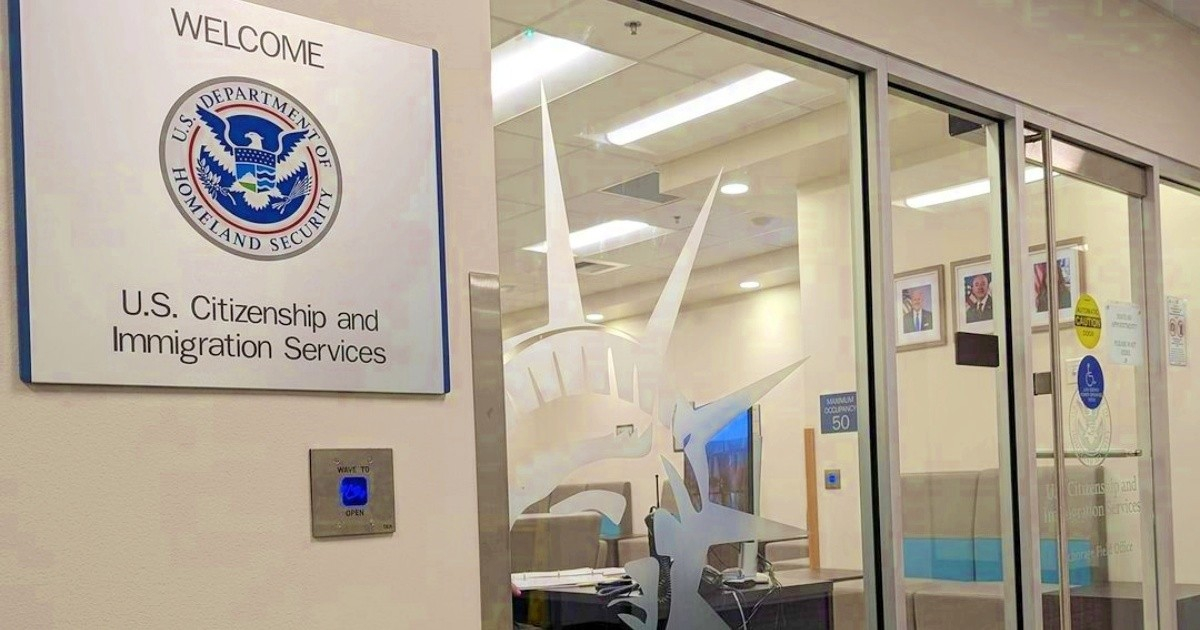
A coalition of civil rights organizations filed a federal lawsuit on Wednesday in the Northern District of California to stop a federal government program that, according to the plaintiffs, investigates and intimidates naturalized U.S. citizens under the guise of verifying their voting eligibility, with Florida among the prioritized states.
The lawsuit —case no. 3:26-cv-12617— was filed by OCA-Asian Pacific American Advocates, OCA-San Mateo, OCA-Sacramento, and Common Cause against the Department of Homeland Security (DHS) and the Citizenship and Immigration Services (USCIS), with representation from the ACLU and Asian Americans Advancing Justice. These are allegations; the government has not yet responded.
The focus of the legal action is the so-called "Unlawful Voter Initiative," which USCIS launched in August 2026, reallocating hundreds of agents to investigate individuals included in a DHS list containing personal identification information—dates of birth, Social Security numbers, and Alien Numbers—of hundreds of thousands of people across the 50 states.
Este caso forma parte de un panorama migratorio en constante cambio que afecta a miles de cubanos y latinoamericanos. Sigue todas las novedades en nuestra sección de
Since all individuals on that list have been assigned at least one Foreign Number, and citizens born in U.S. territory do not receive that identifier, the initiative exclusively affects naturalized citizens, not those born in the U.S.
The reliability of the data is one of the central arguments. An analysis of a sample of the 20,000 identified California voters who were possible non-citizens revealed that 38.9% of those with a registered place of birth had been born in the U.S., and 71.2% had never voted.
The associate director of the USCIS fraud unit, Nicolas Bartell, acknowledged that the data "may be incomplete, outdated, or inaccurate."
According to the lawsuit, the agents were to consult state electoral registration portals posing as the voters themselves, at a rate of five individuals per hour—no more than 12 minutes per case.
The training explicitly instructed agents to make false statements to access the portals of Florida, Virginia, and Massachusetts, and the chief attorney of DHS indicated to them that it was "perfectly fine" to proceed in this manner.
Documents obtained through a Freedom of Information Act request reveal that Florida's records are among the prioritized, along with New Jersey, Michigan, Minnesota, Ohio, Arizona, and Georgia.
After each express review, if an agent suspected illegal voting, they had to open a record in the police system TECS, which can be used at border checks and may even lead to criminal arrests.
The issue is especially relevant for the Cuban community in South Florida: approximately 691,000 registered voters of Cuban descent live in that state, and 66% of Cuban immigrants in the U.S. are naturalized citizens, placing hundreds of thousands of them in the group of individuals who could appear on the federal list just days before the legislative elections on November 3.
This lawsuit adds to a series of actions that have escalated in the weeks leading up to the elections. On October 22, a federal judge limited DHS operations in nine states due to the risk of voter intimidation.
This week, the Department of Justice announced charges against 48 foreigners for electoral crimes, including four Cubans. Additionally, Republican Congressman Randy Fine proposed to review all naturalizations since 1990, a measure that would affect hundreds of thousands of Cubans.
Experts recommend that naturalized citizens planning to vote on November 3 check their registration on the county or state website, keep their naturalization certificate, and if they receive a letter from USCIS or are contacted by federal agents, consult an immigration attorney before responding.
"Naturalized citizens are U.S. citizens, with exactly the same right to vote as anyone born here," stated John C. Yang, president of Asian Americans Advancing Justice-AAJC. "We urge voters to go to the polls. Don't stay home out of fear."
Related videos:
Filed under: