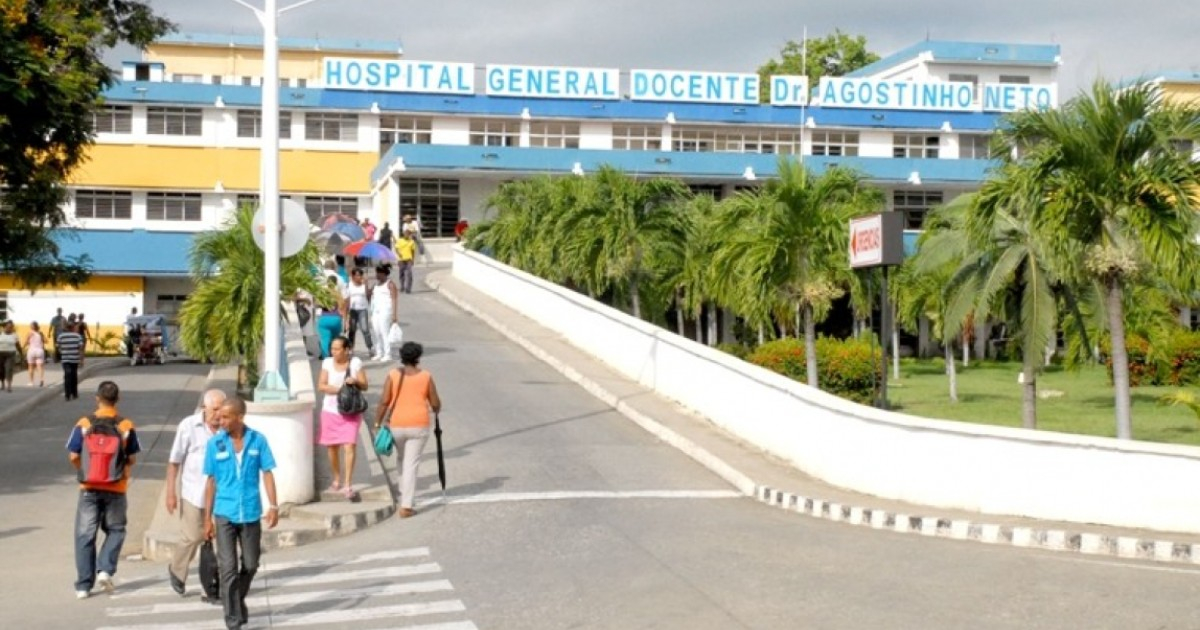
More than 3,000 residents of Guantánamo are waiting for surgical intervention in the province, including over 300 cancer patients, as revealed by the director of the Agostinho Neto Teaching General Hospital, Roberto Javier Torres Bronfield, in an interview published by the state newspaper Granma.
Torres Bronfield attributed the accumulation of cases to the lack of basic equipment: the hospital, which is the largest healthcare institution in the province, is missing machines, tables, and surgical lamps.
The shortage of anesthetics further exacerbates the situation. "We have very low coverage of anesthetics, which forces us to conserve them for emergencies and the Maternal and Child Program," admitted the executive.
But there are other problems that severely burden healthcare in Guantánamo. In mid-October, a failure in the filters of the water treatment plant at the Octavio de la Concepción y de la Pedraja hospital in Baracoa left 48 chronic kidney patients from Maisí, Imías, and Baracoa without hemodialysis, necessitating their urgent transfer to the Agostinho Neto hospital, over 50 kilometers away through the mountains.
Four machines and supplies were transported from Baracoa to assist the patients. The head of the hemodialysis service at Agostinho Neto, Paulo Valier Creach, reported that a new location was set up, increasing the capacity from 14 to 18 stations to accommodate more than 140 patients requiring treatment throughout the province.
Torres Bronfield acknowledged that the situation could worsen: "The breakdown of the active plant is a latent risk. In fact, we already have precedents of that kind in the territory."
The human consequences of this crisis are tangible. Ruth María Méndez Fuentes, a patient from Cayo Guín in Baracoa, has been unable to return home for nine months because there is no fuel for the transportation that took her to the hospital three times a week.
The deterioration of the healthcare system in Guantánamo has been worsening for months. The province recorded an infant mortality rate of 14 per 1,000 live births from January to August 2026, well above the national average of 9.9.
In September, patients from Maisí reported that they were sleeping on mattresses on the floor in Baracoa, without electricity or potable water, while they awaited their hemodialysis sessions.
The lack of surgeries is not exclusive to Guantánamo: on a national scale, the waiting list exceeded 100,000 people in July, of which approximately 5,152 were for oncological interventions.
Related videos:
Filed under: