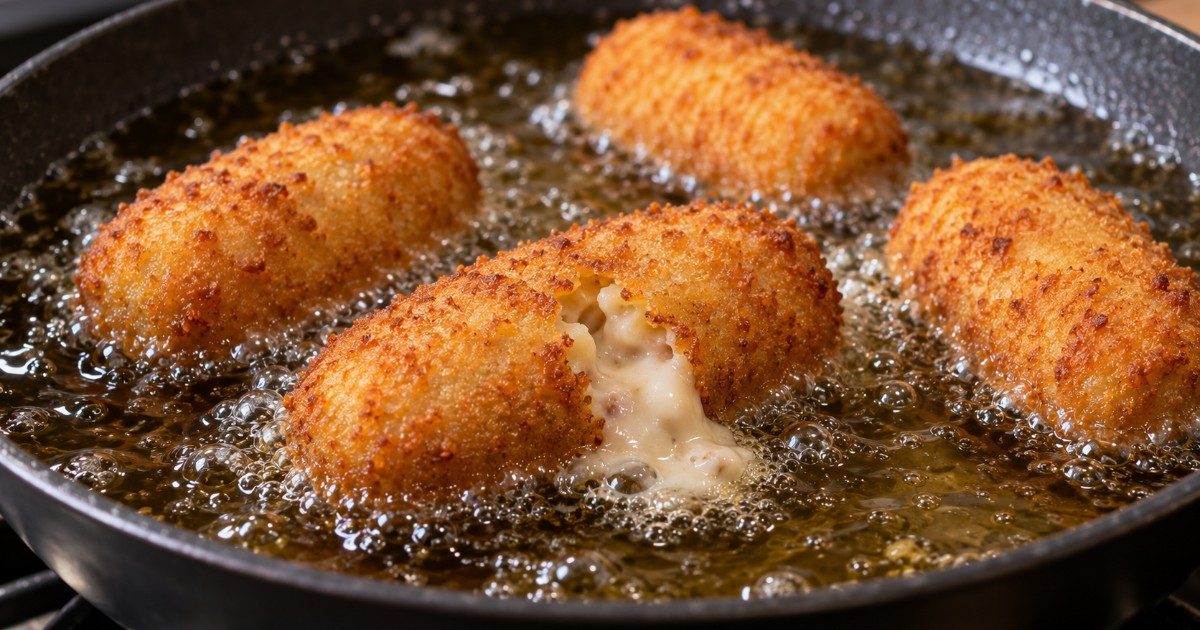
Croquettes can break open because the dough has too much liquid, the coating leaves some areas uncovered, or the oil is not at the right temperature. How they are handled also plays a role. To prevent the filling from ending up in the frying pan, it's important to check each stage: a dough that is difficult to handle is already giving a signal before it touches the oil.
A dough that is too soft needs to be checked before the breading
The base should have enough body to form the croquettes once it cools. In the recipe for meat croquettes from CiberCuba, the mixture is cooked while stirring until it becomes compact and pulls away from the bottom. This point is more reliable than simply deciding it’s ready just because a few minutes have passed.
Also check the liquid provided by the filling. A very watery sauté changes the consistency of the mixture. The preparation of fish croquettes first works the fish with the seasonings until a dry preparation or a very thick sauce is achieved, before incorporating it into the base. This way, the liquid that goes into the dough is better controlled.
If it spreads on the tray while already cold and does not hold its shape, review the proportions and cooking point of the recipe again. Breading does not fix a base that is too liquid on its own. Covering it with more breading may disguise the problem during shaping, but it does not explain or resolve its source.
Let the dough cool before shaping the croquettes
A warm mixture may seem softer than it will be after resting. Avoid judging its final consistency directly from the pot. In his recipe for shrimp croquettes, Karlos Arguiñano transfers the preparation to a dish, covers the surface, and when it cools, he places it in the refrigerator until it is well chilled.
That order allows the pieces to form with a firmer mass. The resting occurs in the refrigerator, avoiding leaving the tray on the table for hours. If it is difficult to maintain its shape while handling, first check that it has cooled completely before adjusting the amounts of flour or liquid.
Make sure the breading covers the entire surface
Check the tips, the bottom, and any cracks that may have formed while shaping the croquettes. An uncoated area is a weak point. The Hogarmania croquette guide suggests passing through flour, beaten egg, and breadcrumbs; other recipes, such as the one for meat from CiberCuba, use egg and breadcrumbs over the shaped dough.
Follow your recipe's system and ensure that the coating is consistent. Work gently to avoid creating cracks when transferring them. Make pieces of similar size: mixing very large and small croquettes requires removing them at different times and makes it harder to monitor the frying process.
The oil should be hot and maintain the temperature
As a reference for frying, Ametller Origen recommends an oil temperature between 175 and 180 °C. A kitchen thermometer allows for more accurate checks than calculating the minutes the pan has been on the heat. The initial temperature also does not guarantee it will be maintained once the food is added.
If the oil is not hot enough, the croquettes may become greasy and take too long to brown. If the outside is changing color too quickly, it's advisable to check if the heat is too high. The explanation by Arguiñano on how to prevent them from breaking adds another recommendation: use enough oil to cover them and promote even frying.
Fry a few at a time and avoid moving them constantly
Filling the pan can ruin a batch that started off well. The oil manufacturer Borges warns in their tips for frying croquettes that adding them all at once lowers the temperature. Work in small batches and ensure the oil reaches the right temperature again before adding the next batch.
Handle them as needed and with care: moving them repeatedly can damage the coating. When they are golden brown, take them out and let them drain excess oil on paper towels. Don’t let a pale color be a reason to stir them constantly; check the heat first.
If a batch opens up, first try with a single piece before adding the others. Check if there was a crack, if the dough was still too soft, or if the oil lost temperature when loading the pan. Correcting the specific issue that fails allows you to test the change without compromising all the remaining croquettes.
Related videos:
Filed under: