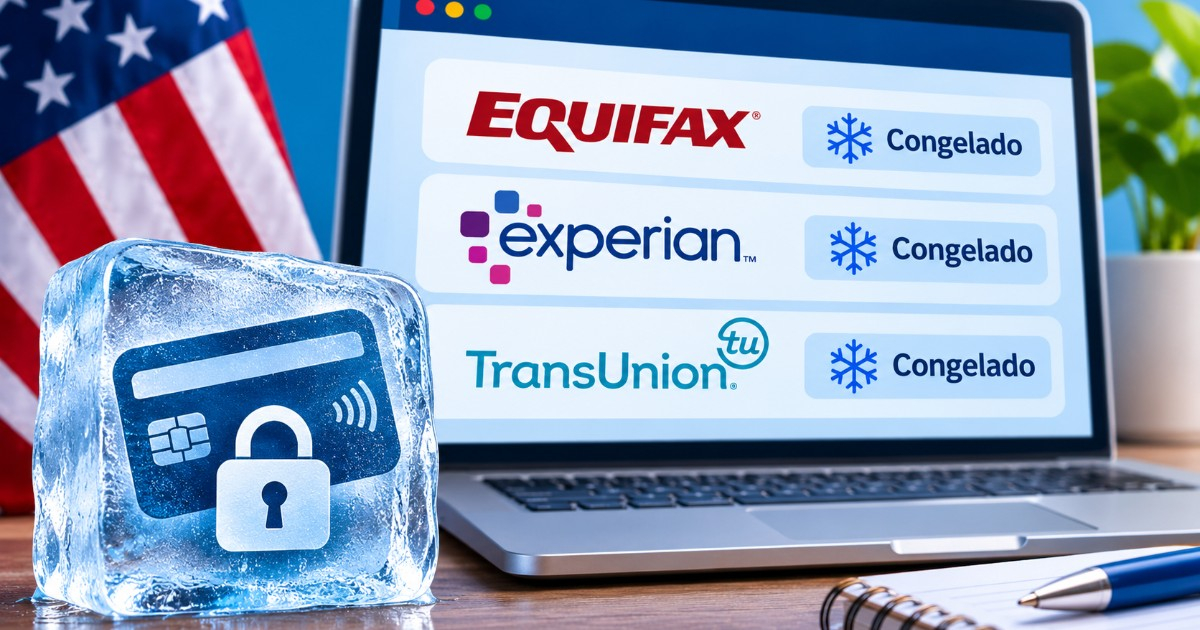
Freezing your credit in the United States is free and can prevent someone else from opening a credit card or applying for a loan using your information. This process is known as a credit freeze or security freeze and involves restricting access to the credit report that many entities check before granting financing. It does not freeze your bank account or deactivate the cards you already have.
To complete the protection, you must separately request a freeze from Equifax, Experian, and TransUnion, the three major credit reporting agencies in the United States. The Federal Trade Commission (FTC) explains that anyone can request it, even if they have not suffered identity theft, and that both activating and lifting it are free of charge.
What is credit freeze and what does it protect?
When you apply for a new credit card, a loan to purchase a car, or a mortgage, the lender may check your history with one or more agencies. If the report is frozen, the institution will generally be unable to access it to assess the opening of a new account, which makes it difficult for a fraudster to obtain financing in your name.
Freezing your credit is beneficial if you have lost documents, suspect that someone has obtained your Social Security number, or if you received a data breach notification. For instance, individuals affected by the data breach on a Florida student aid platform might consider this measure to protect their credit history.
The block is not a guarantee against all fraud: it does not alone prevent charges on an existing account, password theft, bank scams, or other misuse of personal data. It also does not eliminate a fraudulent account that may already appear in your history. Additional actions are necessary for those situations.
How to freeze your credit for free, step by step
The process can be completed online, by phone, or by postal mail. To do it online, go directly to the official website of each agency, locate the security freeze function, and follow the identity verification process. They may ask for your full name, date of birth, address, Social Security number, and other details to confirm that you are the owner of the report.
1. Equifax. Open the official Equifax freeze section. Create a free myEquifax account, or log in if you already have one, and look for the option to place a security freeze. The agency also allows you to manage this measure by phone at 888-298-0045, and by postal mail. Review the confirmation and ensure that the report is marked as frozen.
2. Experian. Access the free Experian freeze service, create or open your free account, and select the option to freeze your credit file. Experian allows you to check the status of the freeze, lift it, and schedule a temporary suspension all from that same account. They also provide phone support at 888-397-3742.
3. TransUnion. Visit TransUnion's official page to freeze your credit. Choose to create a free account with the TransUnion Service Center or log in, and request to freeze your report. From that center, you can check the status, lift the freeze, or temporarily suspend it for a set period. TransUnion also provides a phone option at 800-916-8800.
Important: completing the application at one agency does not activate the freeze at the other two. Check all three separately and securely store your credentials and confirmations. Do not share Social Security numbers, passwords, or identification documents through links received via messages, social media, or alleged intermediaries who charge you for the process.
How much does it cost and how long does it take to activate?
Freezing, temporarily unfreezing, and removing a freeze is free by federal law. You do not need to purchase a credit monitoring subscription to do this. The official USAGov guide states that agencies must implement the freeze within one business day when the request is made online or by phone; for requests made by mail, the timeframe is up to three business days from when they receive the request.
The freeze does not automatically expire; it remains in place until you request to lift it. If you request its removal online or by phone, the agency must do so within a maximum of one hour; by postal mail, it can take up to three business days. Some agencies offer almost immediate changes, but it is advisable to verify that the status has been updated before submitting a financing application.
How to unfreeze credit to buy a car or apply for a credit card
If you are going to apply for a credit card, finance a car, or request a mortgage, ask the bank or lender which agency they will consult. If they use only one, you can temporarily lift the freeze solely for that agency. If you cannot determine which one they will consult, you may need to lift it for all three.
In each portal, look for the options temporarily lift, unfreeze, or thaw. Many allow you to specify start and end dates so that the report can be frozen again after the designated period. You can also remove the freeze indefinitely, but you will then need to request a new one if you want to regain protection. You do not pay for any of these operations.
Does freezing your credit lower your score or block your cards?
No. The credit freeze does not lower the credit score, according to the FTC and the Consumer Financial Protection Bureau (CFPB). It also does not close existing cards, halt the payment of loans you already have, or prevent you from checking your own reports.
Some entities can still access information to manage existing accounts, and there are exceptions for certain legal uses. That is precisely why freezing the history does not replace the review of bank transactions or the security alerts for each account.
Freezing, fraud alert, and credit lock: they are not the same
A fraud alert (fraud alert) notifies entities that they must take steps to verify your identity before granting new credit, but it does not block access to the report. The initial alert is free and lasts for one year; simply request it from one agency, as they are required to inform the other two. If you have already been a victim of identity theft and meet the documentation requirements, you can request an extended alert for seven years.
The freeze (security freeze) restricts access for new credit applications, lasts until you lift it, and requires individual management with each agency. Both measures can coexist.
A credit lock is a distinct product that some agencies offer within their paid services. The CFPB cautions that it is no more effective than the free freeze recognized by federal law. If a screen prompts you to pay for a membership, ensure you are selecting security freeze and not another service.
How to check for free if someone opened accounts in your name
The freeze does not necessarily inform about all suspicious activities. To check if there are any credit cards, loans, or inquiries that you do not recognize, request your reports at AnnualCreditReport.com, the authorized portal for obtaining free reports from Equifax, Experian, and TransUnion. Currently, you can access your reports online for free every week.
Pay special attention to open accounts, balances, registered addresses, and any credit applications you do not recognize. Checking your own reports does not lower your credit score. If you find errors, you can dispute them with the agency and the entity that provided the information; if there are signs of identity theft, also follow the steps to report the theft.
What to do if your data has already been used to commit fraud
If you detect an account that you did not open or unauthorized transactions, contact the fraud department of your bank or creditor as soon as possible to request that they close or secure the affected account. Change any compromised passwords and keep records of the communications.
You can also report identity theft through IdentityTheft.gov, the official portal of the FTC. There you can obtain a report and a recovery plan with instructions on how to dispute fraudulent accounts. The CFPB outlines the procedure for requesting that information resulting from identity theft be blocked or removed from credit reports with the appropriate documentation.
If you want to also protect the credit history of a minor under 16 years old, parents or guardians can request a special free freeze from each agency. This process has different identity and documentation requirements than those for adults, which are explained in the FTC guide on freezes and fraud alerts.
Related videos:
Filed under: