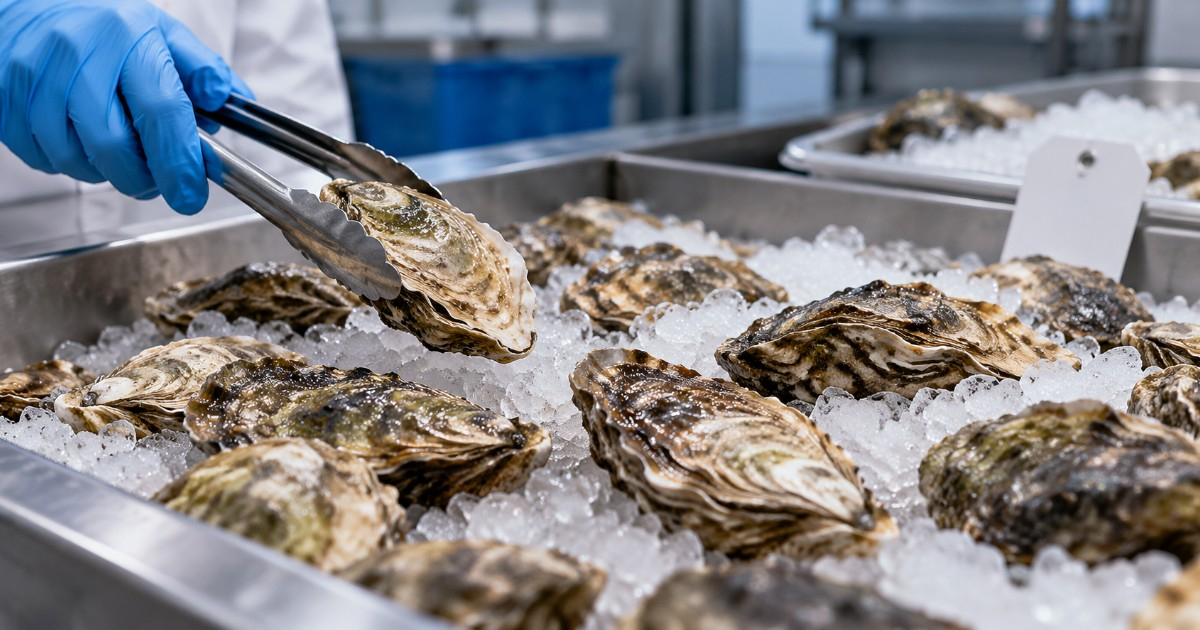
Health authorities in Virginia found the same strain of Salmonella in samples of oysters from Little Wicomico Oyster Company that is causing an outbreak of infections in the United States.
The Virginia Department of Health (VDH) reported in its update on Friday that tests conducted on oysters harvested on October 13 in the company’s growing areas tested positive for Salmonella.
Genetic sequencing analyses identified the Salmonella Telelkebir variant in some samples, the same one detected in outbreak patients.
The result provides new evidence regarding the relationship between oysters from the Little Wicomico River in Virginia and the infections investigated by U.S. authorities.
Up until now, the research has primarily relied on the consumption history of the patients and the traceability of the product.
The laboratories also detected two other variants of the bacteria in the examined samples: Salmonella Newport and Salmonella Hartford.
A second round of analysis, conducted with oysters collected on October 21, found positive samples for Salmonella in three out of the four farming concessions examined from Little Wicomico Oyster Company. The samples from the fourth concession returned negative results.
The VDH clarified that the genetic sequencing results of the positive samples from that second round were still pending. Therefore, it had not been established whether they contained the same variant Telelkebir identified previously.
The United States Food and Drug Administration (FDA) also updated its alert on Friday and reported an additional case of infection since its notice on October 19. The group of patients under investigation has increased from 27 to 28.
According to the Virginia Department of Health, the 28 cases correspond to individuals from 13 states whose infections by Salmonella Telelkebir show a close genetic link.
Of them, 11 reported having consumed raw oysters, and the researchers have traceability information for seven.
Authorities believe that raw oysters from the area of Little Wicomico River are a likely source of infections within that group.
However, it has not been proven that the 28 individuals fell ill from consuming the recalled oysters, as the investigation is still examining the source of the products consumed by various patients.
The health warning specifically refers to whole oysters in shell from Little Wicomico Oyster Company, code VA-1421-SP, harvested between September 18 and October 8, 2026, in the areas of Little Wicomico River and Little Wicomico River Lower, in Virginia.
Florida is among the destinations to which the affected products were shipped, along with other states and the District of Columbia.
The FDA notes that the oysters withdrawn have already exceeded their shelf life and should not remain for sale. However, the warning remains important for consumers, restaurants, and establishments that may have stored some of the product frozen.
The Centers for Disease Control and Prevention (CDC) explicitly warn that those who have frozen oyster meat should check if it is part of the recall. If it matches the affected product, it should not be consumed, but instead discarded or returned.
Freezing does not guarantee the elimination of bacteria. Therefore, authorities do not recommend cooking the removed oysters as an alternative to use them. Restaurants and businesses that still have these products should not sell or serve them.
To identify the oysters, establishments must check the labels, the collection dates, the producer's code, and the documentation of origin. Consumers who are unsure about the source of a preserved product can consult the store or distributor from whom they purchased it.
The FDA also reminds that a food contaminated with Salmonella can have a normal appearance, smell, and taste. Both consumers and establishments should clean and disinfect containers, utensils, and surfaces that have come into contact with the affected oysters to prevent the bacteria from spreading to other foods.
Common symptoms of salmonellosis include diarrhea, fever, and abdominal cramps. The CDC recommends seeking medical attention for severe symptoms, such as diarrhea with blood, high fever, persistent vomiting, or signs of dehydration.
Little Wicomico Oyster Company voluntarily withdrew the oysters on October 9 and notified its customers. That same day, Virginia authorities implemented a temporary closure of the affected harvesting area. The first federal advisories from the FDA and the CDC were published on October 19.
A few days ago, it was reported about the health alert regarding the oysters distributed in Florida, as federal authorities were investigating 27 genetically linked infections.
The laboratory results released later allowed for the identification in samples from the cultivation area of the same strain found among the sick.
Related videos:
Filed under: