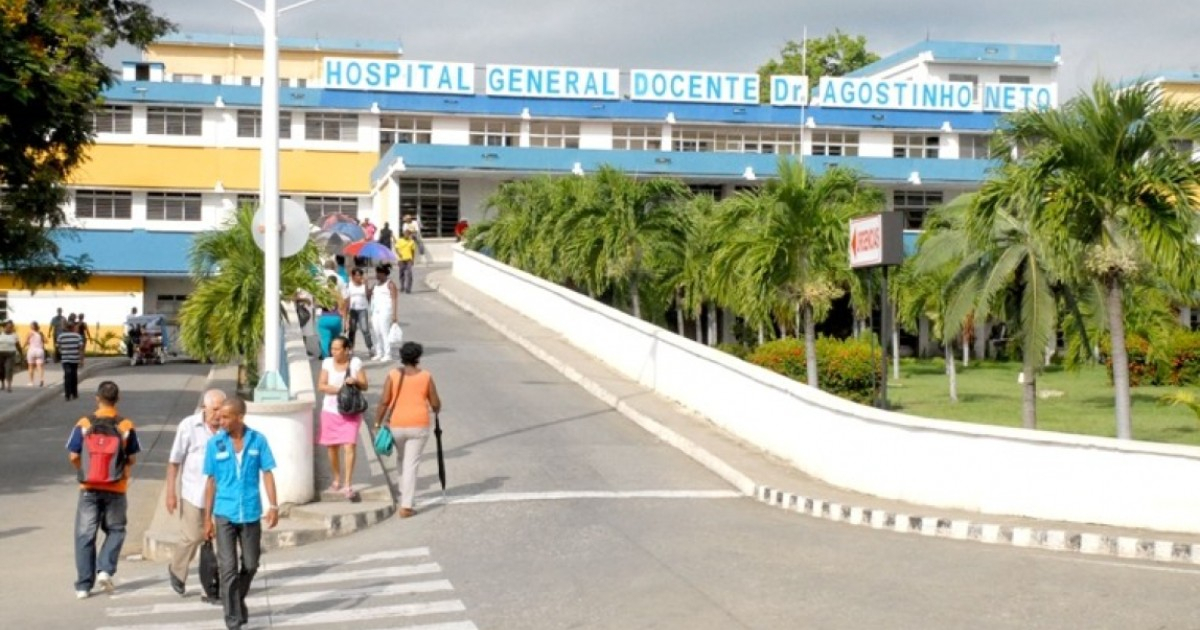
The Minister of Public Health of Cuba, José Ángel Portal Miranda, acknowledged serious operational issues in hospitals and other healthcare institutions across the country, ranging from a lack of medications and medical equipment to malfunctions in elevators, boilers, water systems, and generators.
Despite these difficulties, it was noted that no health center has had to close its doors.
The statements were published this Sunday in the official newspaper Granma, regarding the conclusion of a visit by the Central Committee of the Communist Party of Cuba (PCC) to the Ministry of Public Health (MINSAP) and several institutions in the sector, led by Miguel Díaz-Canel.
During its assessment, Portal Miranda acknowledged that economic, technological, health, and organizational limitations impact the performance of the healthcare system and lead to "justified dissatisfaction among the population with the services we provide".
The minister acknowledged that the shortage of medications remains significant and that disposable materials, analysis reagents, and medical equipment, particularly high-tech devices, are also lacking—shortages that compromise healthcare centers' ability to diagnose diseases and provide treatments.
But the problems are not limited to medications. Portal described difficulties with elevators, boilers, generators, laundry equipment, water supply, cold storage, and emergency transportation, as well as other systems essential for the operation of hospitals and polyclinics.
The head of MINSAP acknowledged that there are programs aimed at recovering part of that infrastructure, but he admitted that the efforts made so far are not sufficient to solve the problems.
Despite this situation, Portal stated that the network of health institutions in the country continues to operate: "No institution has been closed in the country; all our hospitals and polyclinics are still working, and while some services have been limited, we have not closed any," he affirmed.
The official also stated that the system maintains high levels of medical consultations and operations, but acknowledged that there are patients awaiting surgical interventions primarily due to a lack of resources.
According to Portal, surgical activities are still being planned with priority given to operations that are critical for patients' lives.
The minister attributed part of the difficulties to the reduction of available financial resources and U.S. sanctions, but also acknowledged the existence of "shortcomings and inadequacies inherent" within the Cuban healthcare system.
During the same meeting, Díaz-Canel reiterated that over 90,000 people are awaiting surgical operations in Cuba, while tens of thousands of patients are struggling to access radiotherapy, chemotherapy, and dialysis.
It was also noted that more than 34,000 pregnant women are not receiving all the treatments or medical checks they need.
These difficulties had already been acknowledged by the ruler himself in August, when he reported that 98,500 patients were waiting for surgery, including about 12,000 children, and that around 34,000 pregnant women were not receiving the necessary prenatal ultrasounds.
On that occasion, Díaz-Canel also admitted that only 30% of the basic medication list was available, which left seven out of ten essential drugs out of reach for patients.
Related videos:
Filed under: