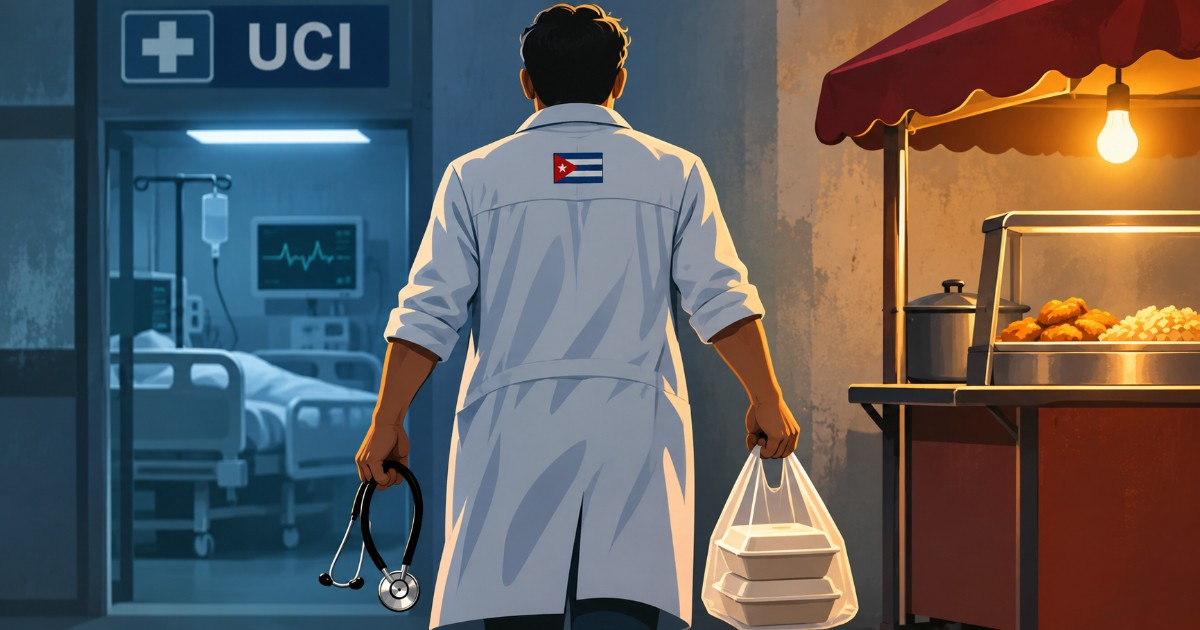
The Cuban doctor Alejandro Chong, head of the Intensive Care Unit (ICU) at the William Soler Pediatric Hospital in Havana, earns more money from a food sales position than from his job leading a service responsible for caring for critically ill children.
Her story was revealed this Sunday by 60 Minutes, from the American network CBS News, in a report conducted in Cuba that featured testimonies from doctors forced to seek additional income as they face shortages of medications, equipment, and hospital supplies.
Chong's case illustrates the contradiction faced by professionals with years of training and crucial responsibilities for the lives of their patients, yet whose salaries do not allow them to meet their needs.
He is not the only doctor in the hospital who needs another job. Lórien Rodríguez, a second-year Pediatric Surgery resident, also works as a radio host to support herself financially.
Meanwhile, the young woman explained to CBS that the lack of staff and resources increasingly complicates medical care.
According to their testimony, professionals must constantly communicate to families that they cannot provide certain treatments due to a lack of necessary resources.
The difficulties include the shortage of cancer medications, anesthetics, and laboratory equipment.
During the visit of the American television channel, the doctors explained that a young girl had been waiting for 68 days for an essential part for an extracorporeal circulation machine necessary for her surgery. Under normal circumstances, the wait would have only been two days.
Blackouts pose another risk. Chong explained that even the seconds that pass between an electrical interruption and the activation of generators can be critical for patients under general anesthesia or connected to mechanical ventilation.
Doctors reported that, when the generators fail as well, they have had to complete surgeries using the light from their cell phones and provide manual ventilation to patients who rely on electric equipment.
The report also highlights the case of a two-month-old baby who arrived at William Soler after being abandoned. The infant was suffering from dehydration and malnutrition, and weighed less than 2.3 kilograms.
After stabilizing him, the doctors needed specialized infant formulas that were not available. Chong explained that the shortage forces them to improvise nutritional alternatives made with malanga and chicken.
The 60 Minutes team reached out to the doctor again before airing the program. Chong reported that the baby had suffered respiratory complications and had to return to intensive care, where he passed away last Thursday.
On October 29, the William Soler hospital received a recent visit from Miguel Díaz-Canel. The leader praised the work of the healthcare staff, although he acknowledged the difficulties related to fuel, transportation, medication, and electricity.
The publication of her journey sparked criticism from citizens who reported the deterioration of the facilities.
Chong's testimony adds to previous coverage by CBS News, which has already documented the shortages of medications, prolonged blackouts, and the economic hardships faced by the population in Havana.
Other cases show how low wages push doctors to seek alternatives outside of hospitals.
In May, a Cuban woman shared that her mother, also a doctor, sold homemade flans because the hospital salary was not enough to support the family. According to her daughter, she could earn in two days of sales what was equivalent to a month's salary as a doctor.
Similarly, in October, another Cuban professional reported that she had decided to resign from practicing medicine to seek better income, despite the years devoted to her training and her passion for caring for patients.
Related videos:
Filed under: