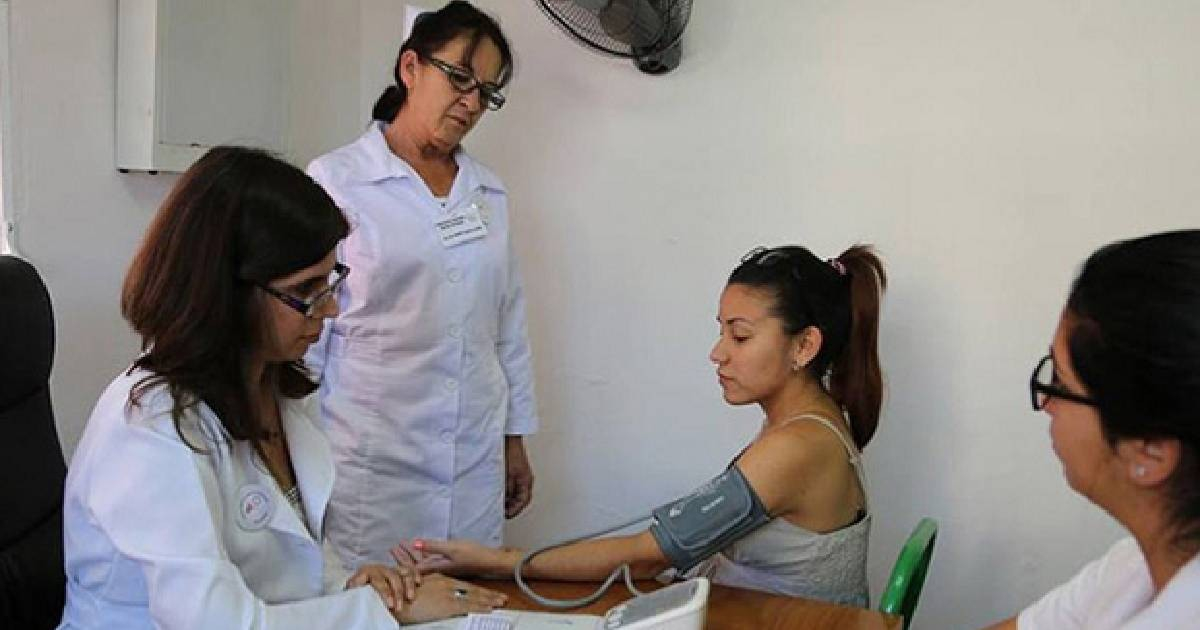
The Cuban health system closed 2025 with 71,635 registered doctors, according to the 2025 Health Statistical Yearbook from MINSAP, published in mid-October 2026. This figure represents a decline of 3,729 professionals compared to the 75,364 recorded in 2024, marking an annual reduction of nearly 5%.
The information comes from Table 102 of the document, compiled from the Health Workers Registry of the Human Capital Directorate of MINSAP. It is important to note that this refers to registered personnel, not necessarily doctors physically practicing within the country: Table 105 of the same yearbook includes residents and diplomats on foreign missions, as well as staff involved in teaching, research, or management. MINSAP itself cautions that the indicators are preliminary, "indicating the possibility of minor variations until the end of the current year."
The reduction in 2025 is part of an ongoing trend that intensified since 2021, when the record counted 106,131 doctors. In four years, that number fell to 71,635, a loss of 34,496 professionals —approximately 32.5% of the total—. The most significant decline occurred between 2023 and 2024, when Cuba lost over 13,000 doctors in a single year.
The yearbook does not break down the reasons for the reduction. Among the factors identified by analysts are emigration—Cuba is experiencing the largest wave of migration in its recent history—abandonment of the profession due to insufficient salaries, retirements, and the assignment of professionals to missions abroad. None of these causes are officially quantified in the document.
Beyond the doctors, the deterioration encompasses the entire National Health System. Table 96 of the yearbook records 365,515 workers in 2025, compared to 390,279 in 2024 and 421,120 in 2023. In two years, the system lost 55,605 workers. Of those who remain, 259,964 are women, accounting for 71.1% of the total. The nursing staff totals 134,817 individuals, and the dentists number 11,740, with a rate of 12.2 per 10,000 inhabitants.
The number of doctors per inhabitant was 74.7 for every 10,000 people in 2025, an indicator that contradicts the official narrative about the supposed medical power of the island. The ratio of inhabitants per doctor has steadily worsened: it increased from 113 in 2022 to 127 in 2023 and to 131 in 2024, according to data from the National Office of Statistics and Information.
The collapse of the Cuban healthcare system has official recognition. In July 2025, Minister José Ángel Portal Miranda acknowledged before the National Assembly a "unprecedented structural crisis," with only 30% of the essential medication supplies available and 32% in pharmacies. By the end of 2024, 461 out of the 651 essential products—70.8%—were either unavailable or had low coverage.
The 2025 yearbook is published alongside other indicators of deterioration. The official figures on premature mortality show 128,106 deaths in 2024, which is 10,357 more than the previous year. The rate of potential years of life lost per 1,000 inhabitants increased from 76.3 in 2023 to 81.8 in 2024, according to the previous year's yearbook.
In September 2026, the MINSAP tightened the licensing requirements for practicing medicine, demanding a degree, registration in the registry, and legalized documentation, a regulatory change that could impact the number of licensed professionals in future registries.
Related videos:
Filed under: