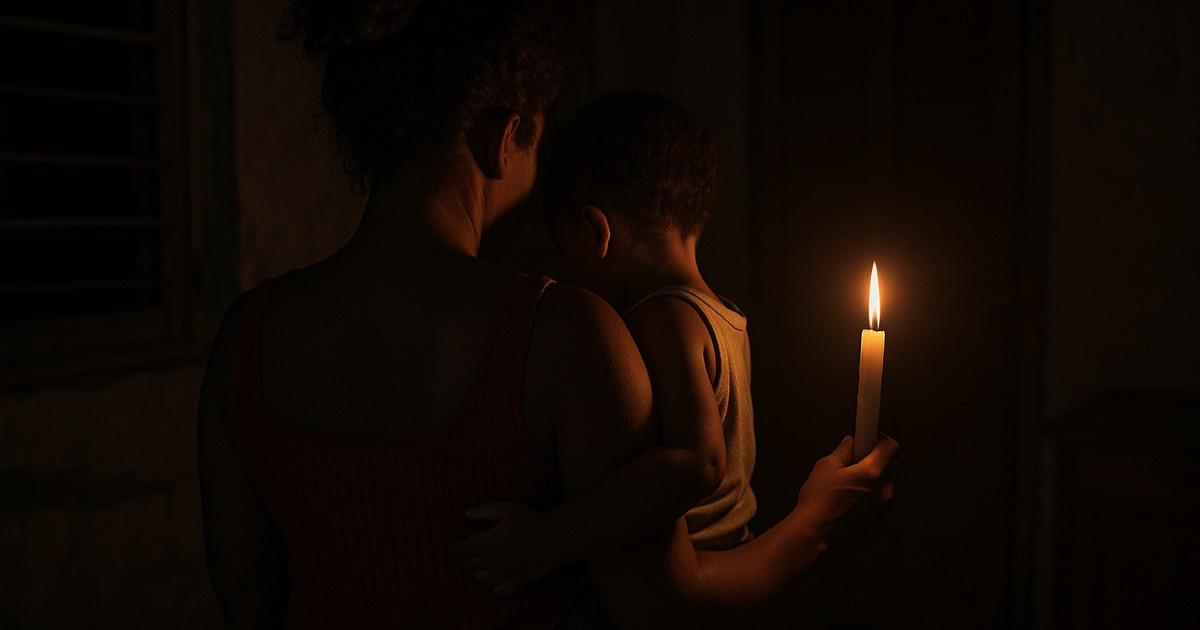
Cuba begins November 2026 mired in an extremely serious electricity crisis. According to the official report from the Unión Eléctrica (UNE) published this Monday, the National Electric System (SEN) anticipates an impact of 1,922 MW during peak hours, with only 958 MW available compared to a demand of 2,850 MW.
The projected deficit for the night amounts to 1,892 MW, which anticipates massive electricity cuts across the country during peak consumption hours.
The situation had already been critical since dawn. At 06:00 hours, the UNE reported an availability of 970 MW against a demand of 2,300 MW, leaving 1,300 MW uncovered. By midday, an impact of 1,550 MW was estimated.
Sunday was not any better. According to the report itself, "yesterday the service was affected by capacity shortages for 24 hours, and the impact persisted throughout the early morning hours," with a maximum deficit of 1,886 MW recorded at 7:20 PM.
The breakdowns in the thermoelectric plants largely explain the collapse. This Monday, the following units were out of service: unit 1 of the CTE Santa Cruz, unit 2 of the CTE Felton, and units 3 and 6 of the CTE Renté. Three other units were under maintenance: unit 3 of Santa Cruz, unit 5 of Nuevitas, and unit 5 of Renté. Together, "the limitations in thermal generation amount to 607 MW," according to the UNE.
The outlook for the nighttime peak includes movements that barely offset the losses: the entry of unit 4 of the Carlos Manuel de Céspedes power plant with 150 MW is expected, but there will also be the exit of unit 3 of the same plant due to low fuel levels (115 MW) and the disconnection of the Energas Varadero power plant due to a lack of lubricating oil (47 MW).
Solar energy contributed 4,140 MWh on Sunday, with a peak power of 644 MW during the average hour. However, this amount is insufficient to compensate for the thermal deficit and does not cover the nighttime hours, when the greatest impacts occur.
This start to November is a direct continuation of a devastating October for the electrical system. The impacts exceeded 2,000 MW for consecutive days at the end of the month: 2,004 MW on the 29th, 2,039 MW on the 30th, and 2,022 MW on the 31st of October.
The Antonio Guiteras power plant, the largest thermoelectric facility in the country with a nominal capacity of 316 MW located in Matanzas, suffered five unscheduled outages just in October, the last one due to low vacuum in the condenser, with three simultaneous cracks detected in the boiler. On October 16, a fire at the Santa Cruz CTE reduced the availability of the SEN to 740 MW, leaving 75.5% of demand unfulfilled.
Across the island, by the end of October, there were reports of circuits experiencing between 70 and 89 consecutive hours without electricity. In Havana, by noon on Sunday, 213 MW were affected and 84 distribution circuits were interrupted.
While the population faces power outages of more than 20 hours daily, the Cuban regime presented a strategy in November 2025 that promises to achieve "electrical independence" by 2035 with 40% of renewable generation, a promise that starkly contrasts with the reality that Cubans are experiencing this Monday.
Related videos:
Filed under: