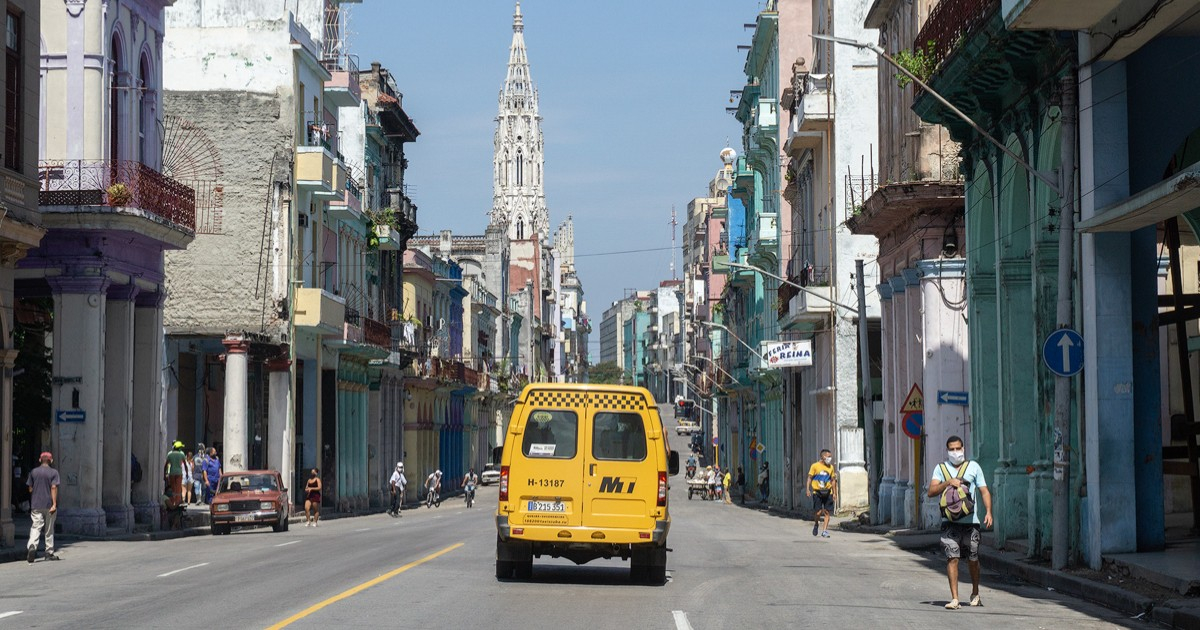
The independent writer and journalist Frank Correa, residing in Jaimanitas, Havana, publicly denounced that his daughter has been unable to attend classes at the Faculty of Foreign Languages at the University of Havana for a week because the round-trip transportation costs her 2,000 Cuban pesos daily, not including meals.
Correa expressed it in a Facebook post with straightforward words: "My daughter has not been able to attend university classes this week because the round trip to the Faculty of Foreign Languages costs 2,000, not to mention food expenses. How humble it is for the people, and especially for an oppressed, persecuted opponent left to their fate, to bear such expenses when there is not even enough to eat."
The figure is staggering when compared to the monthly minimum wage in Cuba, set at 3,210 CUP since July 2026: one single day of classes would consume more than 62% of that income, making university attendance an unattainable luxury for families with limited resources.
The daughter of Correa, Beily Mariam Correa, had already been targeted by repression before the economic crisis left her without classes. In September 2026, State Security agents visited the faculty to inquire about her enrollment, apparently in retaliation for her participation in an art exhibition organized by the Embassy of the United States in Havana.
Weeks later, on October 13, the young woman's mother, the independent journalist Yunia Figueredo, reported that an officer identified as "Major Hilda" threatened to jeopardize Beily Mariam's university enrollment if both journalists did not cease their activities.
The pressure on the family is not recent. The Cuban Observatory for Freedom of Expression documented 22 repressive episodes against Correa and Figueredo between April 2025 and September 2026, including surveillance, arbitrary detentions, interrogations at Villa Marista, threats, and confiscations. In August 2026, Correa was arrested while conducting an interview; simultaneously, agents showed up at his home and threatened Figueredo and her daughter.
In light of this situation, on September 9, 2026, the Cuban Institute for Freedom of Expression and the Press (ICLEP) requested protective measures from the Inter-American Commission on Human Rights to safeguard the family.
Correa's statement highlights a double exclusion: the economic one, which the collapse of transportation imposes on thousands of Cuban students, and the political one, which State Security exercises over the children of those who dare to report independently. "Down with dictatorships," concluded the journalist in his post.
Related videos:
Filed under: