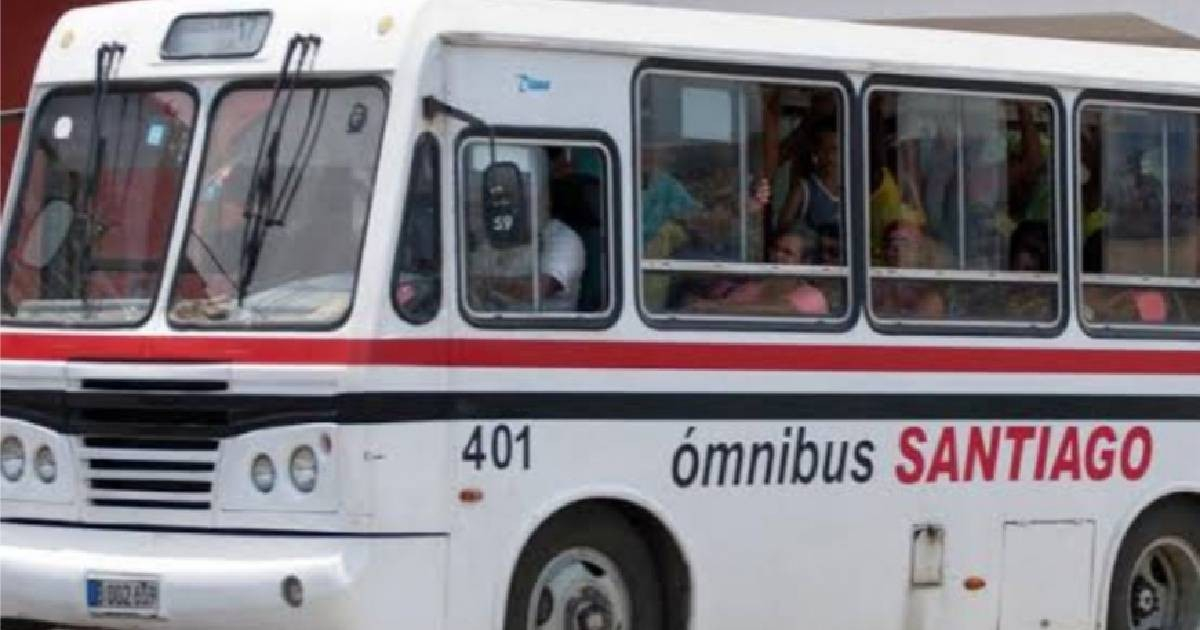
The provincial delegate of Transportation in Santiago de Cuba, Jaime Codorniú Furet, described in the official newspaper Sierra Maestra the measures being implemented to sustain transportation services amid fuel shortages, emphasizing the need to keep operational the routes that connect the population with hospitals and medical reference centers.
According to the official, the provincial plan includes three structural transformations and nine measures that impact the organization of the sector, its autonomy, the energy matrix, and the setting of rates, within a national package of 176 measures distributed across 23 thematic axes.
"The central idea is to keep the main routes active, especially those close to hospitals, reference centers, and areas of economic activity, while also addressing the mobility of the population," Codorniú Furet stated to the state media.
To maintain these routes, the province is working with three supply options: fuel provided by non-state transportation, support from the Ministry of Transportation, and partnerships with small and medium-sized private companies and other non-state transporters.
In the urban area, the reference price set does not exceed 100 pesos, calculated based on the kilometers traveled. Although fuel prices have risen 25 times, the fare has not increased by the same proportion, although it has risen in relation to the current rate. By the end of the year, alternatives with fuels from the Development Fund will be examined to alleviate costs.
The scheme includes non-state transportation on urban, suburban, intermunicipal routes, and within the Plan Turquino, and is complemented by urban buses, route buses, Taxi Cuba, returns, and companies such as Transmetro, Escolares, Transgaviota, and Transtur.
Regarding interprovincial transportation, the lack of fuel has drastically reduced frequencies. From Santiago, there are connections to Havana on Mondays, Wednesdays, and Fridays; to Artemisa on Mondays; to San José on Thursdays; and the combined service Santiago-Batabanó-Gerona is still operating. A weekly frequency to Matanzas has been added on Wednesdays. The national train from Santiago to Havana operates with availability every 16 days, although additional departures are occasionally scheduled.
This month, the Santiago-Guantánamo and Santiago-Bayamo-Manzanillo routes will be added, depending on fuel availability, and efforts are being made to enable the Santiago-Holguín route. Ticket sales are exclusively in-person at the railway station and travel agency, with no option for phone or digital purchases. "The queues are due to insufficient supply and are the only available option for these services," acknowledged the state media.
The situation described by Codorniú Furet reflects a national crisis. In mid-October, the Minister of Transport admitted the collapse of the service: daily interprovincial bus departures from Havana fell from 419 in 2025 to just over 11 in 2026, and national bus routes were reduced from more than 100 to only 21.
In Santiago, daily commuting via private transport can cost up to 5,000 pesos per month, and informal interprovincial trips are priced between 15,000 and 35,000 pesos. As a mitigation measure within the healthcare sector, in August the city received 10 electric taxis designated for dialysis patients, assigned to five hospitals.
Simultaneously, a process for the legalization of vehicles assembled from parts —motorcycles, tricycles, sidecars, trailers, and semi-trailers— is open until November 6 through registration at sensovap.transnet.cu, with the support of municipal Joven Clubs. In Santiago, the Joven Club in Corona, located at the corner of Enramadas, has already registered 3,600 participants in one month.
Related videos:
Filed under: