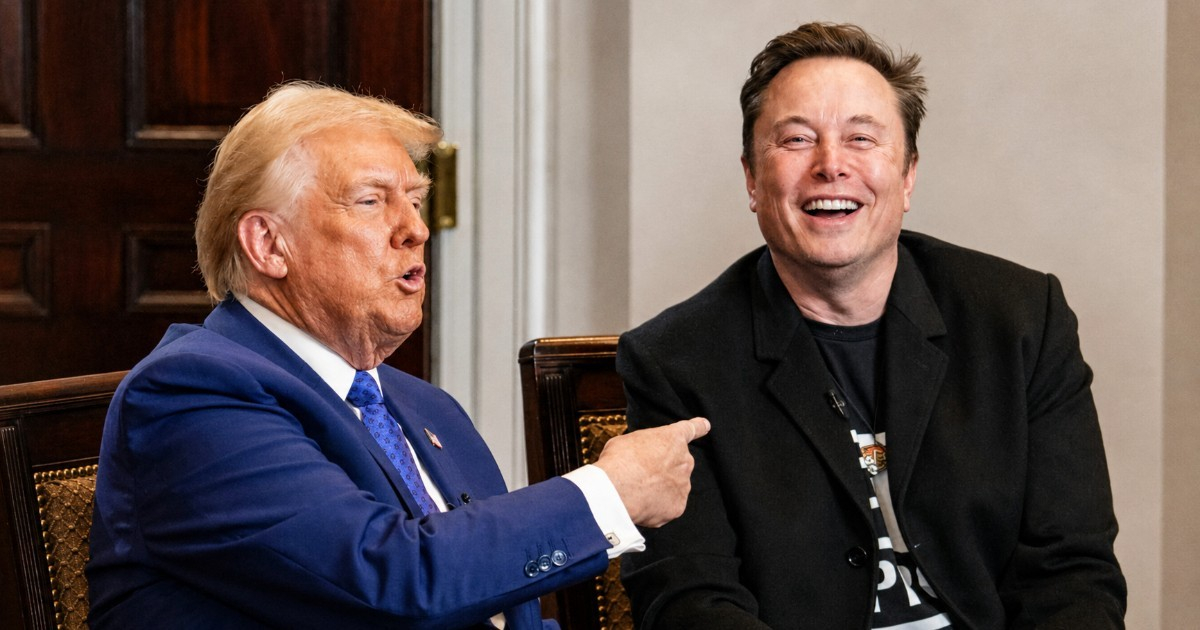
The businessman Elon Musk became the largest political donor in the history of the United States this Monday by contributing at least 474 million dollars to the Republican Party during the midterm election cycle, according to data collected by the EFE agency based on federal records and investigations by the newspaper The New York Times.
No donor who was not a candidate had ever reached such a figure in a single electoral cycle. The previous record belonged to the couple Sheldon and Miriam Adelson, with approximately $218 million contributed during the 2020 presidential cycle, a mark that Musk more than doubles with his 2026 investment.
Donations from the tech magnate were distributed among various committees and organizations: 216 million went to America PAC, the super political committee created by Musk himself; 168 million to the Senate Leadership Fund, the main super PAC supporting Republican candidates for the Senate; 30 million to the Congressional Leadership Fund, focused on the House of Representatives; 44 million to other federal Republican groups and candidates; and 16 million to state political initiatives in Michigan, Texas, and Wisconsin.
The actual figure could be even higher. The available federal records only cover up to October 14, leaving out the last three weeks of the campaign. Additionally, part of Musk's contributions was funneled through "dark money" structures, the sources of which are not always publicly disclosed.
A substantial portion of the spending—around 212 million dollars identifiable—was concentrated in Texas, where Musk backed the Republican candidacy of Ken Paxton for the Senate against the Democrat James Talarico. Despite this massive investment, pre-election polls placed Talarico ahead with 50% compared to 43%, according to NYT/Siena surveys.
Musk's disbursement is not an isolated phenomenon: the 2026 midterm elections also broke the record for political advertising spending in the country, even surpassing the 2024 presidential cycle, with a projected total of $11.6 billion in advertising, according to the firm AdImpact.
This is not the first time Musk has led political spending in an electoral cycle. In 2024, he allocated nearly $290 million to support Donald Trump's candidacy, becoming the largest individual donor of that cycle. Following Trump's victory, Musk headed the so-called Government Efficiency Department (DOGE), which was formally dissolved on July 4, 2026, after about 130 days of operation.
That specific period leading the DOGE, along with the contracts of his companies with the federal government and his role in the conflict between Russia and Ukraine, is the focus of investigations that several Democratic lawmakers have announced if they manage to regain control of one of the chambers of Congress in these elections.
In the electoral event this Tuesday, all 435 seats in the House of Representatives will be renewed, 35 of the 100 seats in the Senate will be contested, and governors will be elected in 36 states, with the Democrats leading over the Republicans in several key states according to the latest polls.
Related videos:
Filed under: