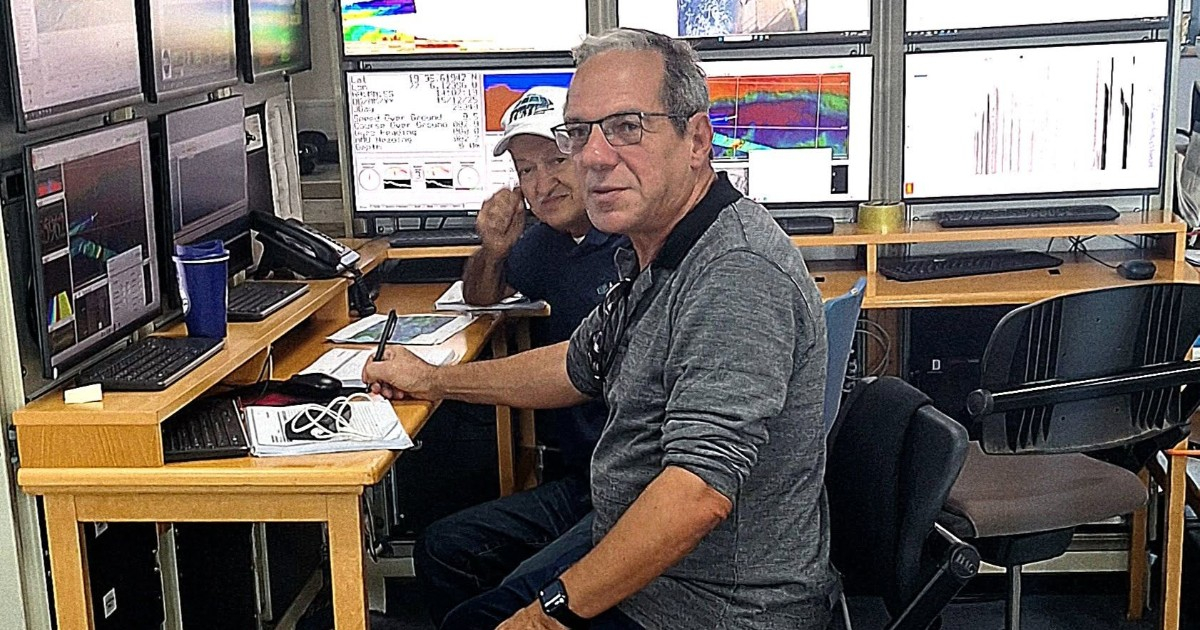
The head of the Cuban National Seismological Service, Enrique Diego Arango Arias, reacted strongly this Tuesday to the official announcement of the law dissolving the Ministry of Science, Technology and the Environment (CITMA), denouncing that the warnings from specialists were completely ignored by the authorities.
Arango, the deputy technical director of the National Center for Seismological Research (CENAIS), posted on Facebook that experts sent their criticisms to the email set up by the National Assembly of People's Power (ANPP) and that the outcome was silence: "And they completely ignored (not to put it more harshly) the analyses carried out by several specialists who pointed out the serious mistake of eliminating CITMA."
The trigger for his new reaction was the publication on Monday of the Law 186 "On the Organization of the Central State Administration" in the Official Gazette (Ordinary Edition No. 90), which comes into effect on November 9, 2026.
The regulation, approved by the ANPP on July 30, reduces the central state administration bodies from 27 to 21 and dissolves CITMA, redistributing its functions between two new ministries: the Ministry of Higher Education, Science, and Innovation and the Ministry of Environment, Habitat, and Hydraulics.
The latter will assume, according to Article 92 of the law, the direction of seismic and hydrometeorological monitoring networks, which places CENAIS under the same portfolio that manages water, land registry, and housing.
Arango noted that this is precisely where one of the technical errors of the law lies: "both INSMET and CENAIS do not only operate 'surveillance networks'; they are scientific institutions that manage project programs, conduct fundamental and applied research, among other missions in Science, Technology, and Innovation."
The criticism is not new. From the day after the parliamentary approval, the seismologist had described the dissolution of CITMA as a "serious mistake" made in an "uncollaborative" manner, denouncing that neither workers nor officials from the ministry were summoned to discuss the measure and that there was no scientific study supporting its advantages.
On that occasion, he also warned that "the vast majority of the workers in our organization are not even aware that the CITMA is disappearing."
A worker from CITMA in Matanzas, Luis Ernesto Martínez González, reported that the staff did not receive "not a single written question" before the decision was made, and that they were informed of the dissolution only on May 8, 2026, less than three months before the legislative approval.
Arango's post sparked a wave of comments from citizens and professionals who shared their frustration. "Why would they listen to the experts when the infallibles had already made the decision? That was well known," wrote Zoilo Rafael Fernández Hernández. Another user summarized the mishmash of competencies established by the law: "Seismology mixed with water management, land registry... There's a hodgepodge of functions there that only they understand."
El CENAIS operates a network of 25 seismic stations and provides real-time data to international tsunami alert systems in the Caribbean, a function that specialists consider incompatible with the logic of a ministry focused on the environment and hydraulic resources.
The affected organisms will have up to a year from the law's entry into force to complete the transfer of personnel, assets, and financial resources, a timeframe that critics deem insufficient for such a large-scale restructuring.
Related videos:
Filed under: