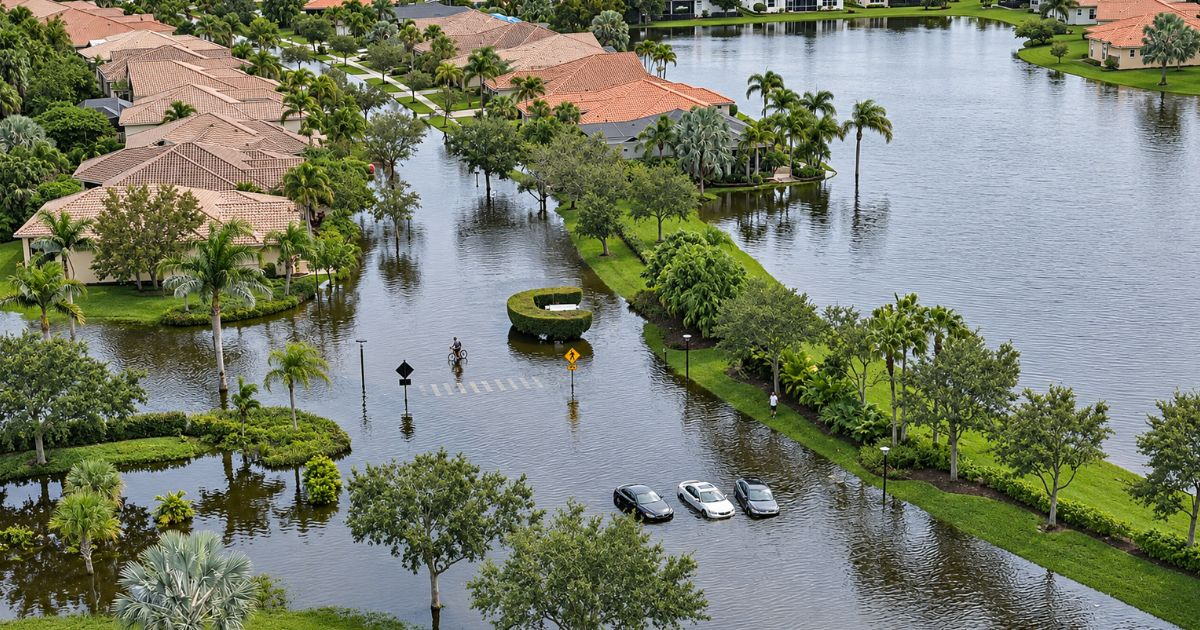
If your home, vehicle, or business has suffered damage from the recent flooding in Florida, photographing the losses before starting the cleanup may be essential for filing a insurance claim.
State authorities recommend carefully documenting everything that was affected by the water, from furniture and appliances to floors, walls, and structures.
The Florida Division of Emergency Management (FDEM) issued a warning on Wednesday addressed to residents affected by the historic rains that have impacted various areas of the state in recent days.
"The floodwaters may be receding, but recovery begins with documenting the damages," the agency noted.
Among the items that are recommended to be recorded are the affected belongings, damage to homes and vehicles, the marks left by the water level on the walls, and the effects on rooms, floors, and structures.
The images serve as evidence of the property's condition after the flooding and can assist insurers in assessing the damages.
If the damaged objects are removed or the surfaces repaired before documenting them, it may become more difficult to determine the extent of the damage later on.
In its official guide on flood insurance, the FDEM explains that before and after photographs of a disaster allow insurance companies to compare the property's condition and assess the extent of the damage.
The agency also recommends preparing a detailed inventory of the lost or damaged items during the cleanup.
If the owner keeps the original receipts for furniture, appliances, or other belongings, they should keep them as additional documentation for the claim.
Once the information has been gathered, the affected individuals should contact their insurance company to initiate the corresponding procedure.
Photographs and inventories can support the claim, but they do not guarantee compensation on their own, as it will depend on the terms and coverage of the policy.
The FDEM also warns that standard homeowner insurance policies do not necessarily include flood coverage. Therefore, it is important to review the policy and check if there is specific protection for these damages.
Authorities insist that no photograph justifies risking one’s life. Residents should document the damage only from safe locations and should never enter stagnant waters to take pictures.
For additional information about insurance and claims, the agency refers to the National Flood Insurance Program, which provides resources for homeowners and renters about coverage and claims procedures.
trapped and numerous roads closed.
The recommendation is particularly valuable after several days of extraordinary rainfall that caused flooding in communities in central and southeastern Florida, where numerous homes were submerged, cars were trapped, and roads were closed.
In some areas, the accumulated rainfall in just 48 hours was equivalent to nearly half a year's worth of usual rain.
Preliminary records from the National Meteorological Service indicated 24.10 inches (612 millimeters) in Malabar and 23.69 inches (602 millimeters) in Grant-Valkaria, both locations in Brevard County.
In Palm Bay, 20.60 inches (523 millimeters) were recorded, while in West Palm Beach, some stations reported up to 22.20 inches (564 millimeters), amounts that reflect the exceptional intensity of the event.
Last Monday, Governor Ron DeSantis declared a state of emergency in seven counties: Brevard, DeSoto, Hardee, Highlands, Indian River, Martin, and St. Lucie.
The declaration, established through Executive Order 26-227, allowed for the mobilization of extraordinary resources and expedited response and recovery operations in the affected communities.
This Wednesday, DeSantis expanded the state of emergency to include seven additional counties: Glades, Hendry, Lake, Okeechobee, Palm Beach, Seminole, and Volusia. With this modification, a total of 14 counties are covered by the state declaration.
Flooding also impacted traffic in various regions. In Okeechobee, intense rains left sections of the SR 70 and US 441 highways impassable, while the National Weather Service warned of potentially deadly flash floods.
The FDEM has the official page FloridaDisaster.org/FallFlooding available, where residents can check emergency declarations, access contacts for their county emergency management offices, and find information about roads, notices related to drinking water, and closures of educational centers.
Related videos:
Filed under: