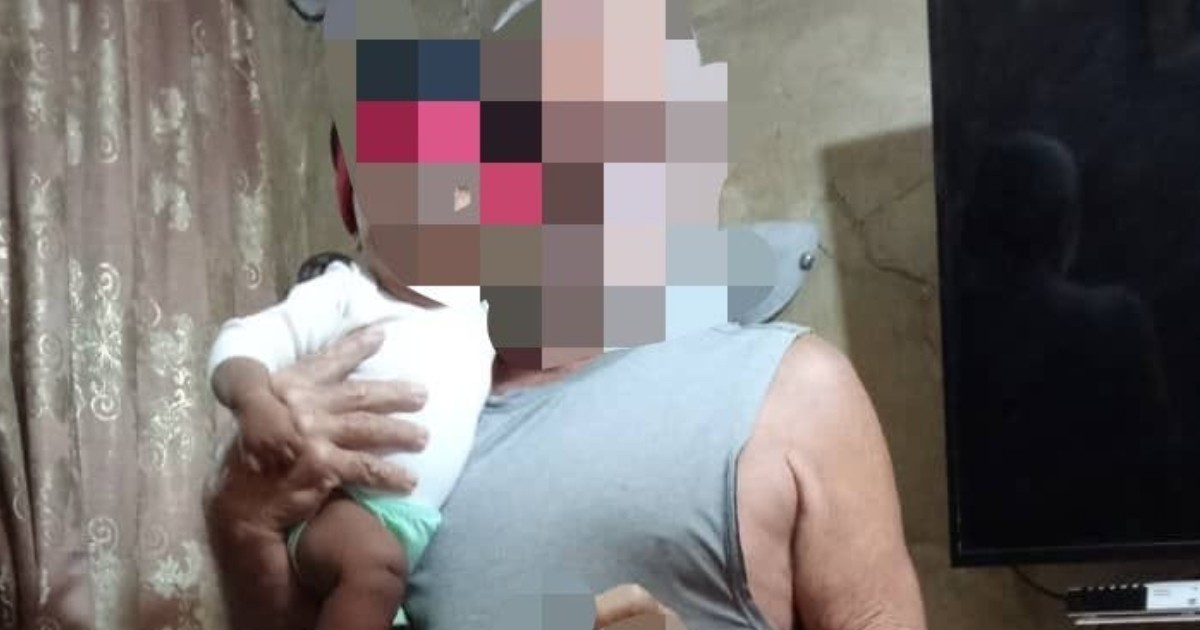
For 15 days, the residents of the Havana neighborhood of Atarés took turns caring for an abandoned baby on their streets after the National Revolutionary Police (PNR) refused to accept the child at least two different stations. The incident was publicly recounted by the Cuban historian and activist Aries M. Cañellas Cabrera, who resides in Madrid and waited for the case to be resolved before bringing it to public attention.
It was a mother from the neighborhood who found the newborn and made what seemed to be the obvious decision: to take him to the police. The response left her speechless. "Another mother found him and did the logical thing: take him to the police. But since common sense doesn't apply to Cuban law enforcement, they told her... that they couldn't accept him!" wrote Cañellas Cabrera. The next day, accompanied by other neighbors, the woman tried again at a second station, with the same outcome.
Faced with institutional inaction, Atarés responded in a way that the author himself describes as extraordinary: the community collectively took the child in.
The neighbors set up a schedule to take care of him from house to house, gathered a suitcase of clothes for him, and made sure he received milk and yogurt at the right times. At least three nursing mothers came each day to breastfeed him. "So he grows strong like my own," they would say, according to the account.
Cañellas Cabrera, who has been away from Cuba for three years, acknowledges that Atarés is now a very different place from the one he knew: "The streets where I grew up are now a very different site; like in almost all of Cuba, drugs and violence have grown uncontrollably." For this reason, the community's response to the baby felt particularly significant to him.
"The neighborhood had remembered, thanks to that baby, that it can be, like in the 90s, the most dangerous yet also the safest place in all of Havana," the historian wrote, referring to a time when neighborhood solidarity networks served as a mechanism of collective protection.
Meanwhile, some mothers from the neighborhood were searching the streets for the baby's mother. The message was clear: "If we find her, we're going to tie her up in Uncle Tom's park. You can be a thug, but you can't be a bad mother."
After 15 days of community care, nurses from the Fernandina clinic took the child and transferred him to a children's home in the 10th of October municipality. "They tell me that there was sadness that day, that the tough people of Atarés were feeling down, but aware that it was for the best, they let him go," recounts Cañellas Cabrera.
In September of this year, two fetuses were found in the trash in Centro Habana, and the authorities did not issue any official statement. Earlier in the year, two newborn twins were allegedly abandoned at the Pediatric Hospital of Camagüey, where they remained under the care of the nursing staff. In 2023, Cuba had only 54 assistance centers for minors, catering to just over 400 children without parental support.
For Cañellas Cabrera, the value of the narrative goes beyond the anecdote: "If today I bring this story to my wall, it is to make it known that the regime has not been able to destroy everything, that the people in Cuba refuse to dehumanize themselves."
Related videos:
Filed under: