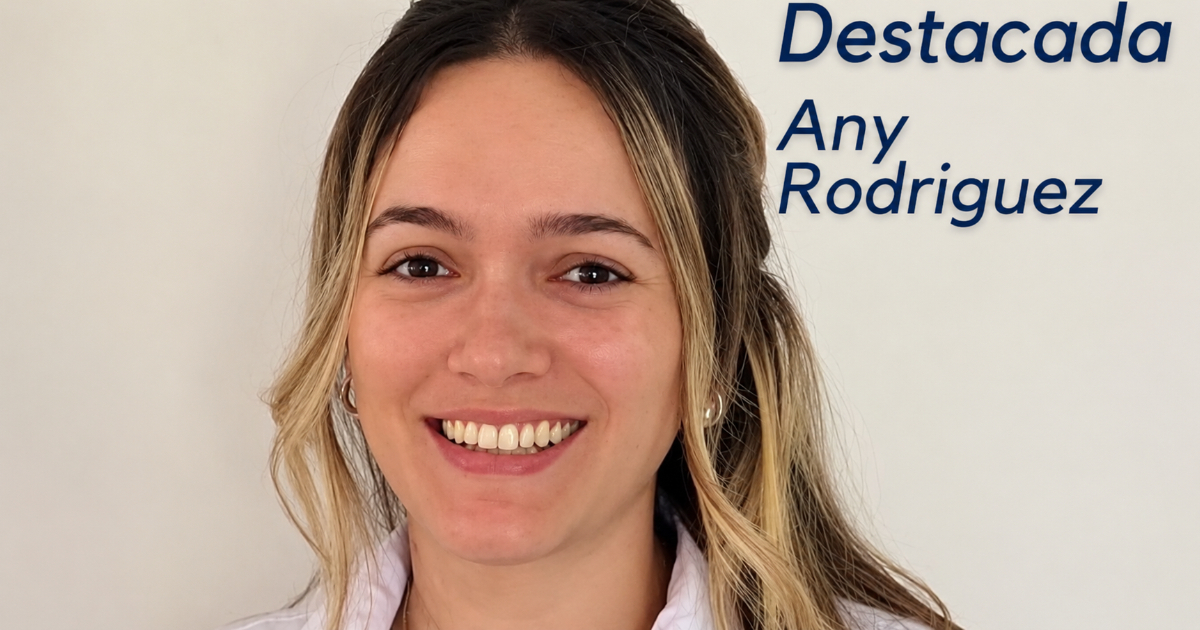
The Department of State of the United States designated this Thursday Any Rodríguez Lastres as a sanctioned individual under Executive Order 14404, as she is the daughter of Ania Guillermina Lastres Morera, the executive president of GAESA, the military-business conglomerate of the Cuban Revolutionary Armed Forces.
The measure is based on the section that allows the designation of adult relatives of individuals who have already been sanctioned. The State Department also pointed out that Any Rodríguez Lastres served as the commercial director of the Mariel Container Terminal S.A., an entity that is also on the list of U.S. designations.
The professional career of Any Rodríguez Lastres began in 2014 as a commercial specialist at the Mariel Terminal itself, where she was involved in budgeting, containerization of cargo, and billing, before advancing to areas of commercial strategy. She later moved to Panama, where she worked for international companies in the port and logistics sector, and is connected with trips to Spain, Portugal, Brazil, Belgium, France, Switzerland, Germany, and Singapore.
The State Department was straightforward in its characterization of the GAESA environment: "Those close to the regime and their families continue to profit from the control that the dictatorship exerts over the island's economy, through opaque networks linked to GAESA."
The sanction against Ania Lastres Morera's daughter is the third direct action taken against the immediate family of the president of GAESA, and the first to affect her direct descendants. In May 2026, Washington sanctioned Ania Lastres Morera herself, along with the conglomerate and Moa Nickel S.A. Days later, the U.S. revoked the permanent residency of Adys Lastres Morera, sister of the GAESA president, who was residing in Miami and managing real estate businesses in Florida.
The actions taken this Thursday were broader: it included the designation of eight entities and two individuals, as well as the identification of five vessels as blocked property. Among the entities are companies linked to oil networks supplying the Cuban regime, two Cuban state entities—CUBAELECTRÓNICA and TECNOSIME—and two Chinese corporations that supplied military components to the Ministry of the Revolutionary Armed Forces: China National Electronic Import and Export Company (CEIEC) and Beijing H&C Technologies Co., Ltd., both operating through the Cuban company Duna S.A.
The State Department also warned about the fate of the resources controlled by GAESA: "Cuba’s ruling elite monopolizes the island's energy and maritime resources for their own enrichment, leaving the Cuban people to deal with blackouts, fuel shortages, and a stagnant economy."
At the same time, the Office of Foreign Assets Control (OFAC) issued a determination that expands the sanctions authorization to any foreign individual operating in the Cuban sectors of manufacturing, technology, electronics, and maritime activity. This measure comes days after an investigation revealed that GAESA might be using Cuban mipymes as a front to evade sanctions and access the international financial system.
The State Department emphasized that the expansion of sanctionable sectors "targets the regime and those who facilitate it, not the Cuban people," and specified that the U.S. maintains authorization for the humanitarian export of food, medicine, and medical devices to the island.
Related videos:
Filed under: