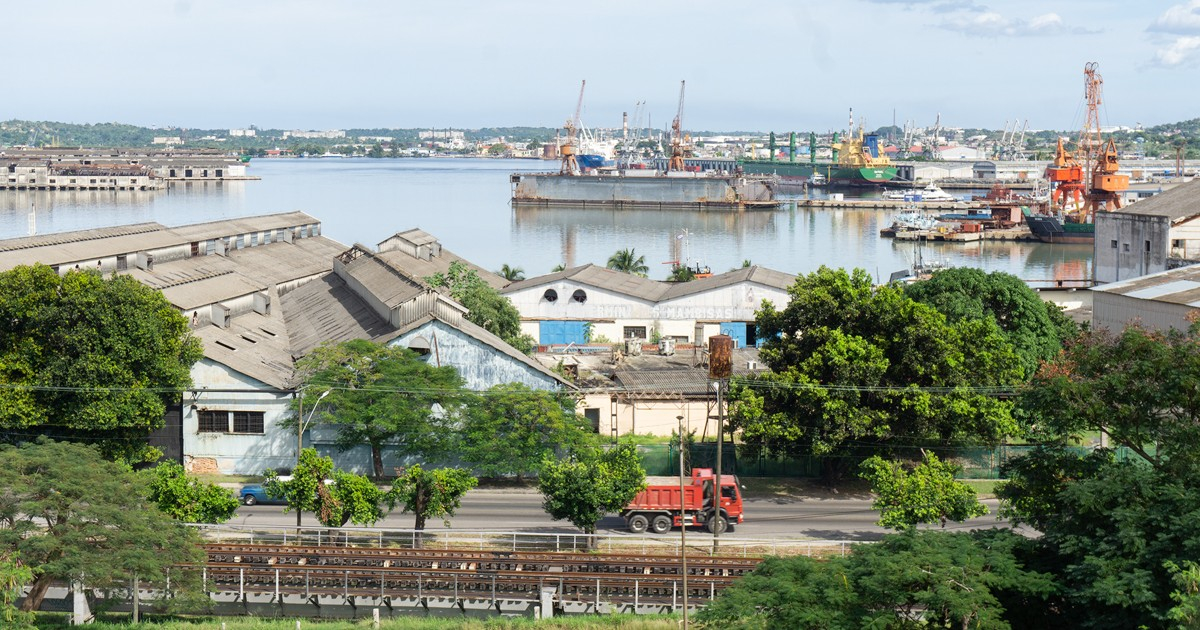
The U.S. Department of State announced this Thursday a new round of sanctions against the Cuban regime, which includes the designation of eight entities and two individuals, along with the identification of five ships as blocked property, according to the official statement released this morning.
The measures are adopted under Executive Order 14404, signed by President Donald Trump on May 1, 2026, and they simultaneously target oil transportation networks, elites linked to GAESA, Cuban state entities, and Chinese suppliers to the island's military.
The State Department also reported that the Office of Foreign Assets Control (OFAC) of the Treasury issued a determination authorizing sanctions against any foreign individual who operates in the Cuban sectors of manufacturing, technology, electronics, and maritime activity.
Blocked oil networks and ships
Guillermo Faustino Rodríguez López-Calleja was appointed for his involvement in an extensive network of maritime companies that transport petroleum products to and from Cuba.
Alongside him, four companies linked to crude transportation were sanctioned: CAROIL Transport Marine Ltd (Cypriot company managing Cuban-flagged oil tankers, already sanctioned by the Treasury in September 2019), TENTACOOL Commercial Inc (Panamanian company owning the vessel Gloria C), Internacional Marítima S.A. (Cuban company owning the vessel Esperanza), and Petróleos Marítimos del Caribe S.A. (PETROMARCA), manager and operator of two product tankers.
The five ships identified as blocked property are: Esperanza (IMO 9289166), Gloria C (IMO 9540273), Maria Cristina (IMO 9502453), Emilia (IMO 9242209), and Lourdes (IMO 9259692).
Washington warned that "the ruling elite of Cuba hoards the island's energy and maritime resources for their own enrichment, leaving the Cuban people to deal with blackouts, fuel shortages, and a stagnant economy."
The daughter of the president of GAESA is on the list
Any Rodríguez Lastres was designated due to her status as an adult relative of Ania Guillermina Lastres Morera, president of GAESA who had already been sanctioned in May 2026. According to the Department of State, Rodríguez Lastres previously served as the commercial director of the Mariel Container Terminal S.A., an entity also designated by the U.S.
The statement notes that "those close to the regime and their families continue to profit from the control exercised by the dictatorship over the island's economy, through opaque networks linked to GAESA."
Days before this announcement, an investigation revealed that GAESA would be using Cuban mipymes as a front to evade sanctions and gain access to the international financial system.
Two state entities in Cuba
CUBAELECTRÓNICA (Importer and Exporter of Electronics and Communications Products), a state importer of supplies and equipment for the electronic industry, and TECNOSIME (Commercial Company for Technical and Technological Services), a state entity that generates income for the State through commercial and labor activities, have also been designated.
Chinese companies that equip the Cuban army
On the Chinese front, the State Department sanctioned China National Electronic Import and Export Company (CEIEC), a state-owned enterprise that exports defense electronics and security systems, which in 2026 contracted with the Cuban company Sociedad Mercantil Duna S.A. to export military equipment components to the Revolutionary Armed Forces (MINFAR). CEIEC had already been sanctioned by the Treasury in November 2020 for supporting the digital surveillance of the then-government of Nicolás Maduro in Venezuela.
Similarly, Beijing H&C Technologies Co., Ltd., a subsidiary of China Electronics Technology Group Corporation International, was appointed. The company markets surveillance and security equipment and collaborated with Duna S.A. in the export of military material to Cuba.
Duna S.A. had been sanctioned on August 6, 2026 for facilitating arms imports from China and Russia to MINFAR, and it acted as a link between Chinese companies and the Cuban military in the sanctions announced this Thursday.
The State Department emphasized that "the identification of these new sectors targets the regime and those who support it, not the Cuban people," and specified that the U.S. continues to permit humanitarian trade in food, medicine, and medical devices.
Related videos:
Filed under: