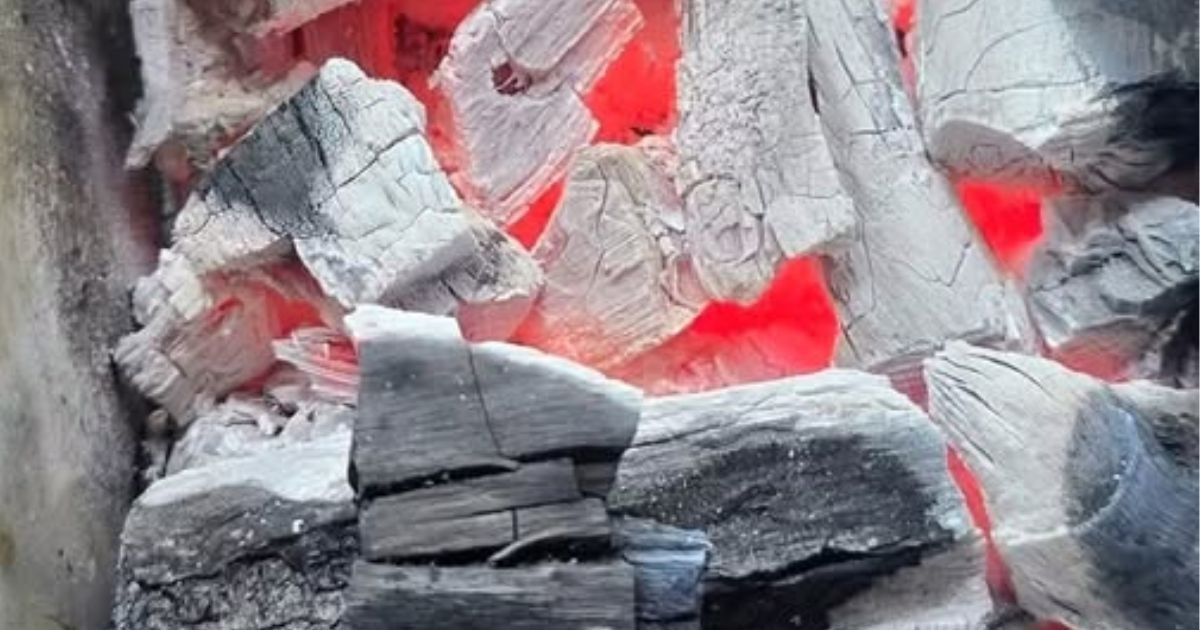
The charcoal, which millions of Cubans use as a last resort for cooking amid the energy collapse, has also become a business that deepens social inequality on the island, according to a report published this Wednesday by Food Monitor Program, an independent organization that monitors food security in Cuba.
A sack of coal costs between 2,000 and 5,000 Cuban pesos depending on its quality and the selling location, which can represent up to 155% of the monthly minimum wage, set at 3,210 pesos since July 2026. In the informal market, small nylon bags can be found for about 600 pesos, but this option is barely enough for a few cooking sessions, the cited source noted.
The organization warns that the issue goes beyond price. "When essential products such as rice, beans, oil, and eggs are affected by inflation, the energy required to cook them becomes another economic burden. Feeding oneself requires more and more money, time, and effort," stated Food Monitor Program.
Access to raw materials is another critical aspect of the problem. A good portion of the land with trees suitable for charcoal production — mainly marabú and aroma — remains under state control, which pushes independent small producers towards informality and unregulated practices. "The State reserves that land for those who benefit it," denounced a charcoal producer interviewed by the organization. Those without direct access must pay landowners and intermediaries to use plots with suitable trees.
"In this way, the state, the owners, the intermediaries, and the charcoal workers form an economic chain whose final link is the Cuban consumer," the report stated.
«Food Monitor Program alerts: a crucial resource for cooking is becoming an expensive commodity, while access to raw materials is concentrated and families bear the consequences. The charcoal crisis reflects the growing economic precariousness, food inequality, and state abandonment faced by Cubans. In Cuba, obtaining food is difficult. Finding something to cook it with is also…», added the program.
While Cubans cannot afford coal for cooking, state-owned companies export charcoal to European markets such as Germany, Spain, the United Kingdom, and Portugal. Cuba was the ninth largest exporter of the product in 2023, with revenues of 61.8 million dollars. The Food Monitor Program has accused companies linked to GAESA, including Flora y Fauna S.A., of controlling these resources and directing them towards export while internal shortages persist.
The authorities of Sancti Spíritus, rather than facilitating access to the resource, increased fines against informal charcoal producers in 2026, imposing penalties for improper use of fire in forested areas and for the logging of unauthorized species.
Related videos:
Filed under: