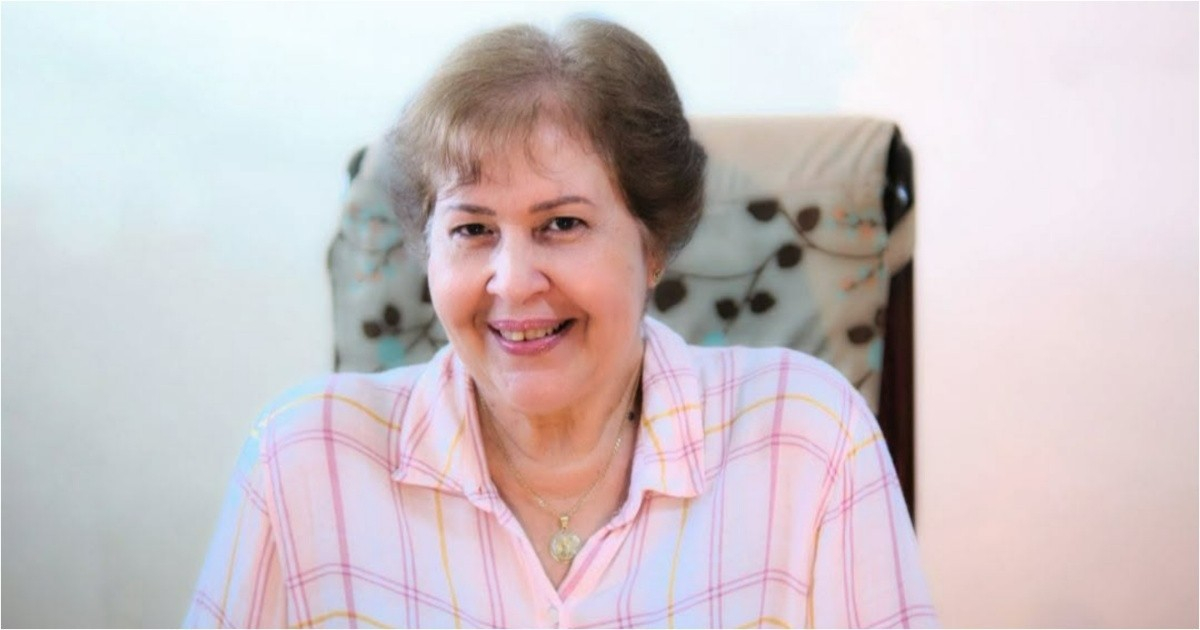
The Cuban historian and activist Alina Bárbara López Hernández published a strong condemnation of the regime's repression against independent journalists Henry Constantín, Camila Acosta, and Yoani Sánchez on Facebook, urging her fellow citizens to defend a free press as a shield against authoritarianism.
In his text, López Hernández referenced statements he made in 2020 during an interview with writer Alex Fleites, in which he already anticipated the decline of official journalism: "You ask me about the future of alternative press and I tell you that the future of official press is even more uncertain," he said at that time.
Almost seven years later, the activist from Matanzas believes that the repression against independent journalists highlights the significance this press has had in the process of information and civic awareness among Cubans.
"Expressing, investigating, documenting, analyzing, writing, informing, communicating are only crimes in a system of political exclusion," wrote López Hernández, who also stated that the reaction of a state "that has never respected the right to truthful information" can only be repression.
His call was direct: "Our duty as citizens is to denounce and advocate for a journalism committed to the people, to the truth, to justice. A free press is one of the shields against authoritarianism and exclusion. Let us defend our journalists from State repression."
The publication comes after a week of escalating repression against independent journalism in Cuba.
On Thursday, Yoani Sánchez was detained for nine hours by State Security agents while leaving her home in Nuevo Vedado to go shopping; she was accused of "attacking the constitutional order" and was released that same night.
After regaining her freedom, the founder of 14ymedio wrote: "That support was what managed to unlock the bolts and open the bars," and announced that she would narrate "the pain and total lack of protection experienced by those who do not have public visibility."
On Tuesday, Camila Acosta was handcuffed and taken to the Playa police station while she was on her way to a veterinary appointment; the authorities disabled her phone and handed her a warning notice for having shared images of a State Security agent.
On Monday, the CubaNet contributor Adelth Bonne Gamboa was arrested in the Santos Suárez neighborhood and released hours later with a fine of 3,000 pesos under Decree-Law 370, along with the confiscation of his laptop, phone, camera, and audio equipment.
Meanwhile, Henry Constantin, director of La Hora de Cuba, has been incarcerated since September 16 in the maximum-security prison Kilo 7, in Camagüey, accused of "disobedience"; Reporters Without Borders documented that this would be at least his nineteenth arrest related to his journalistic work.
The repressive wave generated international condemnation. The U.S. Assistant Secretary of State for Western Hemisphere Affairs, Juan Pablo Segura, stated that the regime "shows its cowardice by resorting to arbitrary detentions because it fears the truth".
The Cuban Institute for Freedom of Expression and the Press (ICLEP) revealed that violations of press freedom in Cuba increased by 129.4% last September, rising from 17 reports in August to 39.
Cuba ranks 160th out of 180 countries in the 2026 World Press Freedom Index by Reporters Without Borders.
Related videos:
Filed under: