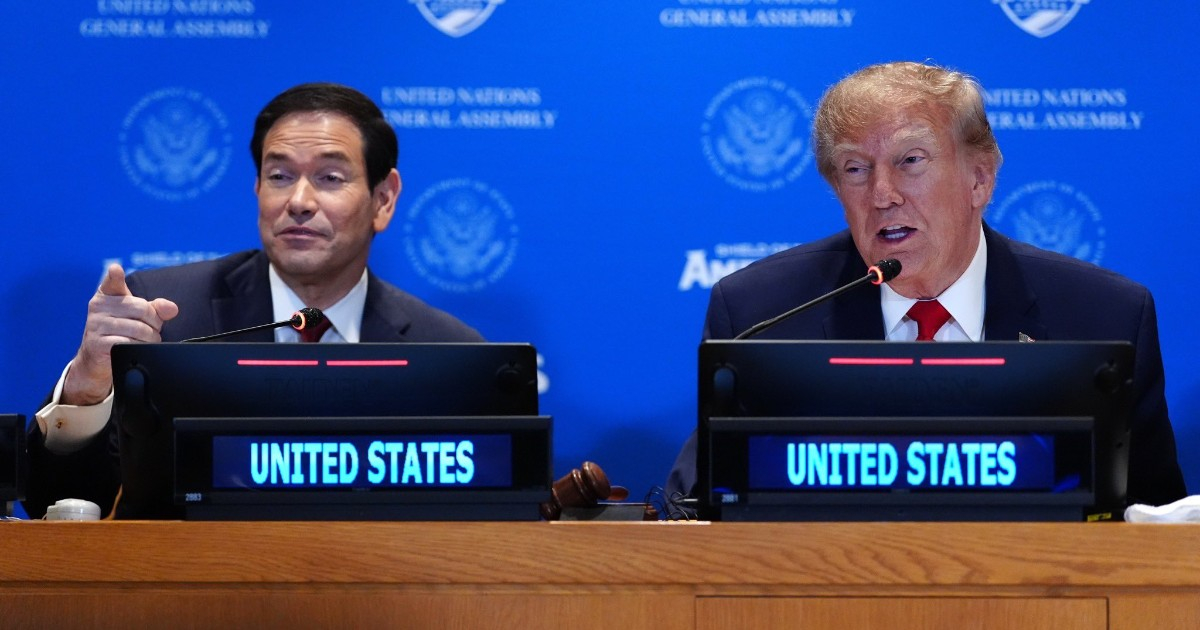
The Secretary of State and National Security Advisor of the United States, Marco Rubio, stepped forward on Thursday to refute reports that placed him on the verge of leaving the Trump administration to pursue a presidential candidacy in 2028, according to an interview granted to The New York Times from his office at the White House.
"Working for President Trump until the end of his term has always been my plan," Rubio stated, flatly dismissing the rumors that had gained traction following the Republican debacle in the November 3 midterm elections, in which the Democrats regained control of both chambers of Congress.
"I don't know where these things come from, to be honest," Rubio said when asked about the reports. "I love the work I do. And I also always laugh when they say I'm going to leave my job. I wonder: which one of us?"
That last question refers to the dual role he has held since September 22: Rubio is the first official since Henry Kissinger to simultaneously serve as Secretary of State and National Security Advisor.
The rumors had been fueled by reports from The Independent —based on anonymous sources from the Republican Party and the British government suggesting he was "on resignation alert"— and Bloomberg, which stated that Rubio had consulted with White House officials about the possibility of resigning, though without any defined decision or timeline.
The official response was emphatic. The Deputy Assistant Secretary of State, Dylan Johnson, described those reports as "completely unfounded fake news based on invented anonymous sources," while White House spokesperson Davis Ingle referred to them as "false and unfounded conspiracy theories."
Regarding a possible presidential candidacy in 2028, Rubio declined to respond. "I literally won't talk about 2028. I simply won't," he concluded.
The politician of Cuban origin has indeed expressed his support in the past for Vice President JD Vance in that race. "JD is a very good friend of mine. If JD runs for president, I think he would be a phenomenal candidate. I have said it publicly and I repeat it: I will be the first to sign up and support him," he declared to NBC News in May.
The political context is tense. Vance published an extensive analysis on social media on Wednesday, attributing the Republican defeat mainly to the war with Iran, distancing himself from Trump. The Democrats gained control of the House of Representatives with projections of up to 244 seats, and also regained the Senate with a net gain of at least four seats.
Rubio initially dodged the assessment of Vance's analysis, claiming he was not "really involved in domestic politics," although he acknowledged that high gas prices are not something to campaign on or boast about.
The Secretary of State firmly defended the president: "Ultimately, that is the price of leadership: the willingness to do things that may not be politically popular or convenient, but are necessary for your country and its long-term future."
Days earlier, Trump had brought Rubio on stage at his rally in Kansas and joked that he might have to dismiss him because he had become "too popular," a gesture that many interpreted as an implicit endorsement amidst the post-election turmoil.
Related videos:
Filed under: